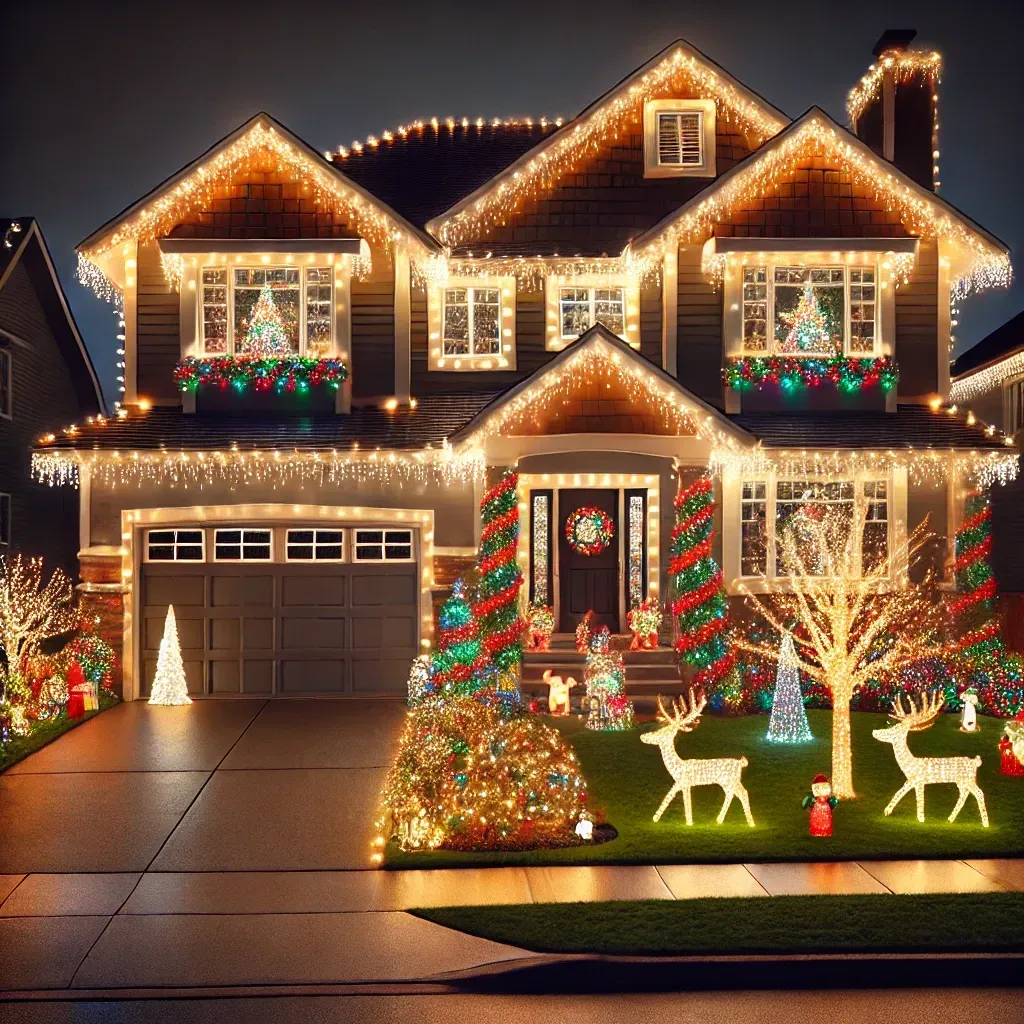
Christmas Light Installation Cost in 2026: What Pros Really Charge
Most homeowners get the same two answers when they ask what professional Christmas lights cost. A national website says "about $400." A neighbor says "a guy did mine for $250." Both are wrong for a real, insured company in 2026.
I ran a Christmas light installation company for years. We scaled it to over $1 million a year with four crews before I sold it in 2018. Today I train more than 43,000 installers through ChristmasLights.io. I see the real invoices. Here is what pros charge, what you get for it, and how to tell a good installer from a cheap one.
The short answer: $8 to $12 per foot of roofline
Professional C9 roofline lighting costs $8.00 to $12.00 per linear foot installed. That price includes the lights, the clips, the labor to hang them, the takedown in January, and storage of your lights until next year.
The materials alone run a contractor $1.50 to $2.00 per foot at wholesale. The rest pays for a trained crew on your roof, insurance, a truck, and the trip back to take everything down.
So a typical home looks like this:
- Small ranch, 100 feet of roofline: $800 to $1,200
- Average two-story, 150 to 200 feet: $1,200 to $2,400
- Large home, 250 to 300 feet: $2,000 to $3,600
Most companies have a minimum job. Expect it to land somewhere between $600 and $800. If a crew shows up for less than that, they lose money on the drive alone.
What the extras cost
Roofline is the base. Trees, bushes, and decorations get priced separately. Here are the 2026 numbers real installers use.
| Item | Typical price | How it is measured |
|---|---|---|
| C9 roofline | $8 to $12 per foot | Linear feet of roof edge |
| Bushes and shrubs | $30 to $50 per strand | By strand, not by bush. A big bush can take 3 strands. |
| Deciduous trees (lose leaves) | $30 to $50 per foot of height | Trunk and branch wrap |
| Evergreen trees | $40 to $60 per foot of height | More bulbs and more time than a bare tree |
| Porch and entry columns | $100 to $600 per column | Most land around $250 |
| Pathway stakes | $8 to $10 per stake | Walkways and landscape beds |
| Lit wreaths (48 inch pro grade) | $200 to $800 each | Most land around $300 |
Put it together and a full display with roofline, two trees, and the front bushes usually runs $2,500 to $5,000. A roofline-only job on an average house is closer to $1,500.
What is included (and what to ask about)
A real quote covers four things. If any one is missing, the price is not comparable.
- Commercial-grade lights. Pros use C9 LED bulbs on socket wire, not the box-store strands that fail after one season. The bulbs are rated for years outdoors.
- Installation by an insured crew. Ask for proof of liability insurance. Someone on your roof without it is your problem if they fall.
- Takedown. It is part of the price. If a company lists takedown as a separate charge, the base price is not $8 to $12 a foot. It is higher.
- Storage. Most established companies store your lights in their own building and bring them back next year. Newer companies without a shop may hand the boxes to you or charge for storage.
Also ask who owns the lights. Some companies sell you the lights in year one and charge less to rehang them in year two. Others lease them and charge the same price every year. Neither is wrong. You just want to know before you sign.
Why the cheap guy costs more
Every year I hear from homeowners who paid $250 for a roofline and got burned. The lights were retail strands. Half a section went dark on December 10th. Nobody answered the phone. In January the lights were still up.
Cheap installers are usually new, uninsured, and using the wrong product. They quit the business after one season because the math does not work. Then you start over with someone new next year.
Pay the real rate and you get a company that comes back. Most good installers rebook 80 to 90 percent of their customers every year. That is the number you want.
How the quote process works
A good installer will not give you a price over the phone. They either come out, measure, and quote on the spot, or they measure from photos and satellite images and email a quote within a day. Both are normal.
Expect to pay a deposit at booking. Fifty percent is standard. That locks your install date. Good crews are booked solid by early November, so the deposit is what holds your spot.
If you want a quick ballpark before you call anyone, use the free Christmas lights calculator. Punch in your roofline and it gives you a realistic range.
Want it done? Want to do it yourself?
Hire a pro. The installers in our installer directory are trained contractors who use the pricing and products above.
Do it yourself with pro lights. You can buy the same commercial-grade C9 bulbs, socket wire, and clips the pros use at Christmas Lights HQ. A 100 foot roofline in real C9 LEDs costs a few hundred dollars in materials and lasts for years. The HQ pricing calculator tells you exactly how many feet and bulbs you need.
Tired of the ladder every year? Permanent Christmas lights mount once and change colors from your phone. Higher cost up front, no install bill after that.
Frequently asked questions
How much does it cost to have Christmas lights installed on a house?
$8 to $12 per foot of roofline in 2026, with takedown and storage included. An average home lands between $1,200 and $2,400 for roofline. Add trees and bushes and most full displays run $2,500 to $5,000.
Does the price include taking the lights down?
Yes. Takedown is built into the per-foot price at any established company. If it is listed as an extra, ask why.
Is it cheaper to buy or lease the lights?
Buying costs more in year one and less in later years. Leasing is the same price every year and the company handles replacements. Over five years the totals end up close. Pick the one that fits your budget this year.
When should I book?
September or October. Good installers fill their November calendar early, and many offer early-bird pricing before the rush.
Why is my quote higher than the national average I saw online?
Those averages mix in handymen, one-season startups, and retail strands. A trained, insured crew using commercial C9 LEDs costs more because it does not fail in December and it comes back to take everything down.
What did your last quote come in at? Drop the number and your roofline footage in the comments and I will tell you if it was fair.


