

Durable Light Stakes for Secure and
Professional Holiday Displays"
Ensure your holiday lights stay perfectly in place with our high-quality light stakes. Designed for durability and ease of use, these stakes provide a secure foundation for your outdoor Christmas displays, keeping your C7 and C9 lights neatly aligned and elevated. Whether you're a professional installer or a DIY enthusiast, our light stakes offer a reliable and long-lasting solution to enhance the beauty of your festive décor.
Light Stakes
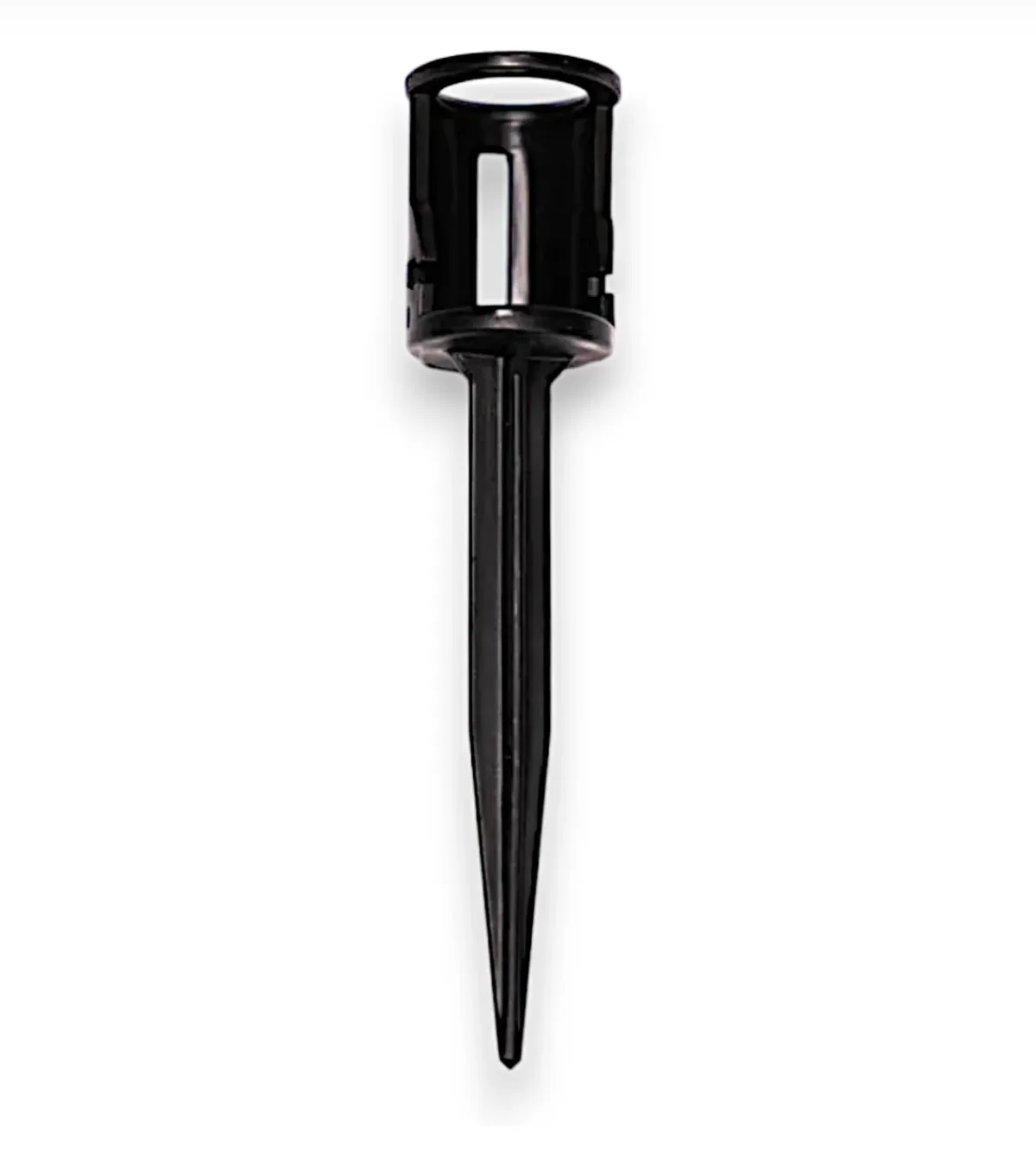
C9/C7 Best Enclosed 5" Light Stake
Keep your outdoor Christmas lights securely in place with the C9/C7 Best Enclosed 5" Light Stake (Patent Pending). These stakes feature a unique enclosed design that firmly holds your C9 and C7 lights, ensuring they stay in place throughout the holiday season. Made from durable plastic, these stakes are designed to endure outdoor elements and can be reused year after year, making them a top choice for both professional and DIY decorators.
Key Features:
- Enclosed Design for Secure Hold: The enclosed design keeps your C9 and C7 bulbs securely fastened, preventing them from slipping out, even in challenging weather.
- Durable Plastic Construction: Crafted from high-quality plastic, these stakes are built to withstand harsh outdoor conditions, ensuring they last through multiple seasons.
- Reusable Year After Year: Designed for longevity, these stakes can be reused season after season, providing a cost-effective solution for your outdoor holiday displays.
- 5" Height: The 5" height is ideal for elevating your lights and keeping them neatly aligned along pathways, driveways, or garden beds for a clean, professional appearance.
- Patent Pending Design: With a patent-pending design, these stakes offer an innovative and effective solution for securing your C9 and C7 holiday lights.
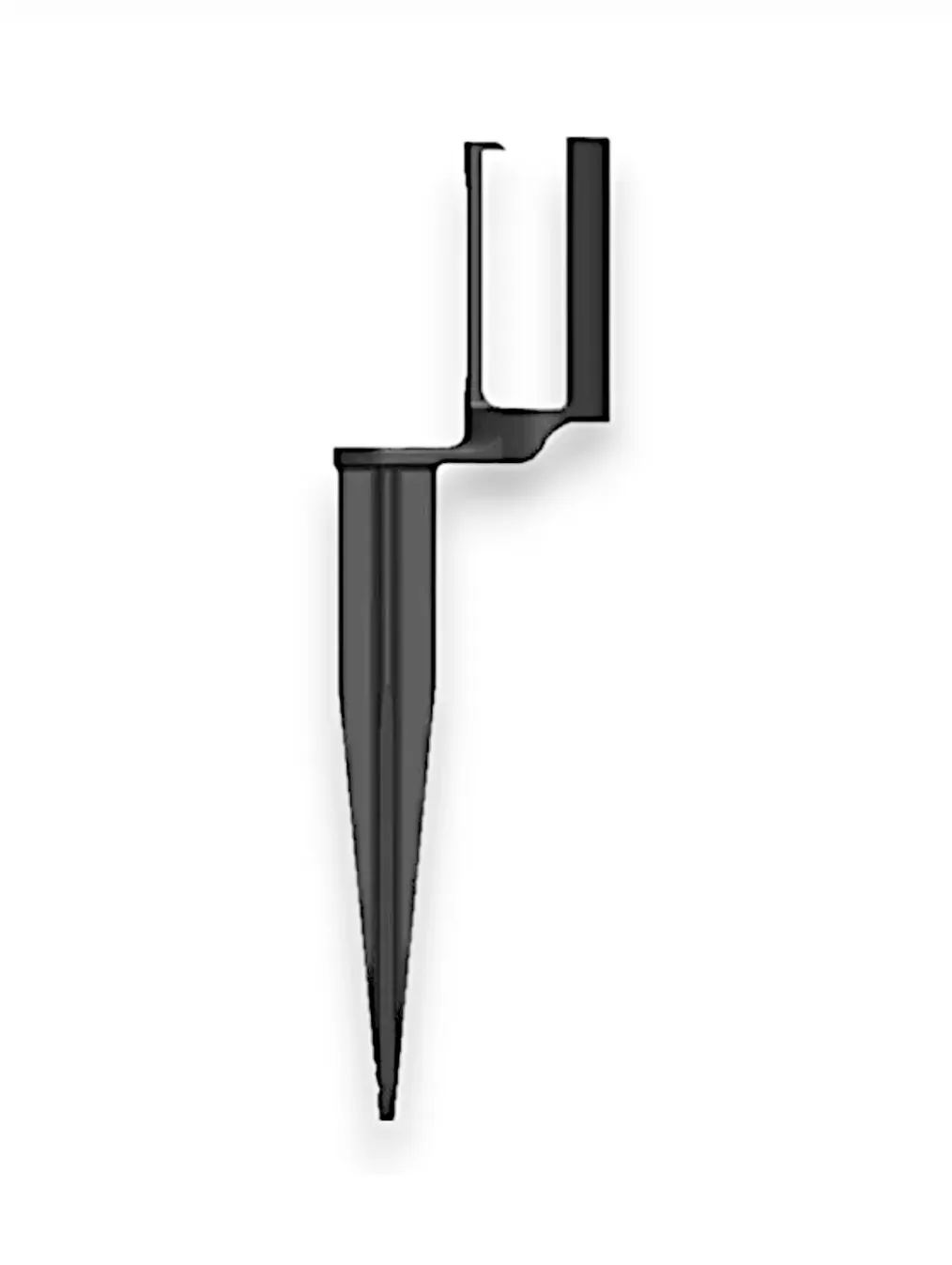
Canny Systems Light Stake
The offset design of the Canny Systems Light Stake makes it easy to use a hammer on tougher ground. Available in 5", 7.5" and 11".
Features:
- 3-Prong Light Holders: Securely grip the light at the top of the socket for a more stable hold.
- Straight Alignment: Ensures your lights stay pointed straight up.
- Cord Protection: Prevents damage or strain on the socket cord.
- Quick Installation and Removal: Fast and easy install and removal
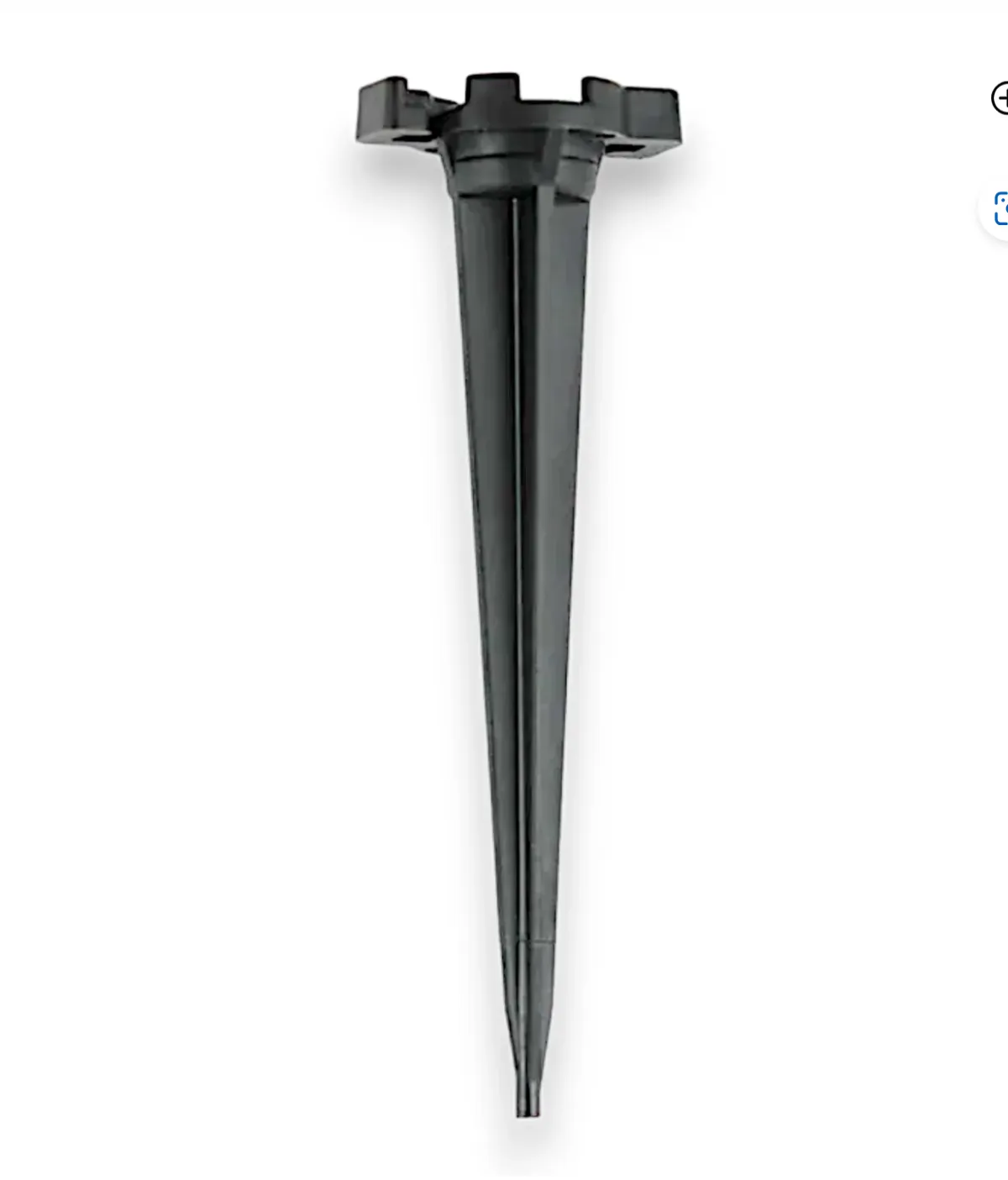
Universal 4.5" Light Stake
This 4.5" stake features a sharp point and rugged construction, making it easy to hammer into the ground if needed. It's perfect for neatly displaying lights throughout your landscape, creating a festive holiday atmosphere. Specifically designed to work best with standard C7 and C9 sockets.
Features:
- 4.5" Universal Light Stakes: Suitable for both C7 and C9 lights.
- Versatile Christmas Light Accessory: Ideal for outlining driveways, pathways, and yard edges along sidewalks with lights.
- Complete Your Display: These stakes help create a cohesive and polished look by extending your Christmas light display from the house down to the ground level.
Frequently Asked Questions
What types of lights do these stakes support?
Our light stakes are designed to securely hold C7 and C9 bulbs, providing a stable foundation for your holiday light displays.
Can these stakes be reused year after year?
Yes, our light stakes are made from durable plastic, allowing them to withstand harsh outdoor conditions and be reused season after season.
How easy is it to install and remove the light stakes?
Our light stakes feature an offset design that allows for quick and easy installation, even in hard ground. Removal is equally simple, making setup and takedown a breeze.
Will these stakes damage my light cords?
No, our stakes are designed to grip the light bulbs securely without putting any strain or causing damage to the socket cords.
Are there different sizes available?
Yes, our light stakes come in various sizes, including 5", 7.5", and 11", to accommodate different needs and ensure your lights are displayed at the perfect height.
Discover Expert Tips on Our Blog

From $600 to $2,000 Jobs: The ONE Thing That Changed Everything
Most Christmas lights installers hit a revenue ceiling not because they lack technical skill or work ethic, but because they've trapped themselves at low average tickets. The difference between generating $50,000 and $200,000+ in a season often comes down to one number: average ticket price. Moving from $1,000 to $2,000 per job doesn't just double revenue—it transforms the entire business model, creating space for hiring, systems development, and actual profitability.
This guide reveals the exact strategies successful installers use to break through the $1,000 ceiling and consistently close $2,000-$3,000 jobs. Whether you're in your first season or looking to scale an established business, these principles will fundamentally change how you quote, present, and close Christmas lights installations.
Understanding Average Ticket: The Most Important Metric
Before discussing strategies to increase average ticket, you must know your current number. Too many installers respond with vague estimates: "Somewhere between $800 and $1,000." This imprecision signals they're not tracking the metric that determines their business success.
Calculating average ticket is simple mathematics: Total revenue divided by number of completed jobs. If you've generated $50,000 from 50 installations, your average ticket is $1,000. If you've done 40 jobs for the same $50,000, your average is $1,250. This number matters because Christmas lights is fundamentally a math game.
Why Average Ticket Determines Everything
Consider the work required to generate $10,000 in revenue:
At $1,000 average ticket: 10 separate installations, 10 quotes, 10 customer conversations, 10 setups, 10 teardowns, and maximum windshield time driving between properties.
At $2,000 average ticket: 5 installations for identical revenue. Half the customer management, half the logistics, half the risk exposure—and likely higher profit margins.
The windshield time alone—driving between jobs—represents one of the biggest profit killers in this business. Every minute spent driving is time not generating revenue. Fewer, larger jobs mean more efficient operations and better profitability.
One successful installer increased average ticket from $1,700 to $2,000+ by implementing a single change: adding ridge lines to every quote. That extra 50-75 feet of lighting on peaks and ridges added $400-$600 per job while requiring minimal additional installation time. Multiply that across 50-100 annual installations, and it represents $20,000-$60,000 in additional revenue.
The Packaging Strategy: Never Quote Just the Basics
The fastest way to remain stuck at $1,000 average tickets is quoting only what customers explicitly request. When someone asks for "Christmas lights on the front of my house," most installers quote the front roofline and nothing more. This approach caps revenue at $800-$1,200 regardless of property size or customer budget.
Successful installers present comprehensive packages that showcase what's possible:
Essential Package Components
Front Roofline (Gutters and Peaks): The foundation, but never the complete offering. This typically represents $600-$1,000 depending on footage.
Ridge Lines and Architectural Details: Adding peaks, hips, and ridges creates dramatic visual impact while adding $400-$800 to each job. Many customers don't even know to request these features—they simply assume professionals will recommend what looks best.
Ground Stake Pathway Lighting: Lining the walkway from sidewalk to entrance adds $300-$500 and creates cohesive design. This feature often sells itself when presented in mockups.
Tree Wrapping: Most properties have 2-3 visible trees worth wrapping. At $40 per foot of tree height, this adds $800-$1,800 to average tickets. A 10-foot tree is $400, a 15-foot tree is $600.
Columns and Architectural Features: Wrapped columns range from $100-$600 each depending on height. Four columns at $150 each adds $600.
Wreaths and Decorative Elements: 48-inch or 60-inch wreaths at $350-$600 each provide high-margin additions requiring minimal installation time.
The principle is simple: customers cannot buy options you don't present. If you only quote the front roofline, that's all you'll ever sell. Present everything, and customers self-select based on budget and vision.

The Psychology of Cheap Pricing: Why $6 Per Foot Keeps You Broke
Many installers charge $6 per foot believing higher prices won't work in their market. This self-limiting belief creates unsustainable businesses that collapse under their own operational weight.
The Real Cost of Underpricing
Materials: Quality LED C9 sets, clips, and accessories cost $150-$200 per 100 feet when purchasing professional-grade products.
Labor: At $80-$100 per installation for a 100-foot roofline (assuming efficient crews), labor consumes significant margin.
Insurance, Overhead, and Risk: General liability insurance, vehicle costs, equipment maintenance, and the inherent danger of rooftop work represent real expenses often ignored in cheap pricing.
At $6 per foot: A 100-foot roofline generates $600. After $150 materials and $90 labor, gross profit is $360 before overhead and risk consideration. Net profit might be $250-$300.
At $8 per foot: The same job generates $800. With identical costs, net profit increases to $450-$500—60-80% more for identical work.
At $10 per foot: Revenue hits $1,000, with net profit around $650-$700. This represents 2.5x the profit of the $6 installer for the same physical work.
Scale this across 50 installations annually, and the $10 installer earns $32,500 in net profit compared to $12,500-$15,000 for the $6 installer. That's $17,500+ more—enough to hire help, invest in marketing, or simply earn fair compensation for dangerous work.
One installer raised prices from $4 per foot to $8 per foot and discovered something remarkable: the "crappy customers" disappeared. Price shoppers, constant negotiators, and problem clients self-selected out. His business became more profitable and dramatically less stressful.
Overcoming the "My Market Won't Pay That" Myth
This excuse appears in every market. Dallas installers insist nobody pays more than $6. Idaho installers claim $4 is the maximum. Maryland installers swear $3 is the ceiling.
Yet in every single market, other installers successfully charge $8-$12+ per foot. Same ZIP codes, same customer base, same competition—different results.
The Real Barrier: Your Mindset
The book "No BS Marketing to the Affluent" by Dan Kennedy emphasizes a critical truth: affluent customers think differently than you think. They're not seeking the cheapest option—they're seeking the best experience, most reliable service, and least hassle.
Consider the typical premium customer profile: They live in a home with an $8,000-$10,000 monthly mortgage. They drive a vehicle with a $2,000 monthly payment. They spend $300+ monthly at Starbucks—$3,600 annually on coffee alone.
Yet installers worry these customers won't invest $1,500-$3,000 in professional holiday lighting? The disconnect reveals the real problem: installers don't believe they're worth premium pricing, so they communicate that uncertainty in every sales conversation.
If you believe your market won't pay $8-$10 per foot, you're 100% correct—not because the market can't support it, but because your lack of confidence guarantees customers will negotiate down or choose competitors. Your belief becomes reality.
One installer in rural Georgia—a 17-year-old in his first season—consistently closes jobs at $10 per foot. If a teenager in a rural market can command premium pricing, the "my area won't pay" excuse crumbles completely.
The Sales Process: Why Customers Want Christmas Lights
Most installers never ask the most important question: Why do you want Christmas lights?
The typical answer—"I think they're pretty" or "I want a nice display"—is surface-level thinking that leads to commodity pricing. Dig deeper with follow-up questions:
"What's special about this Christmas?"
"Who's visiting during the holidays?"
"What memories are you hoping to create?"
"Have you always loved Christmas lights?"
These questions uncover emotional drivers that justify premium pricing:
Grandchildren visiting: Creating magical memories for kids they rarely see makes price irrelevant. The experience is priceless.
First Christmas in new home: Establishing traditions and making a statement in the neighborhood drives budget up significantly.
Competing with neighbors: Friendly competition or desire to have the best-decorated home removes price sensitivity.
Last Christmas due to illness: When time is limited, families invest heavily in creating perfect memories.
When you understand the emotional why, you're no longer selling bulbs and clips—you're selling irreplaceable memories and magical experiences. That justifies $2,000-$4,000 investments easily.
Practical Implementation: Getting the Phone to Ring
The best pricing strategy in the world is worthless without leads. To consistently close $2,000+ jobs, you need volume and momentum.
Proven Lead Generation Strategies
Yard Signs: Deploy 100+ signs weekly in target neighborhoods. Track which locations generate calls to optimize placement. This remains highest-ROI marketing for local service businesses. Some installers generate $100,000+ annually from yard sign leads alone.
Google Business Profile Optimization: Post daily with installation photos, customer testimonials, and project updates. Respond to every review immediately. Ask for reviews systematically after every installation using QR codes or tap cards.
Facebook Marketing: Organic posting builds brand awareness. Join local neighborhood groups and provide value without spamming. When people ask for recommendations, your consistent presence pays dividends.
Facebook Advertising: Expect $15-$30 per lead with optimized campaigns. Include budget qualifiers in ads ("Starting at $900") to filter out customers expecting $200 jobs.
Door-to-Door Canvassing: Walk one neighborhood repeatedly until achieving 90% yes/no responses. Name-drop neighbors who've booked to create social proof and momentum within communities.
The key is consistent action. One installer advertised a month before thinking it was "too early"—his phone hasn't stopped ringing. Early marketing builds momentum that pays off when peak season arrives.

Review Generation: The Long-Term Growth Strategy
Reviews may not dramatically impact this season (unless you already have 50+), but they determine next year's success. Implement systematic review requests:
The Review Request Process
During Initial Phone Call: "Our goal is to make you so happy you'll give us a five-star review. Is there any reason you wouldn't give us five stars?"
Upon Arrival: "My goal today is to make you so happy you'll want to give us a five-star review and tell all your friends."
At Job Completion: "Is there any reason you wouldn't give us a five-star review?" When they say no, immediately pull out your phone with QR code or tap card: "Perfect! Just scan right here and it takes 30 seconds."
Tools that accelerate review generation:
QR Code Review Cards: Print cards with QR codes linking directly to your Google Business Profile review page. Hand these to customers at completion.
NFC Tap Cards: Customers tap their phone to the card and the review page opens automatically—even easier than QR codes.
Incentivize Your Team: Pay bonuses for reviews. $10 if their name is mentioned, $25 for video reviews. This motivates crews to deliver exceptional service.
Don't limit reviews to Google. Collect them on Yelp, Facebook, and even Thumbtack. With AI integration, these platforms increasingly influence local search results.
Safety Investment: Protecting Your Most Valuable Asset
Premium pricing enables proper safety equipment investment. Cheap pricing forces cutting corners that lead to catastrophic injuries.
One installer fell 30 feet from a roof, landed on concrete, and broke both legs. It wasn't steep pitch or poor equipment—he simply stepped backward without looking. The medical bills, lost income, and recovery time far exceeded any savings from cheap pricing.
Essential Safety Equipment
Proper Footwear: Cougar Paws ($200) or specialized Christmas lights shoes ($40) provide roof traction that standard shoes cannot. Hey Dudes and Vans are inadequate and dangerous.
Pitch Hoppers: These platforms ($115-$130) provide stable working surfaces on steep pitches. Choose 30-inch models for maximum space.
The Goat Steep Assist: This tool ($600-$700) provides handholds and stability on challenging roofs.
Ridge Pro: Screws into ridge caps, creating anchor points for stability or harness attachment.
Ladder Stabilizers: Prevent ladders from slipping or denting gutters—inexpensive insurance against falls.
Ladder Levelers: Ensure stability on uneven ground without using rocks or logs.
Mr. Longarm Poles with Hooks: Pass materials to roof workers safely rather than throwing supplies up (which causes balance loss and falls).
Always have a fall plan. If you start slipping, what's your strategy? Grab the gutter? Kick it to slow descent? These mental preparations can mean the difference between minor injury and catastrophe.
The Three Daily Actions: Working ON Your Business
Most installers work constantly IN their business—installing, quoting, managing crews—without dedicating time to working ON the business. This ensures they remain stuck at current revenue levels.
Implement this simple system: Write down three actions daily that improve the business, not just maintain operations.
Examples of "ON the Business" Actions
Research and set up Facebook advertising campaign
Create and post two social media content pieces
Develop standardized quote template
Record installation process video for training
Optimize Google Business Profile with new photos
Follow up with 10 outstanding quotes
Deploy 20 yard signs in new neighborhood
Research and implement CRM system
Create employee training checklist
Develop referral incentive program
These aren't massive projects requiring days—they're 20-30 minute focused actions that compound over time. Complete three daily, and you've accomplished 1,095 business improvements annually. That creates exponential growth impossible through operational work alone.

How do I calculate my current average ticket?
Add total revenue from all completed jobs, then divide by the number of jobs. If you've generated $75,000 from 50 installations, your average ticket is $1,500. Track this weekly to monitor progress toward your $2,000 target. Without knowing this number precisely, you cannot improve it systematically.
What's stopping me from reaching $2,000 average tickets if I'm stuck at $1,000?
You're likely quoting only what customers explicitly request rather than presenting comprehensive packages. If you quote only front rooflines, you'll never exceed $1,200. Add ridge lines, ground stakes, trees, columns, and wreaths to every quote. Customers can't buy options you don't present. This single change moves most installers from $1,000 to $1,500-$2,000+ immediately.
How do I overcome fear of pricing "too high" and losing customers?
Recognize that losing price-shopping customers is beneficial. At $10 per foot with a 20% close rate, you generate more profit with less work than $6 per foot with 40% close rate. Quality customers value expertise and reliability over lowest price. Your confidence (or lack thereof) communicates instantly—if you don't believe you're worth premium pricing, customers won't either.
Should I offer packages or itemized quotes?
Both approaches work. Packages (Basic, Premium, Ultimate) simplify decision-making and often lead to mid-tier selections. Itemized quotes with optional add-ons allow customers to customize. The critical element isn't format—it's ensuring every quote includes multiple options beyond the bare minimum. Never send a quote with only one choice.
How many reviews do I need before they impact my business?
Reviews compound over time. With 10-20 reviews, you'll see modest impact. At 50+, reviews significantly influence search rankings and conversion rates. At 100+, you dominate local competition. Start systematic review collection immediately—reviews requested this season pay dividends for years. Use QR codes, tap cards, and employee incentives to accelerate collection.
What's the fastest way to increase leads without spending thousands on advertising?
Yard signs remain highest-ROI marketing. Deploy 100+ signs in target neighborhoods for $300-$500 investment. One well-placed sign can generate 5-10 jobs worth $10,000-$20,000. Google Business Profile optimization (free) drives organic search traffic. Post daily, respond to reviews, and ask every customer for reviews. These two strategies alone can generate 50-100 annual jobs.
How do I respond when customers say I'm more expensive than competitors?
Reframe the conversation around value, not price: "Our pricing reflects professional-grade materials, comprehensive insurance, experienced crews, and guaranteed satisfaction. If lowest price is your priority, we might not be the best fit. But if you want premium, hassle-free service with stunning results, we're perfect for you." Then stop talking and let them decide. Don't chase price shoppers.
What average ticket should I target in my first year?
Target $1,500-$2,000 minimum, even in year one. Starting at $1,000 creates difficult habits to break later. Customers anchored to cheap pricing resist increases. Begin at $8-$10 per foot with comprehensive packages. You can always adjust down (though you won't need to), but climbing from $6 to $10 with existing customers is nearly impossible.

How do I handle customers who already own lights and just want installation?
Politely decline in most cases: "I appreciate you thinking of us, but our insurance doesn't cover installing customer-owned materials, as we can't verify their safety or condition. We'd be happy to quote our professional red carpet service with quality materials and comprehensive warranty." The liability and unprofitability aren't worth the modest revenue.
What's the most important mindset shift for reaching $2,000 average tickets?
Stop believing you're selling bulbs and clips. You're selling magical memories, family experiences, and holiday joy. When you understand the emotional value—grandchildren's wonder, neighborhood pride, cherished traditions—$2,000-$4,000 becomes reasonable investment in priceless experiences. Read "Think and Grow Rich" and "No BS Marketing to the Affluent" to fundamentally shift how you value your service.
Copyright ©2025 All Right Reserved website designed by christmaslights.io
Terms of Service / Privacy Policy
Have questions or need assistance?
Contact us at (855)619-LITE