

Blog
Our Top Blog Posts
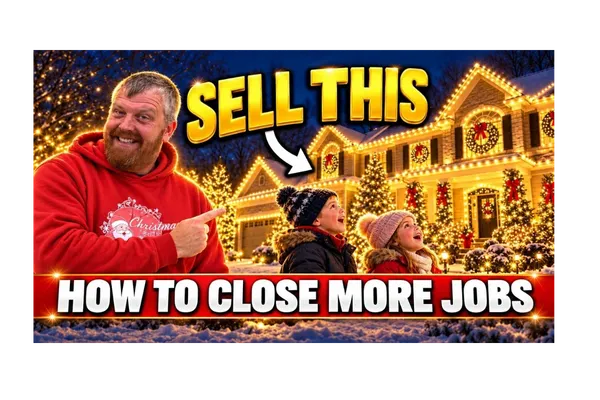
How to Close More Christmas Light Jobs in 2026: Sell the Feeling, Not the Foot
Installers are closing jobs right now. Some are closing $3,000 jobs. Others are closing $13,000 jobs in parts of the country where people insist you can't charge that. What separates the installers who close from the ones who struggle usually isn't the lights, the bulbs, or the install quality. It's what they're selling.
This guide breaks down how professional installers close more jobs this season: selling emotion instead of per-foot pricing, taking fast and imperfect action with mock-ups, following up, and avoiding the customers who cost you the most. If you want more strategies for growing a Christmas light installation business, start here.
Stop Selling Lights. Start Selling the Feeling.
"I'm just selling Christmas lights" is okay, but it isn't good. Nobody cares about just lights. What you are really selling is a child's face when they walk outside and see the house lit up, the excitement of kids talking a hundred miles a minute, and a mom who tears up for a good reason.
That is why installers who sell $2,000, $3,000, and $4,000 houses don't sell by the foot. If you try to sell by the foot, you will go out of business.
Christmas Lights Are a Want, Not a Need
Because lights are a want, you have to sell on emotion. About 90% of people buy on emotion, not logic. Find out which emotion applies to the customer in front of you. Ask:
Do you have kids coming home?
Do you have any grandkids?
Are you having a party at the house?
Do you remember going to your grandma and grandpa's house when you were a kid?
If a customer has grandkids and you can't close that sale, you're selling the wrong thing. You're selling the bulbs.
Think Like a Memory Maker
Think about how Disney works. A couple of nights there can cost five to ten thousand dollars, and it isn't about the rides. It's about the music, the smells, and how you feel when your child meets their favorite character. A $10,000 purse does the same thing as a $10 purse, because it holds your things. People pay for how it makes them feel.
Christmas lights work the same way. You are not an installer of bulbs. You are a memory maker. Keep the picture of the kids' reaction in your head when you talk to a customer.

The Words You Use Decide the Price You Get
Language may be the most important part of the sale. If you talk about price per foot, the bulbs, the peaks, or the LEDs you use, you're not going to sell at $8 to $12 a foot.
Use words like beautiful, elegant, and amazing instead. Paint the picture: "When your kids come out and see it, they're going to be lit up like light bulbs." Help the customer picture it and envision it, because if they can picture it, they can feel it.
What Happens When You Sell Only the Lights
If all you sell is lights, expect to land at $4, $5, or $6 a foot. Usually the real problem is the sales process, lack of follow-up, or not selling the picture and the emotion.
By contrast, installers who sell the emotion get $10, $12, $14, or even $15 a foot. One Louisiana installer sold an $8 to $9 a foot job for $13,500, in an area where plenty of people say you can't get more than $4 or $5 a foot. Installers in Missouri who report only getting $6 a foot share the state with others getting $8 to $10, including in St. Louis. The market is rarely the limit. The belief is.
Don't Sell by the Foot
If a customer asks you to price by the foot, understand that going cheap puts you in a race you can't win, because someone will always do it for less. If you believe that someone cheaper is ruining the market, that's what you will achieve. If you believe you are making this house look elegant and beautiful, that's what you will sell.
When a Customer Pushes on Price
Don't match a lower number. Show the difference in what they are getting. For example, tell them:
How many years you've been in business
That you carry insurance
That your crew has lift certification
That you follow up and will be there if there's a problem
Then ask whether this is an apples-to-apples comparison or apples to oranges. The cheap option might use clips that fall off, may not show back up, and may not take the lights down. That installer may not have the right insurance or lift certification either. If the lights quit working and nobody shows up, the cheap price ends up costing more.
The Problems Cheap Installs Create
Low-priced work shows up as duct tape and wire nuts on the lights, stripped wires tied together, and burn marks on the gutters. In one case the "professional" lights were incandescents so hot they melted the line. And when an installer who charged too little goes out of business, the homeowner is left with lights half hanging off the house and nobody who answers the phone.
Fewer Customers, Fewer Problems
You do not need to be the best installer in the world to make the most money. One installer lost 20 jobs this year and still ended up only $2,000 to $3,000 below last year. Raise your prices and you do less work and make more money, with fewer complaints and fewer problems.
Cheap customers are the worst customers. They complain the most and ask for more than you agreed to, and a $400 reinstall will cost you more in the end. Don't bid from your own pocket either. You might never pay $13,000 to put lights on a house, but other people will.

What to Say When Customers Want Their Own Lights Installed
Many leads from sites like Thumbtack want you to install lights they already own. You can say no and keep the lead. Try a script like this: "Our insurance won't allow us to put up your lights. We don't know if they're UL rated, whether they've been damaged, or whether they were installed properly the first time. I'm not willing to take the chance of burning down your house with something we weren't trained to install properly." Put it in terms of safety and use some scarcity.
Take Massive Imperfect Action
The installers getting ahead are the ones sending the quote, sending the mock-up, and following up even when it isn't perfect.
Mock-Ups Win Jobs, and Practice Makes Them Better
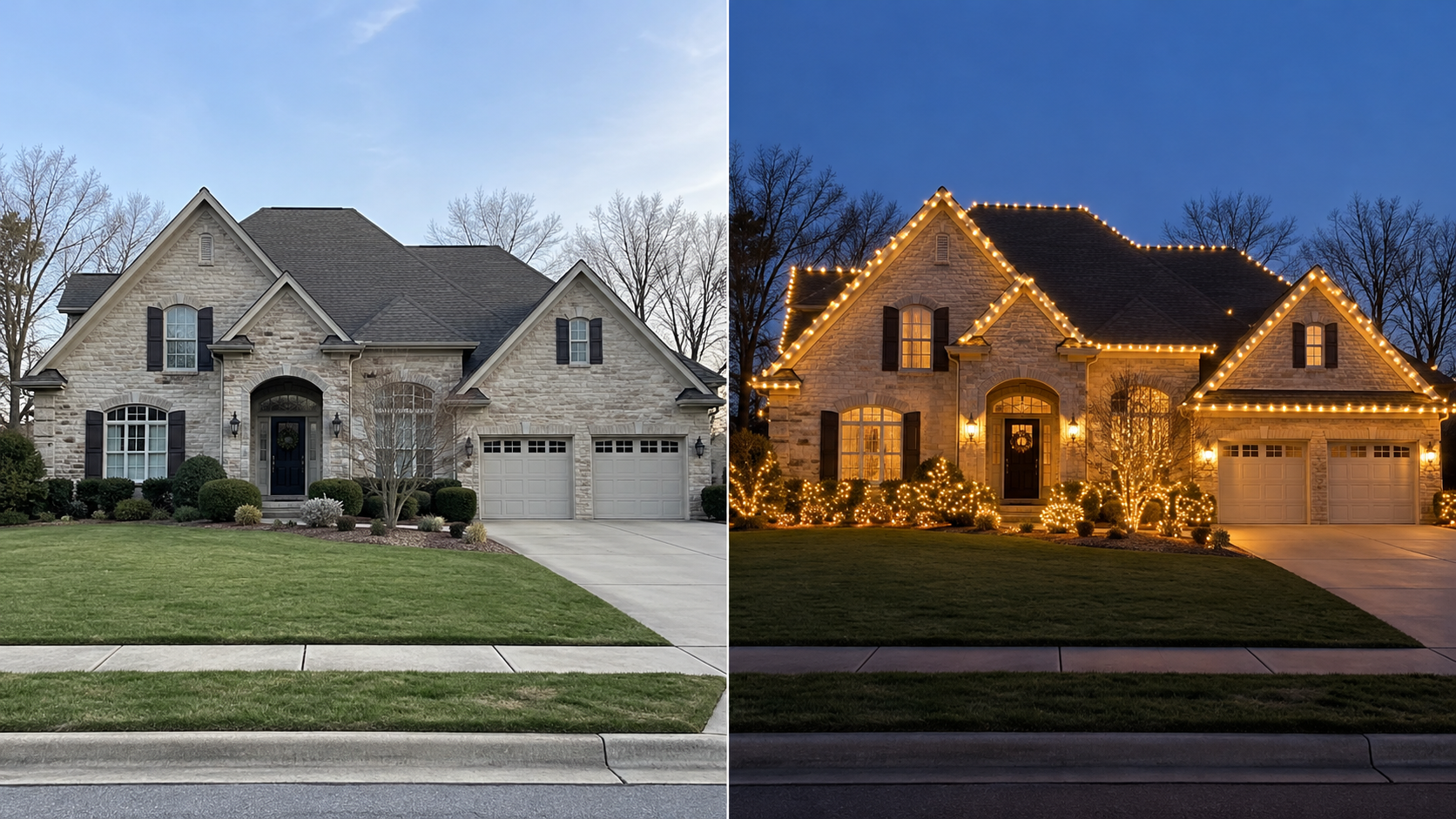
Mock-ups are one of the best ways to close. One installer sent over 200 mock-ups in a short stretch. Two customers said yes for over $20,000 in total, with more pending approval, and the reps made every mock-up better. By the time November arrives, an installer who has done that many can get a quote out in five minutes.
You don't get good at mock-ups by hoping. You get good by doing them. One mock-up that sold a $13,000 job wasn't perfect. The final install didn't match it exactly: the columns were wrapped in mini lights instead of garland, and the roofline wasn't in the picture. It still got the kids' reaction the installer wanted, and the customer bought.
Speed matters too. A fast, beautiful example of the customer's own home gets attention, and if you wait, you lose them. One pressure washing contractor kept going back and forth on a school bid. When he finally sent it, the school had given the job to someone else the day before.
Use ChatGPT for Fast Mock-Ups
For mock-ups and quotes, ChatGPT works well. Go to christmaslightshq.com/ai to get a prompt, put it into ChatGPT, and keep dropping in photos of homes. It can work out measurements by asking whether the garage door is 16 feet or the door is 7 feet tall, and you can choose options such as garland and bows.
Tell it what not to do. The AI sometimes adds a tree or bushes the house doesn't have, so specify exactly where the lights go, and uncheck windows or garage doors if you don't do them. For door-to-door sales, find neighborhoods with potential, pull photos from Zillow and Google, and mock up the house so it catches the owner's eye.
Every No Gets You Closer to a Yes
Closing every job isn't realistic, but every no brings you closer to a yes. If your close rate is 20%, you may need eight no's to get a yes. That's why a contractor who says you can't get $8 to $10 a foot after giving three bids hasn't really tried. Send out 20 bids and you'll probably land around four jobs, and you'll learn how to sell it along the way.
Follow Up Faster and Longer
If you aren't closing, look at your follow-up first. One installer closing at 15% challenged himself to close one job a day. He followed up on estimates sent three weeks earlier that never got a response, and two of them signed.
Respond While the Feeling Is Hot
Speed to lead matters. If it takes three, four, or ten hours to get back to someone, the feeling is gone and you won't get the job. When you talk to the customer, are you excited? Or do you sound flat? If you're not excited, it won't work.
Phone selling works for many installers, including some closing $8 to $10 a foot over the phone. If you have a good voice, build the emotion, ask the right questions, let the customer talk, and get excited when they say something exciting.
Answer Your Phone
One installer was missing almost half his calls. That is a problem, and the phone is where the sale starts.
Use Pictures, Free Jobs, and Reviews to Build Proof
New this year? You need reviews and pictures. Here's how to get them.
Do Family and Friends' Houses First
Do your family's and friends' houses and use the pictures for your portfolio. Ask each one for a review. Training houses are a great way to practice.
Do Free Jobs Only in Two Cases
Free jobs should be rare. There are two times to consider them:
Someone is going through a hard time, such as a child who is seriously ill. Do it for free.
A large, engaging local group, like a mom group. Mom groups are money groups. Offer a free install to the admin, but only if the group is large and engaging and the admin will post three or four times about how amazing the install was.
Either way, go all out. A skimpy roofline isn't marketing. A job that looks amazing gives you pictures and a review.
Show Pictures, Not a Product List
Build a picture book instead of a boring list of colors. A book with photos of the little girl's face and the kids jumping up and down is what sells.
Price and Package the Work Correctly
Trees: For branch wrapping, price per strand. For canopy wrap, typically price per foot of the tree.
Windows: Skip them. Many installers also steer away from garage doors. One finished house skipped the windows and put just one wreath on a window, and it still looked awesome.
Add-ons: They come naturally when you keep selling the emotion through the install. One installer has a Grinch character visit clients during the install as a big upsell. For your lights and supplies, browse Christmas Lights HQ.
Get Your Foundation Right
If your Google Business Profile has window washing reviews and you're moving into holiday lighting, Google sees you as a window cleaner, no matter how many Christmas light reviews you add. Set up a separate company, possibly a DBA, with its own Google Business Profile.
Think about where your marketing money goes, too. One installer put out 25 yard signs and made $18,000. What would happen with 100 signs, or 500? There is no easy marketing, so pick a channel that works and do more of it.
It's Still Early
It's still October. If you're in your first year, you're learning how to do mock-ups, talk on the phone, sell, and install all at once. If you've never installed a house, go install one so you understand how it works. If mid-November arrives and you still have issues, that's a problem to dig into. Right now, keep taking action.
Some installers are already at $200,000 for the month, and others had a $500,000 October. One went from $600,000 toward $1 million this year, and another is at seven figures. None of them has it all perfect. They throw mud at the wall and keep going.
For more training and support, visit ChristmasLights.io or the online class.

Why shouldn't I price Christmas lights by the foot?
Selling by the foot turns the sale into a race to the bottom, because someone will always be cheaper. Installers who sell $2,000 to $4,000 houses sell the emotion and the result instead of the bulbs.
What should I say to sell Christmas lights?
Use words like beautiful, elegant, and amazing, and describe how the kids will react. Avoid talking about per-foot pricing, bulbs, peaks, or LEDs. Learn more at ChristmasLights.io.
Do people really buy Christmas lights on emotion?
Yes. About 90% of people buy on emotion, not logic. Lights are a want, not a need, so ask about kids and grandkids coming home, parties, and childhood memories.
How do I respond when a customer wants a cheaper price?
Don't match a lower number. Tell them about your years in business, your insurance, your lift certification, and your follow-up. Ask whether the comparison is apples to apples.
Should I install lights that customers already own?
No. You can say your insurance won't cover it because you can't know whether the lights are UL rated, damaged, or installed properly the first time. Frame it as a safety issue.
How do I get better at mock-ups?
Do more of them. One installer sent over 200 mock-ups, and the practice made each one better. Try the prompt at Christmas Lights HQ with ChatGPT.
How do I price trees?
For branch wrapping, price per strand. For canopy wrap, typically price per foot of the tree.
When should I do a free job?
Only in two cases: for someone going through a hard time, or for the admin of a large, engaging local group such as a mom group that will post about it several times. Make it look amazing either way.
Why am I not closing jobs?
Check your follow-up first, then your speed to respond, your enthusiasm on the phone, and the number of bids you've sent. A 20% close rate means you need more bids, and following up on old estimates can still produce signups.
Is it too early to worry if I haven't closed many jobs?
It's still October. Keep sending mock-ups, answering the phone, and following up. If you're still having issues in the middle of November, dig deeper. Find more help at ChristmasLights.io.

How to Close More Christmas Light Jobs in 2026: Sell the Feeling, Not the Foot
Installers are closing jobs right now. Some are closing $3,000 jobs. Others are closing $13,000 jobs in parts of the country where people insist you can't charge that. What separates the installers who close from the ones who struggle usually isn't the lights, the bulbs, or the install quality. It's what they're selling.
This guide breaks down how professional installers close more jobs this season: selling emotion instead of per-foot pricing, taking fast and imperfect action with mock-ups, following up, and avoiding the customers who cost you the most. If you want more strategies for growing a Christmas light installation business, start here.
Stop Selling Lights. Start Selling the Feeling.
"I'm just selling Christmas lights" is okay, but it isn't good. Nobody cares about just lights. What you are really selling is a child's face when they walk outside and see the house lit up, the excitement of kids talking a hundred miles a minute, and a mom who tears up for a good reason.
That is why installers who sell $2,000, $3,000, and $4,000 houses don't sell by the foot. If you try to sell by the foot, you will go out of business.
Christmas Lights Are a Want, Not a Need
Because lights are a want, you have to sell on emotion. About 90% of people buy on emotion, not logic. Find out which emotion applies to the customer in front of you. Ask:
Do you have kids coming home?
Do you have any grandkids?
Are you having a party at the house?
Do you remember going to your grandma and grandpa's house when you were a kid?
If a customer has grandkids and you can't close that sale, you're selling the wrong thing. You're selling the bulbs.
Think Like a Memory Maker
Think about how Disney works. A couple of nights there can cost five to ten thousand dollars, and it isn't about the rides. It's about the music, the smells, and how you feel when your child meets their favorite character. A $10,000 purse does the same thing as a $10 purse, because it holds your things. People pay for how it makes them feel.
Christmas lights work the same way. You are not an installer of bulbs. You are a memory maker. Keep the picture of the kids' reaction in your head when you talk to a customer.
The Words You Use Decide the Price You Get
Language may be the most important part of the sale. If you talk about price per foot, the bulbs, the peaks, or the LEDs you use, you're not going to sell at $8 to $12 a foot.
Use words like beautiful, elegant, and amazing instead. Paint the picture: "When your kids come out and see it, they're going to be lit up like light bulbs." Help the customer picture it and envision it, because if they can picture it, they can feel it.
What Happens When You Sell Only the Lights
If all you sell is lights, expect to land at $4, $5, or $6 a foot. Usually the real problem is the sales process, lack of follow-up, or not selling the picture and the emotion.
By contrast, installers who sell the emotion get $10, $12, $14, or even $15 a foot. One Louisiana installer sold an $8 to $9 a foot job for $13,500, in an area where plenty of people say you can't get more than $4 or $5 a foot. Installers in Missouri who report only getting $6 a foot share the state with others getting $8 to $10, including in St. Louis. The market is rarely the limit. The belief is.
Don't Sell by the Foot
If a customer asks you to price by the foot, understand that going cheap puts you in a race you can't win, because someone will always do it for less. If you believe that someone cheaper is ruining the market, that's what you will achieve. If you believe you are making this house look elegant and beautiful, that's what you will sell.
When a Customer Pushes on Price
Don't match a lower number. Show the difference in what they are getting. For example, tell them:
How many years you've been in business
That you carry insurance
That your crew has lift certification
That you follow up and will be there if there's a problem
Then ask whether this is an apples-to-apples comparison or apples to oranges. The cheap option might use clips that fall off, may not show back up, and may not take the lights down. That installer may not have the right insurance or lift certification either. If the lights quit working and nobody shows up, the cheap price ends up costing more.
The Problems Cheap Installs Create
Low-priced work shows up as duct tape and wire nuts on the lights, stripped wires tied together, and burn marks on the gutters. In one case the "professional" lights were incandescents so hot they melted the line. And when an installer who charged too little goes out of business, the homeowner is left with lights half hanging off the house and nobody who answers the phone.
Fewer Customers, Fewer Problems
You do not need to be the best installer in the world to make the most money. One installer lost 20 jobs this year and still ended up only $2,000 to $3,000 below last year. Raise your prices and you do less work and make more money, with fewer complaints and fewer problems.
Cheap customers are the worst customers. They complain the most and ask for more than you agreed to, and a $400 reinstall will cost you more in the end. Don't bid from your own pocket either. You might never pay $13,000 to put lights on a house, but other people will.
What to Say When Customers Want Their Own Lights Installed
Many leads from sites like Thumbtack want you to install lights they already own. You can say no and keep the lead. Try a script like this: "Our insurance won't allow us to put up your lights. We don't know if they're UL rated, whether they've been damaged, or whether they were installed properly the first time. I'm not willing to take the chance of burning down your house with something we weren't trained to install properly." Put it in terms of safety and use some scarcity.
Take Massive Imperfect Action
The installers getting ahead are the ones sending the quote, sending the mock-up, and following up even when it isn't perfect.
Mock-Ups Win Jobs, and Practice Makes Them Better
Mock-ups are one of the best ways to close. One installer sent over 200 mock-ups in a short stretch. Two customers said yes for over $20,000 in total, with more pending approval, and the reps made every mock-up better. By the time November arrives, an installer who has done that many can get a quote out in five minutes.
You don't get good at mock-ups by hoping. You get good by doing them. One mock-up that sold a $13,000 job wasn't perfect. The final install didn't match it exactly: the columns were wrapped in mini lights instead of garland, and the roofline wasn't in the picture. It still got the kids' reaction the installer wanted, and the customer bought.
Speed matters too. A fast, beautiful example of the customer's own home gets attention, and if you wait, you lose them. One pressure washing contractor kept going back and forth on a school bid. When he finally sent it, the school had given the job to someone else the day before.
Use ChatGPT for Fast Mock-Ups
For mock-ups and quotes, ChatGPT works well. Go to christmaslightshq.com/ai to get a prompt, put it into ChatGPT, and keep dropping in photos of homes. It can work out measurements by asking whether the garage door is 16 feet or the door is 7 feet tall, and you can choose options such as garland and bows.
Tell it what not to do. The AI sometimes adds a tree or bushes the house doesn't have, so specify exactly where the lights go, and uncheck windows or garage doors if you don't do them. For door-to-door sales, find neighborhoods with potential, pull photos from Zillow and Google, and mock up the house so it catches the owner's eye.
Every No Gets You Closer to a Yes
Closing every job isn't realistic, but every no brings you closer to a yes. If your close rate is 20%, you may need eight no's to get a yes. That's why a contractor who says you can't get $8 to $10 a foot after giving three bids hasn't really tried. Send out 20 bids and you'll probably land around four jobs, and you'll learn how to sell it along the way.
Follow Up Faster and Longer
If you aren't closing, look at your follow-up first. One installer closing at 15% challenged himself to close one job a day. He followed up on estimates sent three weeks earlier that never got a response, and two of them signed.
Respond While the Feeling Is Hot
Speed to lead matters. If it takes three, four, or ten hours to get back to someone, the feeling is gone and you won't get the job. When you talk to the customer, are you excited? Or do you sound flat? If you're not excited, it won't work.
Phone selling works for many installers, including some closing $8 to $10 a foot over the phone. If you have a good voice, build the emotion, ask the right questions, let the customer talk, and get excited when they say something exciting.
Answer Your Phone
One installer was missing almost half his calls. That is a problem, and the phone is where the sale starts.
Use Pictures, Free Jobs, and Reviews to Build Proof
New this year? You need reviews and pictures. Here's how to get them.
Do Family and Friends' Houses First
Do your family's and friends' houses and use the pictures for your portfolio. Ask each one for a review. Training houses are a great way to practice.
Do Free Jobs Only in Two Cases
Free jobs should be rare. There are two times to consider them:
Someone is going through a hard time, such as a child who is seriously ill. Do it for free.
A large, engaging local group, like a mom group. Mom groups are money groups. Offer a free install to the admin, but only if the group is large and engaging and the admin will post three or four times about how amazing the install was.
Either way, go all out. A skimpy roofline isn't marketing. A job that looks amazing gives you pictures and a review.
Show Pictures, Not a Product List
Build a picture book instead of a boring list of colors. A book with photos of the little girl's face and the kids jumping up and down is what sells.
Price and Package the Work Correctly
Trees: For branch wrapping, price per strand. For canopy wrap, typically price per foot of the tree.
Windows: Skip them. Many installers also steer away from garage doors. One finished house skipped the windows and put just one wreath on a window, and it still looked awesome.
Add-ons: They come naturally when you keep selling the emotion through the install. One installer has a Grinch character visit clients during the install as a big upsell. For your lights and supplies, browse Christmas Lights HQ.
Get Your Foundation Right
If your Google Business Profile has window washing reviews and you're moving into holiday lighting, Google sees you as a window cleaner, no matter how many Christmas light reviews you add. Set up a separate company, possibly a DBA, with its own Google Business Profile.
Think about where your marketing money goes, too. One installer put out 25 yard signs and made $18,000. What would happen with 100 signs, or 500? There is no easy marketing, so pick a channel that works and do more of it.
It's Still Early
It's still October. If you're in your first year, you're learning how to do mock-ups, talk on the phone, sell, and install all at once. If you've never installed a house, go install one so you understand how it works. If mid-November arrives and you still have issues, that's a problem to dig into. Right now, keep taking action.
Some installers are already at $200,000 for the month, and others had a $500,000 October. One went from $600,000 toward $1 million this year, and another is at seven figures. None of them has it all perfect. They throw mud at the wall and keep going.
For more training and support, visit ChristmasLights.io or the online class.
Why shouldn't I price Christmas lights by the foot?
Selling by the foot turns the sale into a race to the bottom, because someone will always be cheaper. Installers who sell $2,000 to $4,000 houses sell the emotion and the result instead of the bulbs.
What should I say to sell Christmas lights?
Use words like beautiful, elegant, and amazing, and describe how the kids will react. Avoid talking about per-foot pricing, bulbs, peaks, or LEDs. Learn more at ChristmasLights.io.
Do people really buy Christmas lights on emotion?
Yes. About 90% of people buy on emotion, not logic. Lights are a want, not a need, so ask about kids and grandkids coming home, parties, and childhood memories.
How do I respond when a customer wants a cheaper price?
Don't match a lower number. Tell them about your years in business, your insurance, your lift certification, and your follow-up. Ask whether the comparison is apples to apples.
Should I install lights that customers already own?
No. You can say your insurance won't cover it because you can't know whether the lights are UL rated, damaged, or installed properly the first time. Frame it as a safety issue.
How do I get better at mock-ups?
Do more of them. One installer sent over 200 mock-ups, and the practice made each one better. Try the prompt at Christmas Lights HQ with ChatGPT.
How do I price trees?
For branch wrapping, price per strand. For canopy wrap, typically price per foot of the tree.
When should I do a free job?
Only in two cases: for someone going through a hard time, or for the admin of a large, engaging local group such as a mom group that will post about it several times. Make it look amazing either way.
Why am I not closing jobs?
Check your follow-up first, then your speed to respond, your enthusiasm on the phone, and the number of bids you've sent. A 20% close rate means you need more bids, and following up on old estimates can still produce signups.
Is it too early to worry if I haven't closed many jobs?
It's still October. Keep sending mock-ups, answering the phone, and following up. If you're still having issues in the middle of November, dig deeper. Find more help at ChristmasLights.io.
Copyright ©2026 All Right Reserved website designed by christmaslights.io
Terms of Service / Privacy Policy
Have questions or need assistance?
Contact us at (855)619-LITE