

Blog
Our Top Blog Posts
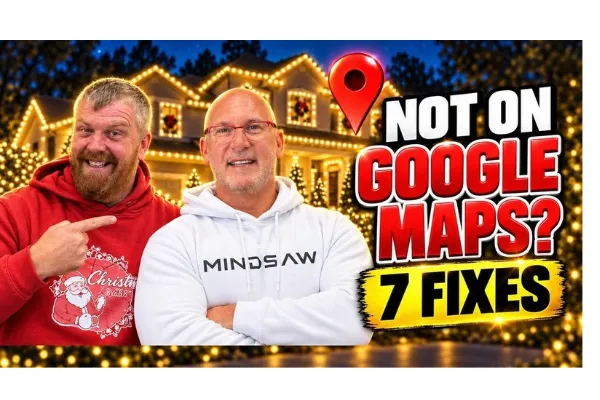
Why You're Not Showing Up on Google Maps for Christmas Lights
If you install Christmas lights for a living, the customers you want are already searching for you. They type "Christmas light installation" into Google, and a handful of local businesses show up at the top. The rest are invisible.
This guide covers how professional installers earn a spot in that top group before the season starts, and why the same steps now matter for AI search tools. If you're a business owner focused on growing a Christmas light installation company, local search is one of the best places to put your time.
Why Google Maps Matters Most for Local Installers
Google's results page has four zones: ads, the Google Maps "map pack," organic website results, and AI answers. For local services, the map pack is the most clicked area on the page. Over 70% of clicks for local services land there, because searchers know those businesses are local.
The Four Zones, Explained
Ads: Usually at the very top, depending on when Google serves them. Click costs vary by industry and city. Lawyer clicks can reach $500 to $700, while pressure washing clicks haven't been seen above $30 to $40. A big city costs more than a smaller market.
Map pack: Local businesses with reviews, a category, and a phone number. Ready-to-hire customers click here.
Organic results: Websites mixed in with big directories like Thumbtack, Angie's List, and Yelp. They're hard to beat and work better for people still researching, such as someone asking whether installers will hang lights on an apartment building.
AI answers: AI mode vets the options and gives a short list of top choices.
For most installers, the map pack is the first target.
Be the Most Popular Installer in Your Area
You don't need to rank nationally. Nobody in Tampa hires an installer from San Francisco. Your job is to be the most popular option inside roughly a 20-mile circle around your business. Think of it as being the Starbucks or the Home Depot of Christmas lighting in your market.
Get listed on local websites, such as your chamber of commerce or a local little league, if they have business listings.
Make sure your business shows a clear location so Google sees you as a company based in that area.
Skip worrying about backlinks from all over the country.
Your own website can say "serving all of Tampa Bay" instead of showing a street address. But other websites should carry your business name, address, and phone number so Google can confirm where you operate.
The Triangle: Website, Google Business Profile, and Reviews
Three things decide who shows up in the map pack and in AI recommendations: your website, your Google Business Profile, and what people say about you in reviews. They have to work together, and they account for about 90% of the result. Everything else is the spice on the steak.
Optimize Your Website With the "Four Kings"
Google needs to know what you do and where you do it. Put both in four places:
Title tag: The text shown at the top of the browser tab.
H1 heading: The main headline. "Welcome to my website" tells Google nothing; a headline with your service and city does.
First sentence: Name the service and the city right away.
Business name: If you can work them in, great.
Doing this puts you well ahead of most competitors.
Website builders come in two types: designers, who make the site look beautiful, and developers, who make the code clear to Google. You need both.
Also confirm Google can see your site at all. Type site:yourwebsite.com into Google. If nothing returns, your pages aren't indexed, and no amount of good design will help you rank.
Set Up Your Google Business Profile Correctly
Your Google Business Profile is the listing in the map pack, and its category is the most important setting.
Match the winners. Search your service in your area and see what ranking competitors use. There is no dedicated "Christmas light service" category. In a sample search, lighting contractor and landscape lighting designer came up.
Pick three to five categories. Google allows up to 10, but more waters them down.
Build a page for every category. Each category needs its own page on your website with your city included, such as
yoursite.com/tampa-christmas-light-installation.Fill out the full description. You get about 1,500 characters. Cover what you do and the areas you serve.
If you run a Christmas light business and a pressure washing business, use two separate profiles. Google decides what you are based on what it sees, and one profile can't be both.
Be careful when changing your business name or categories. Those edits can trigger re-verification.
Earn Reviews That Name the Job and the Town
Reviews matter as much as collecting the second half of a payment. Don't leave a job without one.
In your Google Business Profile, use "ask for review" to copy your review link.
Save it on your phone or email it to yourself.
When the job is done, text it to the customer as they write the check or hand over a card. Customers rarely know how to find your listing on their own.
Put the link or a QR code on your business card or truck.
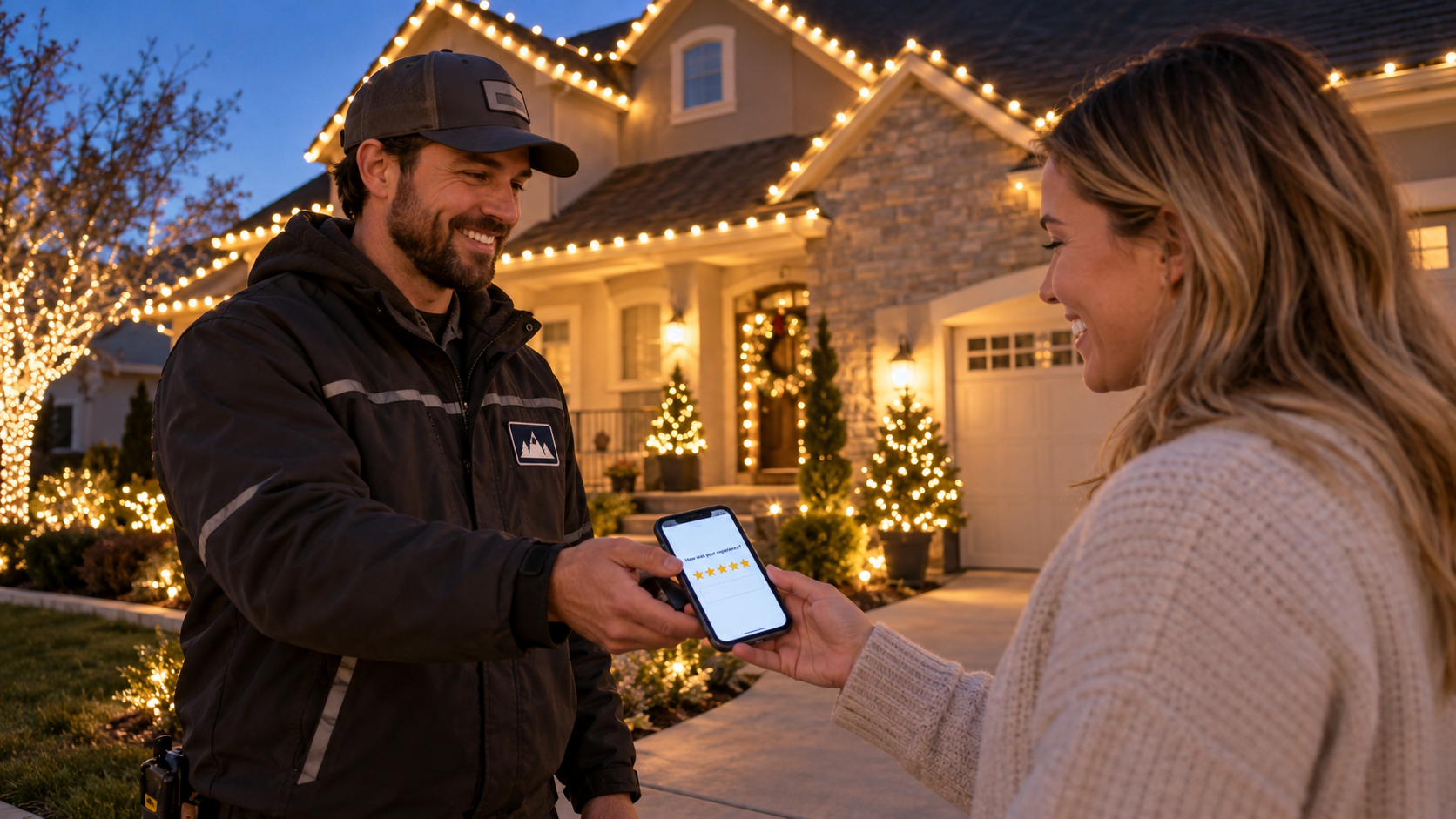
Google doesn't allow you to tell customers to leave five stars. You can give guidance, though: ask them to mention the service you provided and the area where you provided it. A review that says "they're great" carries little weight. One that says you hung Christmas lights in a specific town, or even a neighborhood, tells Google what you did and where.
Ask customers to use your company name rather than an employee's name. Google may filter out reviews that include a person's name.
Why the urgency? If you have 39 reviews now, your competitors may have 300 by next year. AI tools also read your reviews on Google, Yelp, and Facebook.
Answer Your Phone
If customers call through your Google listing and you don't answer, Google can remove you from the map.
Understand Proximity and How to Extend Your Reach
An address-based business beats a service-area business every time. If you're good, you can rank within about 10 miles of your address. If you're very good, about 20. It depends on your market: a crowded area like Wall Street may only give you a block, while a lawyer in Utah may get 20 miles.
Reviews can stretch that reach. A lot of reviews from a nearby town can make Google see you as the better choice there, even though you're farther away.
To rank 30 or 40 miles away, add another Google Business Profile for that area. It needs a real location, since Google can spot a P.O. box or UPS box, plus its own phone number and landing page. Expect to verify it, possibly by video. Check any phone number's history before you use it, and check any domain name's history before you buy it. If either was used for something else years ago, you may never rank it.
Don't start with the profile. Build the website first, add the business to directories with the new address, and publish a couple of press releases. Let those signals sit for two to three months, then apply. A profile on a clean slate is much harder to approve, and in categories like locksmiths and roofers it can be nearly impossible.
Use Directories to Confirm What You Do and Where
Directories, also called citations, back up the signals on your website and profile. Each listing has your name, address, phone number, website, service, and area. Together they tell Google and AI tools you're a Christmas light installer in your city.
Examples include Yelp, Manta, Merchant Circle, Thumbtack, white pages, Angie's List, HomeAdvisor, MapQuest, Foursquare, and Yellow Pages. A Facebook business page and a Better Business Bureau listing are worth having too, and a basic BBB listing is free.
Get listed in three kinds of directories:
Industry directories: Christmas light and holiday lighting directories confirm what you do.
Local directories: A Tampa Bay-style directory confirms where you operate, even if it has nothing to do with lighting.
General business directories: The usual big names.
To build your list quickly, ask ChatGPT, Gemini, or Claude for the best directories for Christmas light installation, and ask for sign-up links.
Quality beats quantity. You don't want 300 listings on poor directories. Aim for the ones AI tools recommend, because that's where they pull information. When someone asks an AI tool for the best installer near them, it shows where its answer came from: your website, Yelp, or another site's article about you.
You can hire someone on Fiverr to add you to a list of directories for around $50, or hand it to a kid over a weekend. It's a repeatable task.
Keep your name, address, and phone number identical everywhere. Google has caught up on small format differences, but consistency is still a safe habit. You also need to include your address in directory listings. You don't have to put it on your website, but without enough citations you won't rank in Google Maps.
Use Press Releases as a Trust Signal
A press release is an article about your business written in the third person and sent to news outlets. It's a strong trust signal, and it counts as a citation when it includes your business name, address, and phone number. Fiverr and other companies will write them. During the Christmas season, consider one every two weeks on different subjects.
Show Your Work
Stop keeping your work a secret.
Post before-and-after photos on your website, Google Business Profile, and social media, for installs and takedowns.
Protect privacy by naming only the block and city, like "the 100 block of Maple Street in Tampa Bay."
Show your team in branded shirts. It builds know, like, and trust.
Photograph your service area so Google connects you with it. GPS data in photos no longer counts, since Google Business Profile strips it out.
Use a clear logo. Google needs to recognize your brand.
Great photos start with great displays. You can find Christmas lights and supplies at Christmas Lights HQ.
Try Bing for a Quick, Low-Cost Test
If all of this feels like too much, set up a pay-per-click campaign on Bing that sends traffic to your website. Some people never change their default browser from Bing. Clicks can be far cheaper: something that costs $25 per click on Google might cost $5 on Bing. A couple hundred dollars between now and the season may bring in a couple of jobs.
Also track your calls. If you have different phone numbers for ads, your Google profile, and your website, you can see which one brings in the most money.
Quick-Win Checklist for This Season
Make sure your name, address, and phone number are correct and consistent everywhere.
Check your Google Business Profile category against ranking competitors.
Put your service and city in your title tag, H1, and first sentence.
Save your review link on your phone and send it at every job.
Answer every call that comes through Google.
Post before-and-after photos.
Get listed in industry, local, and general directories.
Publish press releases regularly.
For more strategies on growing your installation business, visit ChristmasLights.io. For supplies, see Christmas Lights HQ.

Is Google still relevant for Christmas light installers?
Yes. The map pack is the most clicked area for local services, with over 70% of clicks, and AI tools draw on your website, Google profile, and reviews when picking top choices. Learn more at ChristmasLights.io.
What three things decide who ranks in the map pack?
Your website, your Google Business Profile, and your reviews. They have to work together, and they make up about 90% of the result.
What are the "four kings" for a website?
Your service and city should appear in your title tag, H1 heading, first sentence, and ideally your business name.
Which Google Business Profile category should a Christmas light installer pick?
There's no dedicated Christmas light category. Check what ranking competitors use. In a sample search, lighting contractor and landscape lighting designer appeared. Pick three to five categories and build a page for each.
How should I ask customers for reviews?
Copy your review link, save it on your phone, and text it at the end of each job. Don't tell customers to leave five stars. Ask them to mention the service and the area.
Should customers name my employees in reviews?
No. Google may filter out reviews that include a person's name. Have customers use your company name instead.

How far from my address can I rank?
If you're good, about 10 miles. If you're very good, about 20. It depends on your market, and many reviews from a nearby town can help you rank there.
Should I use one Google Business Profile for lights and pressure washing?
No. Use a separate profile for each business, because Google decides what you are based on what it sees.
How important are directories and citations?
Very. They confirm what you do and where you do it, and AI tools pull from them. Without enough citations, you won't rank in Google Maps.
What's the cheapest way to start getting leads if I'm overwhelmed?
Run a pay-per-click campaign on Bing. Clicks can cost far less than on Google, such as $5 versus $25, and a couple hundred dollars before the season may bring in a few jobs. Find more help at ChristmasLights.io.

Why You're Not Showing Up on Google Maps for Christmas Lights
If you install Christmas lights for a living, the customers you want are already searching for you. They type "Christmas light installation" into Google, and a handful of local businesses show up at the top. The rest are invisible.
This guide covers how professional installers earn a spot in that top group before the season starts, and why the same steps now matter for AI search tools. If you're a business owner focused on growing a Christmas light installation company, local search is one of the best places to put your time.
Why Google Maps Matters Most for Local Installers
Google's results page has four zones: ads, the Google Maps "map pack," organic website results, and AI answers. For local services, the map pack is the most clicked area on the page. Over 70% of clicks for local services land there, because searchers know those businesses are local.
The Four Zones, Explained
Ads: Usually at the very top, depending on when Google serves them. Click costs vary by industry and city. Lawyer clicks can reach $500 to $700, while pressure washing clicks haven't been seen above $30 to $40. A big city costs more than a smaller market.
Map pack: Local businesses with reviews, a category, and a phone number. Ready-to-hire customers click here.
Organic results: Websites mixed in with big directories like Thumbtack, Angie's List, and Yelp. They're hard to beat and work better for people still researching, such as someone asking whether installers will hang lights on an apartment building.
AI answers: AI mode vets the options and gives a short list of top choices.
For most installers, the map pack is the first target.
Be the Most Popular Installer in Your Area
You don't need to rank nationally. Nobody in Tampa hires an installer from San Francisco. Your job is to be the most popular option inside roughly a 20-mile circle around your business. Think of it as being the Starbucks or the Home Depot of Christmas lighting in your market.
Get listed on local websites, such as your chamber of commerce or a local little league, if they have business listings.
Make sure your business shows a clear location so Google sees you as a company based in that area.
Skip worrying about backlinks from all over the country.
Your own website can say "serving all of Tampa Bay" instead of showing a street address. But other websites should carry your business name, address, and phone number so Google can confirm where you operate.
The Triangle: Website, Google Business Profile, and Reviews
Three things decide who shows up in the map pack and in AI recommendations: your website, your Google Business Profile, and what people say about you in reviews. They have to work together, and they account for about 90% of the result. Everything else is the spice on the steak.
Optimize Your Website With the "Four Kings"
Google needs to know what you do and where you do it. Put both in four places:
Title tag: The text shown at the top of the browser tab.
H1 heading: The main headline. "Welcome to my website" tells Google nothing; a headline with your service and city does.
First sentence: Name the service and the city right away.
Business name: If you can work them in, great.
Doing this puts you well ahead of most competitors.
Website builders come in two types: designers, who make the site look beautiful, and developers, who make the code clear to Google. You need both.
Also confirm Google can see your site at all. Type site:yourwebsite.com into Google. If nothing returns, your pages aren't indexed, and no amount of good design will help you rank.
Set Up Your Google Business Profile Correctly
Your Google Business Profile is the listing in the map pack, and its category is the most important setting.
Match the winners. Search your service in your area and see what ranking competitors use. There is no dedicated "Christmas light service" category. In a sample search, lighting contractor and landscape lighting designer came up.
Pick three to five categories. Google allows up to 10, but more waters them down.
Build a page for every category. Each category needs its own page on your website with your city included, such as
yoursite.com/tampa-christmas-light-installation.Fill out the full description. You get about 1,500 characters. Cover what you do and the areas you serve.
If you run a Christmas light business and a pressure washing business, use two separate profiles. Google decides what you are based on what it sees, and one profile can't be both.
Be careful when changing your business name or categories. Those edits can trigger re-verification.
Earn Reviews That Name the Job and the Town
Reviews matter as much as collecting the second half of a payment. Don't leave a job without one.
In your Google Business Profile, use "ask for review" to copy your review link.
Save it on your phone or email it to yourself.
When the job is done, text it to the customer as they write the check or hand over a card. Customers rarely know how to find your listing on their own.
Put the link or a QR code on your business card or truck.
Google doesn't allow you to tell customers to leave five stars. You can give guidance, though: ask them to mention the service you provided and the area where you provided it. A review that says "they're great" carries little weight. One that says you hung Christmas lights in a specific town, or even a neighborhood, tells Google what you did and where.
Ask customers to use your company name rather than an employee's name. Google may filter out reviews that include a person's name.
Why the urgency? If you have 39 reviews now, your competitors may have 300 by next year. AI tools also read your reviews on Google, Yelp, and Facebook.
Answer Your Phone
If customers call through your Google listing and you don't answer, Google can remove you from the map.
Understand Proximity and How to Extend Your Reach
An address-based business beats a service-area business every time. If you're good, you can rank within about 10 miles of your address. If you're very good, about 20. It depends on your market: a crowded area like Wall Street may only give you a block, while a lawyer in Utah may get 20 miles.
Reviews can stretch that reach. A lot of reviews from a nearby town can make Google see you as the better choice there, even though you're farther away.
To rank 30 or 40 miles away, add another Google Business Profile for that area. It needs a real location, since Google can spot a P.O. box or UPS box, plus its own phone number and landing page. Expect to verify it, possibly by video. Check any phone number's history before you use it, and check any domain name's history before you buy it. If either was used for something else years ago, you may never rank it.
Don't start with the profile. Build the website first, add the business to directories with the new address, and publish a couple of press releases. Let those signals sit for two to three months, then apply. A profile on a clean slate is much harder to approve, and in categories like locksmiths and roofers it can be nearly impossible.
Use Directories to Confirm What You Do and Where
Directories, also called citations, back up the signals on your website and profile. Each listing has your name, address, phone number, website, service, and area. Together they tell Google and AI tools you're a Christmas light installer in your city.
Examples include Yelp, Manta, Merchant Circle, Thumbtack, white pages, Angie's List, HomeAdvisor, MapQuest, Foursquare, and Yellow Pages. A Facebook business page and a Better Business Bureau listing are worth having too, and a basic BBB listing is free.
Get listed in three kinds of directories:
Industry directories: Christmas light and holiday lighting directories confirm what you do.
Local directories: A Tampa Bay-style directory confirms where you operate, even if it has nothing to do with lighting.
General business directories: The usual big names.
To build your list quickly, ask ChatGPT, Gemini, or Claude for the best directories for Christmas light installation, and ask for sign-up links.
Quality beats quantity. You don't want 300 listings on poor directories. Aim for the ones AI tools recommend, because that's where they pull information. When someone asks an AI tool for the best installer near them, it shows where its answer came from: your website, Yelp, or another site's article about you.
You can hire someone on Fiverr to add you to a list of directories for around $50, or hand it to a kid over a weekend. It's a repeatable task.
Keep your name, address, and phone number identical everywhere. Google has caught up on small format differences, but consistency is still a safe habit. You also need to include your address in directory listings. You don't have to put it on your website, but without enough citations you won't rank in Google Maps.
Use Press Releases as a Trust Signal
A press release is an article about your business written in the third person and sent to news outlets. It's a strong trust signal, and it counts as a citation when it includes your business name, address, and phone number. Fiverr and other companies will write them. During the Christmas season, consider one every two weeks on different subjects.
Show Your Work
Stop keeping your work a secret.
Post before-and-after photos on your website, Google Business Profile, and social media, for installs and takedowns.
Protect privacy by naming only the block and city, like "the 100 block of Maple Street in Tampa Bay."
Show your team in branded shirts. It builds know, like, and trust.
Photograph your service area so Google connects you with it. GPS data in photos no longer counts, since Google Business Profile strips it out.
Use a clear logo. Google needs to recognize your brand.
Great photos start with great displays. You can find Christmas lights and supplies at Christmas Lights HQ.
Try Bing for a Quick, Low-Cost Test
If all of this feels like too much, set up a pay-per-click campaign on Bing that sends traffic to your website. Some people never change their default browser from Bing. Clicks can be far cheaper: something that costs $25 per click on Google might cost $5 on Bing. A couple hundred dollars between now and the season may bring in a couple of jobs.
Also track your calls. If you have different phone numbers for ads, your Google profile, and your website, you can see which one brings in the most money.
Quick-Win Checklist for This Season
Make sure your name, address, and phone number are correct and consistent everywhere.
Check your Google Business Profile category against ranking competitors.
Put your service and city in your title tag, H1, and first sentence.
Save your review link on your phone and send it at every job.
Answer every call that comes through Google.
Post before-and-after photos.
Get listed in industry, local, and general directories.
Publish press releases regularly.
For more strategies on growing your installation business, visit ChristmasLights.io. For supplies, see Christmas Lights HQ.
Is Google still relevant for Christmas light installers?
Yes. The map pack is the most clicked area for local services, with over 70% of clicks, and AI tools draw on your website, Google profile, and reviews when picking top choices. Learn more at ChristmasLights.io.
What three things decide who ranks in the map pack?
Your website, your Google Business Profile, and your reviews. They have to work together, and they make up about 90% of the result.
What are the "four kings" for a website?
Your service and city should appear in your title tag, H1 heading, first sentence, and ideally your business name.
Which Google Business Profile category should a Christmas light installer pick?
There's no dedicated Christmas light category. Check what ranking competitors use. In a sample search, lighting contractor and landscape lighting designer appeared. Pick three to five categories and build a page for each.
How should I ask customers for reviews?
Copy your review link, save it on your phone, and text it at the end of each job. Don't tell customers to leave five stars. Ask them to mention the service and the area.
Should customers name my employees in reviews?
No. Google may filter out reviews that include a person's name. Have customers use your company name instead.
How far from my address can I rank?
If you're good, about 10 miles. If you're very good, about 20. It depends on your market, and many reviews from a nearby town can help you rank there.
Should I use one Google Business Profile for lights and pressure washing?
No. Use a separate profile for each business, because Google decides what you are based on what it sees.
How important are directories and citations?
Very. They confirm what you do and where you do it, and AI tools pull from them. Without enough citations, you won't rank in Google Maps.
What's the cheapest way to start getting leads if I'm overwhelmed?
Run a pay-per-click campaign on Bing. Clicks can cost far less than on Google, such as $5 versus $25, and a couple hundred dollars before the season may bring in a few jobs. Find more help at ChristmasLights.io.
Copyright ©2026 All Right Reserved website designed by christmaslights.io
Terms of Service / Privacy Policy
Have questions or need assistance?
Contact us at (855)619-LITE