

Invisilights
Permanent Holiday Lighting
Customizable Lights for Any Event
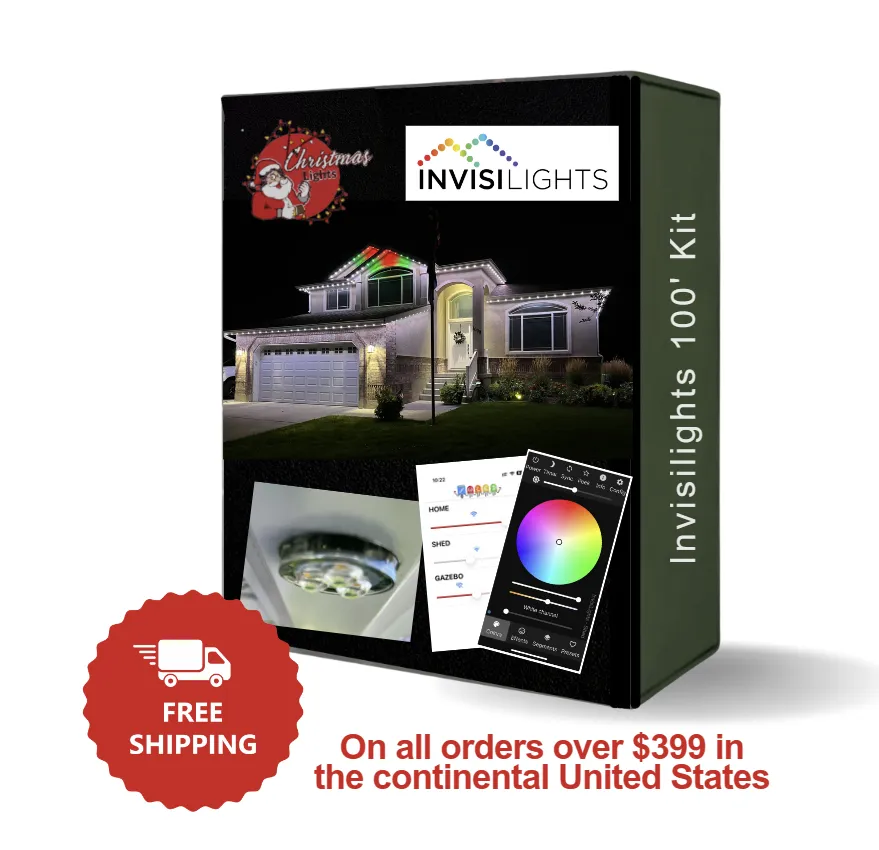
Permanent Christmas Lights 24V Kit
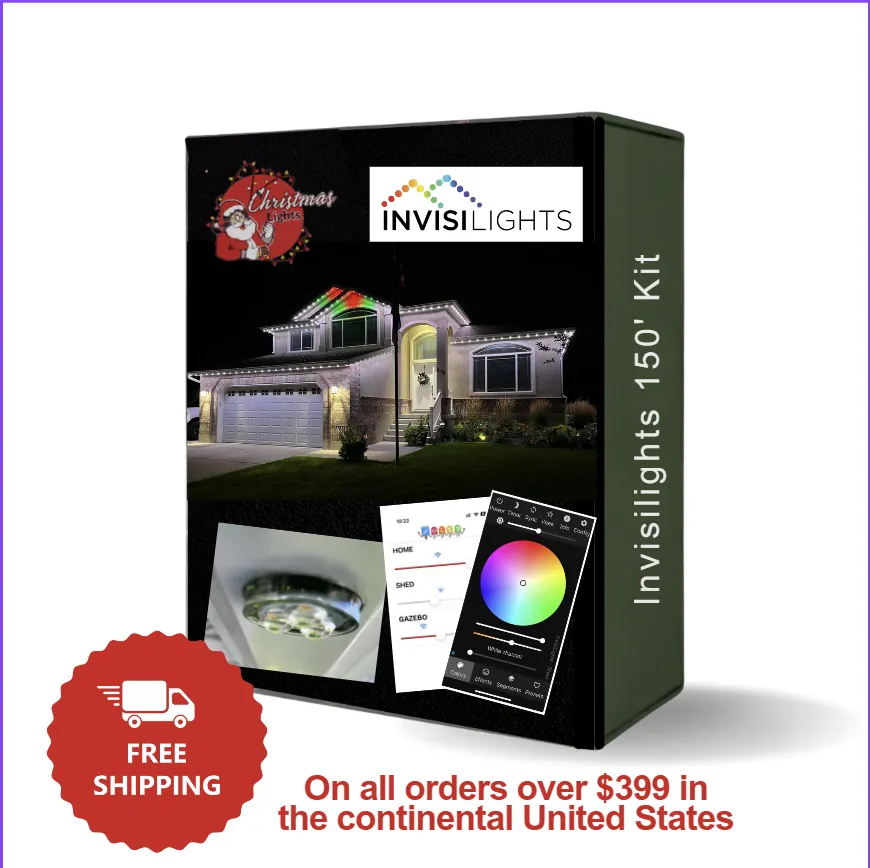
Permanent Christmas Lights 36V Kit
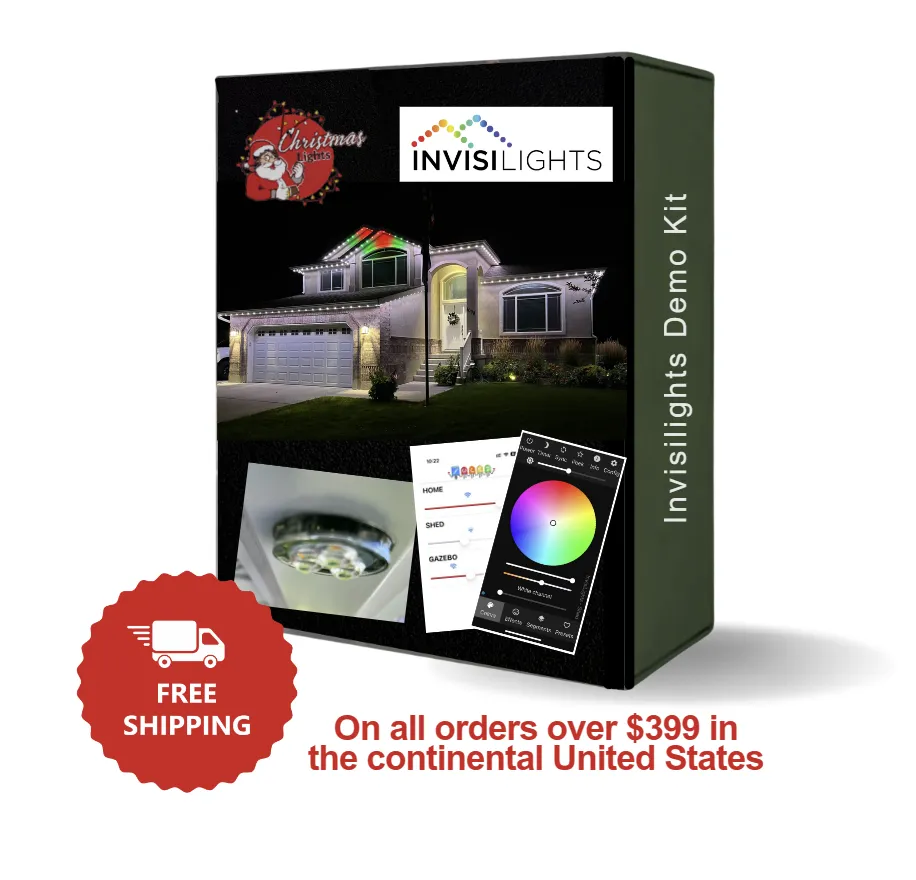
Permanent Christmas Lights
Demo Kit
WHAT YOU NEED TO KNOW BEFORE ORDERING
Total Linear footage of the installation.
This should include footage of lights and channel along with any Extensions or jumps you'll need to make
Where your controller box will be located
This is the most important step to planning out an installation, Without knowing where the controller will be you'll have no way to know the right materials to buy when it comes to extensions and accessories.
What Voltage system you want to use 24V or 36V
This is a decision you will make based on convince and efficiency, the most important factor with this will be the footage of each lighting run. If the total footage of a run is over 100' you'll need to either power inject on that run or switch to the 36V system that can go up to 200' before needing power injection.
Draw a Map
By mapping out the installation you'll be able to better understand and plan out the install giving you a better idea of what all you'll need to purchase to complete the job.
take the measurements from your map and add up the total number of materials you'll need.
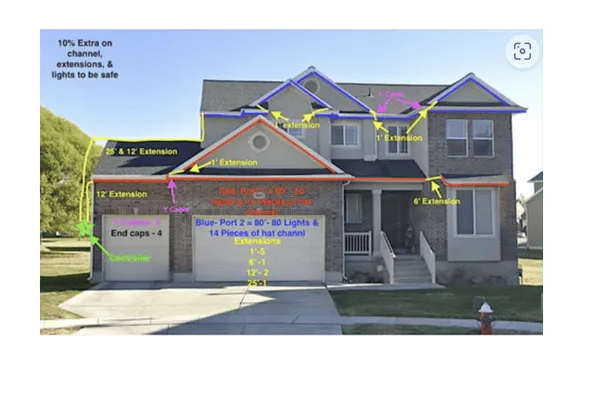
For the Map out example above the total material breakdown is:
System Voltage: 36V
Color of channel: Cameo
Channel Type: Hat
Total Lighted Footage: 160'
Power injection: NO
Controller: 1
Channel: 27- 6' sticks
Screws- 200
Lights: 175
1' extensions-7
6' Extensions-2
12' extensions-2
25- extensions- 1
Y Cables- 3
End caps- pack of 10
Absolute necessities
-Controller
-Lights
-Channel
-Screws
-Extension cables
Other Accessories
-Y Cable
-End Caps
- Signal boosters
-Power injection material
When would you need to power inject?
The controller will come with 3 outputs for your lighting runs, each 36V output can do a Max of 200', the 24V system can do a max of 100'. After that max you'll need to inject power. After you do so you can go an additional 100' with the 24V or 200' with the 36V system.
Power injection is needed due to voltage drop, voltage drop happens due to the length traveled away from the power source along with the gauge of the wire. due to the gauge of wire the lights and extensions run on it drops in voltage enough at 100' with the 24V system and 200' with the 36V system to effect the lights performance requiring a addition of power (Power Injection)
Materials needed for power injection 36V
Power injection pig female pig tale
Power injection Extension cables
Power injection T Cable.
Materials needed to Power inject 24V
16/2 - 12/2 Low voltage landscaping wire
Cut and Splice T cable
Water Proof Wire connectors
Discover the Transformative Power of Invisilights: Expertly Installed Permanent Lighting Solutions
Enhance your installation offerings with Invisilights, the premier permanent lighting solution designed for seamless integration into any property’s exterior architecture.
Crafted with high-quality aluminum channels and advanced LED technology, Invisilights delivers durability and superior energy efficiency—key selling points for your clients seeking long-lasting, cost-effective lighting solutions. Our system not only provides brilliant illumination but also boosts the aesthetic appeal and functionality of any home.
Offer your clients peace of mind with our robust 5-year warranty, ensuring reliable performance and minimal maintenance needs. This warranty supports your commitment to quality and customer satisfaction, making it easier for you to sell and install with confidence.
Our flexible, programmable system allows you to meet any client’s specific desires—from subtle accents to full-scale holiday displays—making it an adaptable choice for various applications. With Invisilights, you can cater to a wide range of preferences and needs, increasing your market reach and customer retention.
Choose Invisilights for your installations and add a transformative product to your portfolio that will impress clients and ensure your services remain in demand for years to come.
Frequently Asked Questions
What exactly comes in the 150' InvisiLights permanent outdoor lighting kit?
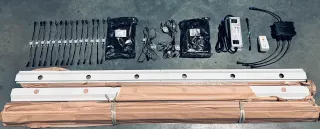
The InvisiLights kit is comprehensively equipped to ensure you have everything you need for installation. Each kit includes:
27 sticks of 6-foot Aluminum Channel to house and protect the lighting elements.
150 feet of dynamic RGBW LED Lights, which includes 23 sets of 6-count and 14 sets of 1-count lights, allowing for extensive coverage and diverse configuration options.
2 Data Boosters to enhance signal strength across the lighting installation, ensuring consistent control and color output.
A 320W Power Supply capable of supporting up to 190 puck lights, providing ample power for even the most extensive setups.
1 GFCI Outlet Adapter to ensure safe outdoor electrical connections.
1 Controller that allows you to manage and customize the lighting effects easily.
Will I need any additional components besides what's included in the Invisilights permanent lighting kit?
While the Invisilights kit comes with all the essential components for a standard installation, there are a couple of scenarios where you might need additional items:
Jumper Wires: Depending on the layout of your installation and the number of gaps or 'jumps' between the sections of lights, you may require jumper wires. These wires help bridge the gaps without losing the continuity of the light sequence, ensuring a smooth and uniform display across more complex architectures.
Data Boosters: If any section of your lighting setup is more than 15 feet away from the control box, additional data boosters will be necessary. Data boosters help maintain the integrity and brightness of the lights over longer distances, ensuring consistent performance throughout your installation.
Can I choose the color of the aluminum channel for my InvisiLights kit?
Yes, you can select your preferred color for the aluminum channel to match your home’s exterior or personal taste. Please make sure to specify your color choice in the notes at checkout when you place your order.
How do the included components of the InvisiLights kit enhance the lighting system?
Each component in the InvisiLights kit plays a crucial role in creating an effective and stunning lighting display:
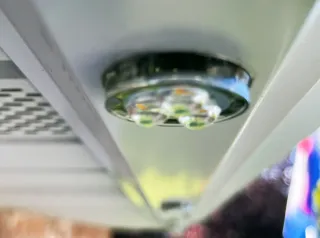
Aluminum Channels: Provide a durable, weather-resistant housing for the LED lights, which helps in maintaining a clean and nearly invisible look during the day.
RGBW LED Lights: Offer vibrant, full-spectrum color and white light combinations, making it perfect for any occasion from festive holidays to elegant ambient lighting.
Data Boosters: Ensure that the signal remains strong across longer distances, which is crucial for larger installations.
Power Supply: Designed to efficiently handle the energy needs of the system without overload, ensuring safety and durability.
GFCI Outlet Adapter: Adds an extra layer of safety by protecting against electrical shorts and surges, particularly important in outdoor settings.
Controller: Provides the flexibility to customize and control the lighting sequences, colors, and patterns right from your smartphone or controller, adding convenience and advanced functionality to your lighting system.
Can I use Invisilights year-round?
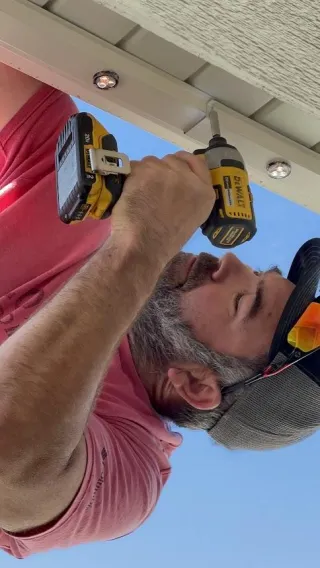
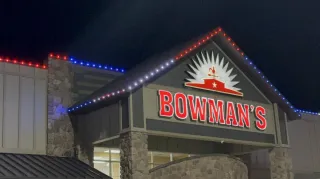
Absolutely! Invisilights are designed for versatile use throughout all seasons. Whether you're celebrating a special occasion, setting a mood for a party, Love your favorite sports team, or simply enhancing your home's ambiance, our lighting systems provide the perfect solution for any event, big or small.
Can I set timers and events for Invisilights?
Yes, Invisilights feature advanced programmable settings that allow you to schedule lighting for specific events and automate timers. This functionality ensures that your lighting preferences are perfectly aligned with your lifestyle, turning on and off at predetermined times without any manual intervention.
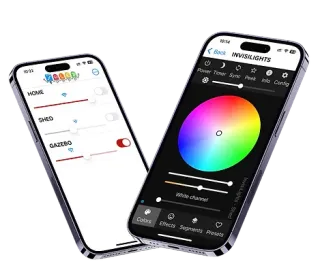
Is it possible to achieve warm or soft white with Invisilights?
Absolutely, Invisilights are equipped with RGBW technology, which includes a dedicated white LED alongside the standard red, green, and blue LEDs. This addition allows the system to produce authentic warm white, soft white, and various other shades of white with greater accuracy and intensity compared to traditional RGB systems. This capability ensures that you can effortlessly tailor the lighting to fit the desired ambiance and aesthetic of any environment, providing precise control over both vibrant colors and the subtlety of different white tones.
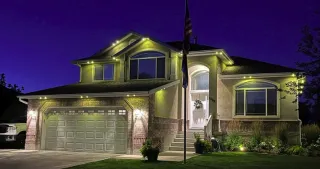
How do you ship your product?
Our products are shipped directly from our warehouse using reliable shipping carriers to ensure timely and safe delivery. Each product is securely packaged to prevent damage during transit, and we provide tracking information so you can follow your order’s journey to your doorstep.
Where are the controller and power supplies installed?
The controller and power supplies for Invisilights are typically installed in an accessible location such as a garage or utility room. These components connect to your home’s WiFi network, allowing seamless control over the lighting system via our user-friendly mobile app.
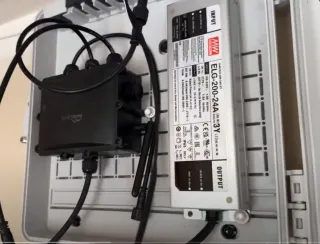
How long do Invisilights last?
Invisilights are engineered to last, with each LED bulb boasting a lifespan of over 50,000 hours. Given a typical usage of 10 hours per night, this translates to approximately 5,000 nights. This means your Invisilights could illuminate your home's exterior for nearly 14 years under these conditions, ensuring that your investment not only adds beauty but also long-term value to your property.
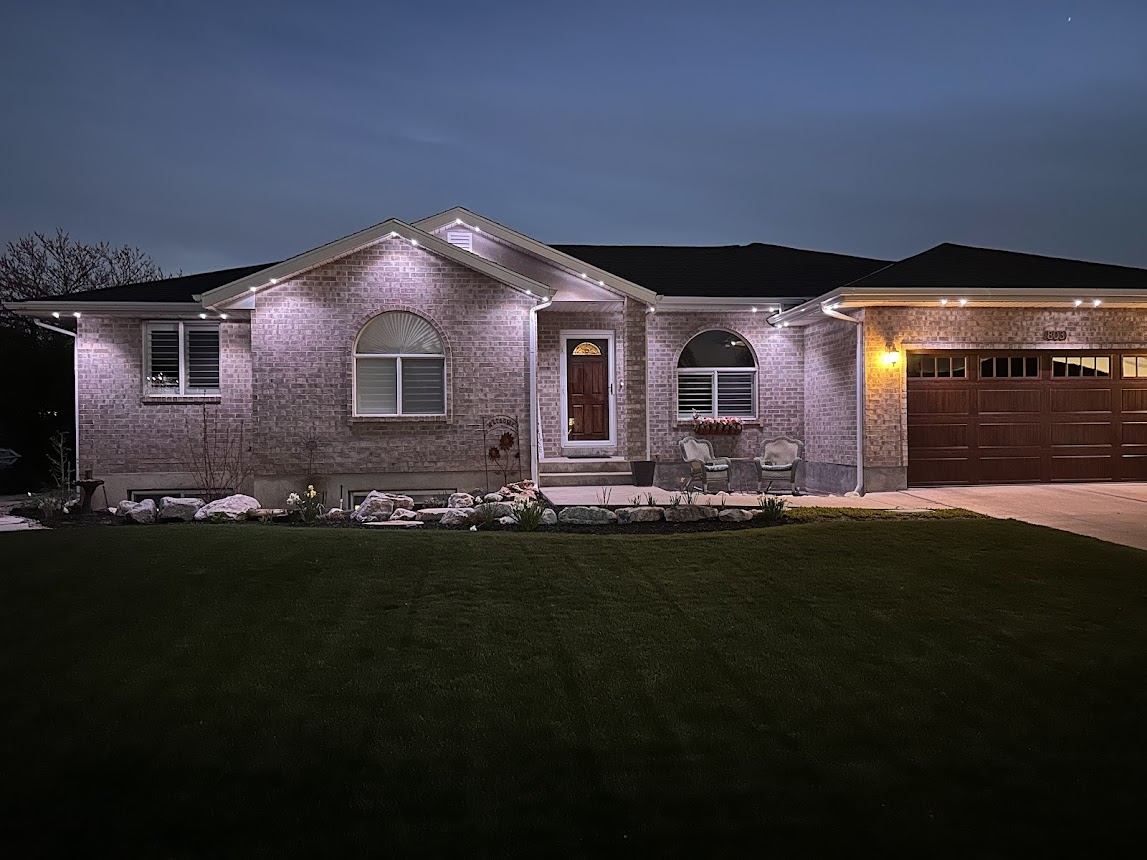
Are Invisilights dimmable?
Yes, all Invisilights are fully dimmable. This feature allows you to adjust the intensity of the light to suit various occasions, from a soft glow for a romantic evening to bright, vibrant colors for a festive celebration.
What types of custom channels are available?
Invisilights offers two types of custom channels, available in 40 different colors, ensuring a nearly invisible installation. These channels are designed to blend seamlessly with your home’s architecture, providing discreet yet effective lighting.

Can I control different zones independently?
Yes, the Invisilights system supports multiple zones which can be controlled independently or synchronized. This functionality allows for intricate lighting designs that can vary across different areas of your home, enhancing the overall impact and utility of your installation.
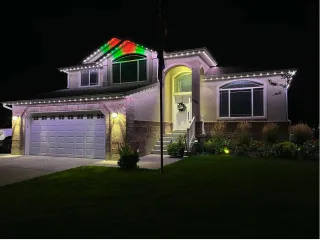
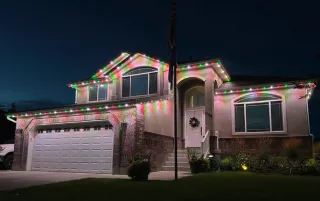
What is outdoor permanent lighting?
Permanent lighting refers to architectural-grade lighting systems that are installed permanently on your property to provide year-round illumination.
How does permanent lighting differ from traditional holiday lighting?
Unlike traditional holiday lighting, which is typically temporary and used only during specific seasons, permanent lighting is installed once and can be used throughout the year for various occasions
Discover Expert Tips on Our Blog

How Landscape Lighting Principles Can Grow Your Christmas Lights Installation Business
The outdoor lighting industry has experienced explosive growth over the past five years. For Christmas lights installers looking to scale their operations and increase revenue, understanding the fundamentals that make landscape lighting successful reveals a blueprint for sustainable business growth. The strategies, pricing models, and marketing approaches that work in landscape lighting translate directly to building a thriving seasonal lighting business.
Understanding the Landscape Lighting to Christmas Lights Connection
Many successful service business owners operate across multiple seasonal lighting verticals. Christmas lights represent a concentrated revenue opportunity during Q4, while landscape lighting provides year-round income potential. Both businesses share fundamental principles: design expertise, technical installation skills, customer relationship management, and strategic pricing.
The transition from one service vertical to another isn't complicated. As professionals in this space have discovered, the core competencies—understanding light placement, fixture selection, wiring systems, and customer preferences—remain consistent. What changes is the seasonal focus and design aesthetic.
Why Christmas Lights Installers Should Study Landscape Lighting Success
Landscape lighting professionals have already solved many problems that Christmas lights installers face:
Design methodology: Understanding how to position lights for maximum visual impact
Customer communication: Explaining technical choices in accessible language
Pricing psychology: Moving away from per-light pricing to value-based pricing
Marketing strategies: Leveraging social proof and community relationships
Operational efficiency: Managing multiple jobs simultaneously with structured systems
By studying how landscape lighting businesses have scaled to six and seven-figure revenues, Christmas lights installers gain access to proven operational frameworks without requiring years of trial and error.
The Biggest Mistake: Overcomplicating Your Offering
Professional lighting installers across all verticals identify one consistent obstacle: the tendency to overcomplicate what is fundamentally a straightforward service.
Keep Your Service Simple
Landscape lighting professionals have learned that excessive technical jargon and complex design frameworks actually discourage sales. When customers feel overwhelmed by terminology—angles of beam spread, lumens calculations, fixture specifications, color temperature ratios—they become hesitant to commit.
The reality is simpler: When the customer likes the design and you execute it well, it's good work.
Christmas lights follow the same principle. A customer wants their home to look festive, welcoming, and well-lit. While you understand C9 versus C6 bulbs, warm white versus cool white, and optimal spacing, these technical considerations should inform your recommendations without dominating the sales conversation.
The professionals earning the highest revenues across lighting businesses share a common trait: they explain technical choices in terms of customer outcomes, not specification details.
Stop Over-Selling During Initial Consultations
One tested strategy that landscape lighting professionals use effectively is the "undersell then upsell" approach. Rather than presenting the maximum light configuration during the initial estimate, successful installers recommend a reasonable baseline with clear communication that additional lights can be added later.
This approach accomplishes several objectives:
Reduces customer sticker shock
Demonstrates honesty and customer-first thinking
Creates future revenue opportunities
Increases close rates by lowering initial investment barriers
Builds trust for larger subsequent projects
For Christmas lights, this might mean recommending roofline and feature lighting during the initial install, with potential add-ons like pathway lights or accent lighting presented as optional enhancements.

Pricing Strategy: Moving Beyond Per-Light Calculations
Professional lighting installers have moved away from simple per-light pricing models. This shift reflects an important reality: charging $250 per light on a small residential installation doesn't work the same way as charging $250 per light on a large commercial project.
Calculate Based on Complexity and Labor
Effective pricing requires understanding your true costs:
Material costs: Calculate exact fixture, wire, connectors, and hardware expenses
Labor hours: Document realistic installation time, including site prep and cleanup
Operational overhead: Account for vehicle, insurance, administrative time
Profit margin: Target minimum 40% gross margin, with 50% as your goal
For a landscape lighting installation spanning 40-50 fixtures across a large property with trenching and drilling requirements, per-light pricing makes sense. For a Christmas lights installation with 100+ lights requiring significant wire runs across rooflines and around architectural features, a project-based fee better reflects actual labor investment.
Understanding Your Local Market
Geographic location dramatically impacts pricing. Markets with higher cost of living, larger homes, and greater wealth concentration support premium pricing. Markets with smaller properties and more price-conscious customers require different approaches.
The key is understanding your market's price elasticity. Research what other installers in your area charge. Mystery shop competitors. Survey past customers about price sensitivity. Use this data to inform your pricing strategy rather than guessing or relying on formulas that work elsewhere.
Marketing Strategies That Actually Generate Phone Calls
While numerous marketing channels exist, successful outdoor lighting businesses focus on three primary strategies:
1. Content Creation and Social Proof
Before-and-after photography represents your most powerful marketing asset. Every installation deserves documentation:
High-quality photos of completed work
Videos showing intricate installation techniques
Step-by-step process documentation
Results showcasing the transformation
Upload this content consistently across:
Google Business Profile
Facebook (personal and business pages)
Instagram
Website portfolio pages
Facebook neighborhood groups
The cumulative effect of consistent content creation builds authority. Potential customers searching for "Christmas lights installation near me" see a business with extensive documented projects. They perceive professionalism, experience, and reliability.
2. Community Engagement and Networking
Facebook neighborhood groups and local community pages generate qualified leads. The strategy requires genuine participation:
Answer lighting-related questions from community members
Share seasonal tips relevant to your service
Engage with local business discussions
Build relationships with group administrators
Administrators represent key influencers in these communities. When an admin has personally experienced excellent service and recommends your business, their endorsement carries significant weight. This recommendation strategy generates consistent, high-quality leads.
3. Relationship-Based Business Development
Professional networking organizations, local business associations, and community events create relationship opportunities. The landscaping and outdoor services industries overlap significantly. Business owners in complementary services (landscaping, pressure washing, irrigation, lawn care) frequently refer work to trusted service providers.
Successful professionals attend networking events regularly, participate in local business groups, and invest time in genuine relationship-building. This consistency generates referrals organically over time.
The Mom Group Opportunity
A specific marketing insight from successful service business owners deserves emphasis: Facebook mom groups represent disproportionate revenue opportunities.
These groups—typically organized around parenting, schools, neighborhoods, and family activities—contain homeowners actively engaged in household decision-making. They discuss contractors, service providers, and home improvements extensively. Members trust recommendations from other moms in their community.
The challenge for male-dominated service businesses is gaining access to these groups. Solutions include:
Asking spouses or female team members to join and participate
Becoming active in mixed-gender neighborhood groups where moms are present
Providing referral incentives to community members who introduce your business
Professionals who successfully penetrate mom group networks report significantly higher conversion rates and larger average project values.
Product Selection and Quality Considerations
Christmas lights installers face continuous decisions about fixture quality and cost. Premium options exist at price points ranging from mid-range to premium, with corresponding cost differences.
Quality Doesn't Always Require Premium Pricing
A critical insight from landscape lighting professionals applies directly: you don't need the most expensive fixtures to deliver excellent results. Quality varies across price ranges, but mid-range professional-grade products often deliver the same visual results as premium options at substantially lower cost.
The strategy involves understanding different fixture options, their performance characteristics, and the specific applications where each makes sense. Some installations benefit from premium fixtures; others look equally excellent with mid-range options.
LED Technology and Color Options
Modern LED technology has eliminated many historical complications. Unlike incandescent systems, current LED lighting is difficult to install incorrectly. The basics are genuinely simple—once you understand the fundamentals, installation becomes straightforward.
For Christmas lights, warm white LED lighting dominates customer preferences. Some customers desire RGB color-changing capabilities, but the majority prefer traditional warm white or multicolor static displays. Understanding these preferences allows you to match product recommendations to customer expectations rather than pushing premium color options that most customers won't appreciate.
Scaling From Solo Operation to Multi-Crew Business
The professionals earning $400,000+ annually in landscape lighting operate structured businesses, not solo operations. They've moved off the truck and into management. The transition requires:
Systems and Processes
Document how you perform every aspect of your business:
Estimate procedures
Installation workflows
Customer communication templates
Quality control checklists
Safety protocols
Hiring and Delegation
Identify the highest-value activities in your business—usually design consultation and complex installations where your expertise commands premium pricing. Delegate routine tasks, administrative work, and standard installations to team members. This multiplication of effort is how solo operations become scalable businesses.
Maintaining Quality Standards
As you hire, establish clear quality expectations. Schedule reviews of completed work. Address quality issues immediately. Your reputation depends on consistent execution across all team members, not just your personal work.
Building Authority in Your Market
To rank on Google for Christmas lights installation searches and establish market authority, implement these EEAT-aligned strategies:
1. Demonstrate Expertise Through Content
Create blog content addressing common customer questions:
Choosing between light types
Installation process and safety
Seasonal planning and timing
Design principles for residential lighting
Maintenance and storage tips
2. Show Authorship and Experience
Include author information on all content:
Years of experience in the industry
Certifications or training completed
Notable projects or client testimonials
Professional affiliations or associations
3. Provide Transparent Information
Address pricing, costs, and value explicitly:
Explain what factors impact installation costs
Show example project pricing ranges
Discuss warranty and guarantee policies
Share how you ensure quality
4. Maintain Content Freshness
Update blog posts and portfolio content regularly. Use schema markup for publication dates so Google's algorithms recognize current information. This signals ongoing expertise and current knowledge.
The Foundation: Consistency and Relationship Building
Underlying all successful strategies is a fundamental principle: consistency in service delivery combined with genuine relationship building generates sustainable business growth.
Customers choose to work with and recommend service providers based on trust. That trust develops through:
Consistent execution of promised work
Honest communication about capabilities and costs
Responsive customer service
Genuine interest in customer satisfaction
When you combine consistent execution with strategic marketing and reasonable pricing, business growth follows naturally.

Q1: Should I charge per light or by project for Christmas lights installations?
A: Project-based pricing better reflects the reality of Christmas lights installations. While per-light pricing works for smaller jobs, large installations with significant wire runs and complex routing require different labor calculations. Calculate your material costs, estimate labor hours realistically, apply your overhead, and target 40-50% gross margin. This approach accounts for the actual complexity and duration of each project.
Q2: How much should I charge for a typical residential Christmas lights installation?
A: Pricing varies significantly by market, market perception of your expertise, and project complexity. Rather than a fixed price, determine your costs (materials + labor + overhead) and apply your profit margin. A typical residential installation might range from $1,500 to $5,000+ depending on home size, design complexity, and your market positioning. Research local competitors and survey customers about price sensitivity to set rates appropriate for your area.
Q3: What's the best way to market Christmas lights services during off-season?
A: Begin marketing in late summer and early fall before seasonal demand peaks. Use content marketing with before-and-after photos from previous seasons. Engage in Facebook neighborhood groups and community pages. Build relationships with complementary service providers for referrals. Attend networking events. Create seasonal tips and educational content. This consistent marketing generates inquiries starting in August-September.
Q4: How do I prevent customers from requesting excessive lights beyond what looks good?
A: Use the "undersell then upsell" approach. During initial estimates, recommend a quality baseline design rather than the maximum possible lighting. Explain that additional lights can be added as enhancements if desired after the initial installation. This builds trust (customers appreciate honesty) and creates future upsell opportunities.
Q5: Should I offer maintenance or removal services?
A: Maintenance programs create recurring revenue, but require dedicated staffing to prevent quality issues. Many professionals find that providing excellent installation service, documenting everything, and making yourself available for repairs and adjustments works better than formal maintenance contracts. Offer removal services, which generate demand and create opportunities to discuss next season's installation.

Q6: What's the most effective way to get referrals from other local contractors?
A: Build genuine relationships with complementary service providers (landscapers, pressure washers, irrigation companies, general contractors). Attend networking events regularly. Be reliable and professional in every interaction. Provide excellent results that these contractors are comfortable recommending. Consider referral incentives for consistent sources. Refer business back to them when appropriate.
Q7: How do I decide which light types and fixtures to recommend?
A: Understand the performance characteristics and cost differences of available options. Match recommendations to customer preferences and budget. Some installations benefit from premium fixtures; others look equally excellent with mid-range options. Avoid pushing unnecessary premium upgrades. Focus on delivering excellent results within the customer's comfort level.
Q8: How do I know if I'm pricing competitively?
A: Research what other installers in your area charge. Mystery shop competitors by requesting estimates. Survey past customers about their price sensitivity. Look at market indicators—do you get booked months in advance, or struggle to find work? Adjust pricing upward if you're consistently busy; adjust downward if you're struggling for work. Price is one factor among many; service quality and reputation matter equally.
Q9: What's the fastest way to scale from solo operations to a multi-crew business?
A: Document your processes systematically. Hire crew members for installations while you focus on estimates and customer relationships. Create quality control systems ensuring team-installed work meets your standards. Start with one additional crew member; expand gradually as you develop effective management and delegation systems. Many professionals scale to six-figure revenues with just one additional crew member.
Q10: How can I build authority and rank on Google for Christmas lights searches?
A: Create content demonstrating expertise (blog posts, guides, FAQs). Include detailed author information showing your experience and qualifications. Maintain a current Google Business Profile with regular updates, photos, and customer reviews. Provide transparent information about your process, pricing factors, and guarantees. Keep website content fresh with current information and recent project examples. Encourage satisfied customers to leave detailed reviews mentioning specific aspects of your service.
Ready to grow your Christmas lights installation business? Join thousands of service business owners who've scaled their operations to six and seven-figure revenue levels. Whether you're starting your first season or optimizing an established business, proven systems and expert training accelerate your growth trajectory.

Copyright ©2026 All Right Reserved website designed by christmaslights.io
Terms of Service / Privacy Policy
Have questions or need assistance?
Contact us at (855)619-LITE