

Invisilights
Permanent Holiday Lighting
Customizable Lights for Any Event
Permanent Christmas Lights 24V Kit

Permanent Christmas Lights 36V Kit
Permanent Christmas Lights
Demo Kit
WHAT YOU NEED TO KNOW BEFORE ORDERING
Total Linear footage of the installation.
This should include footage of lights and channel along with any Extensions or jumps you'll need to make
Where your controller box will be located
This is the most important step to planning out an installation, Without knowing where the controller will be you'll have no way to know the right materials to buy when it comes to extensions and accessories.
What Voltage system you want to use 24V or 36V
This is a decision you will make based on convince and efficiency, the most important factor with this will be the footage of each lighting run. If the total footage of a run is over 100' you'll need to either power inject on that run or switch to the 36V system that can go up to 200' before needing power injection.
Draw a Map
By mapping out the installation you'll be able to better understand and plan out the install giving you a better idea of what all you'll need to purchase to complete the job.
take the measurements from your map and add up the total number of materials you'll need.
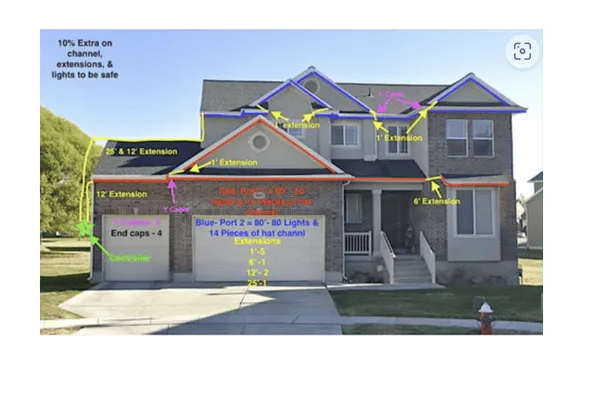
For the Map out example above the total material breakdown is:
System Voltage: 36V
Color of channel: Cameo
Channel Type: Hat
Total Lighted Footage: 160'
Power injection: NO
Controller: 1
Channel: 27- 6' sticks
Screws- 200
Lights: 175
1' extensions-7
6' Extensions-2
12' extensions-2
25- extensions- 1
Y Cables- 3
End caps- pack of 10
Absolute necessities
-Controller
-Lights
-Channel
-Screws
-Extension cables
Other Accessories
-Y Cable
-End Caps
- Signal boosters
-Power injection material
When would you need to power inject?
The controller will come with 3 outputs for your lighting runs, each 36V output can do a Max of 200', the 24V system can do a max of 100'. After that max you'll need to inject power. After you do so you can go an additional 100' with the 24V or 200' with the 36V system.
Power injection is needed due to voltage drop, voltage drop happens due to the length traveled away from the power source along with the gauge of the wire. due to the gauge of wire the lights and extensions run on it drops in voltage enough at 100' with the 24V system and 200' with the 36V system to effect the lights performance requiring a addition of power (Power Injection)
Materials needed for power injection 36V
Power injection pig female pig tale
Power injection Extension cables
Power injection T Cable.
Materials needed to Power inject 24V
16/2 - 12/2 Low voltage landscaping wire
Cut and Splice T cable
Water Proof Wire connectors
Discover the Transformative Power of Invisilights: Expertly Installed Permanent Lighting Solutions
Enhance your installation offerings with Invisilights, the premier permanent lighting solution designed for seamless integration into any property’s exterior architecture.
Crafted with high-quality aluminum channels and advanced LED technology, Invisilights delivers durability and superior energy efficiency—key selling points for your clients seeking long-lasting, cost-effective lighting solutions. Our system not only provides brilliant illumination but also boosts the aesthetic appeal and functionality of any home.
Offer your clients peace of mind with our robust 5-year warranty, ensuring reliable performance and minimal maintenance needs. This warranty supports your commitment to quality and customer satisfaction, making it easier for you to sell and install with confidence.
Our flexible, programmable system allows you to meet any client’s specific desires—from subtle accents to full-scale holiday displays—making it an adaptable choice for various applications. With Invisilights, you can cater to a wide range of preferences and needs, increasing your market reach and customer retention.
Choose Invisilights for your installations and add a transformative product to your portfolio that will impress clients and ensure your services remain in demand for years to come.
Frequently Asked Questions
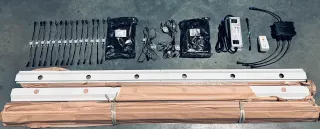
What exactly comes in the 150' InvisiLights permanent outdoor lighting kit?
The InvisiLights kit is comprehensively equipped to ensure you have everything you need for installation. Each kit includes:
27 sticks of 6-foot Aluminum Channel to house and protect the lighting elements.
150 feet of dynamic RGBW LED Lights, which includes 23 sets of 6-count and 14 sets of 1-count lights, allowing for extensive coverage and diverse configuration options.
2 Data Boosters to enhance signal strength across the lighting installation, ensuring consistent control and color output.
A 320W Power Supply capable of supporting up to 190 puck lights, providing ample power for even the most extensive setups.
1 GFCI Outlet Adapter to ensure safe outdoor electrical connections.
1 Controller that allows you to manage and customize the lighting effects easily.
Will I need any additional components besides what's included in the Invisilights permanent lighting kit?
While the Invisilights kit comes with all the essential components for a standard installation, there are a couple of scenarios where you might need additional items:
Jumper Wires: Depending on the layout of your installation and the number of gaps or 'jumps' between the sections of lights, you may require jumper wires. These wires help bridge the gaps without losing the continuity of the light sequence, ensuring a smooth and uniform display across more complex architectures.
Data Boosters: If any section of your lighting setup is more than 15 feet away from the control box, additional data boosters will be necessary. Data boosters help maintain the integrity and brightness of the lights over longer distances, ensuring consistent performance throughout your installation.
Can I choose the color of the aluminum channel for my InvisiLights kit?
Yes, you can select your preferred color for the aluminum channel to match your home’s exterior or personal taste. Please make sure to specify your color choice in the notes at checkout when you place your order.
How do the included components of the InvisiLights kit enhance the lighting system?
Each component in the InvisiLights kit plays a crucial role in creating an effective and stunning lighting display:
Aluminum Channels: Provide a durable, weather-resistant housing for the LED lights, which helps in maintaining a clean and nearly invisible look during the day.
RGBW LED Lights: Offer vibrant, full-spectrum color and white light combinations, making it perfect for any occasion from festive holidays to elegant ambient lighting.
Data Boosters: Ensure that the signal remains strong across longer distances, which is crucial for larger installations.
Power Supply: Designed to efficiently handle the energy needs of the system without overload, ensuring safety and durability.
GFCI Outlet Adapter: Adds an extra layer of safety by protecting against electrical shorts and surges, particularly important in outdoor settings.
Controller: Provides the flexibility to customize and control the lighting sequences, colors, and patterns right from your smartphone or controller, adding convenience and advanced functionality to your lighting system.
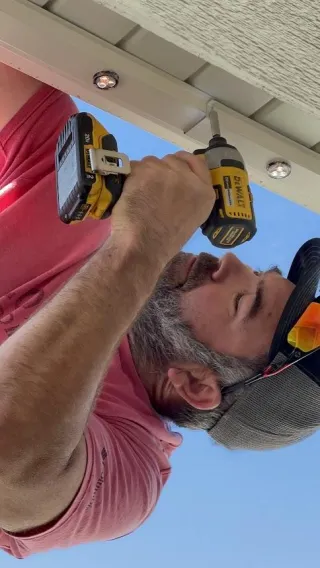
Can I use Invisilights year-round?
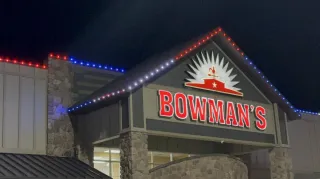
Absolutely! Invisilights are designed for versatile use throughout all seasons. Whether you're celebrating a special occasion, setting a mood for a party, Love your favorite sports team, or simply enhancing your home's ambiance, our lighting systems provide the perfect solution for any event, big or small.
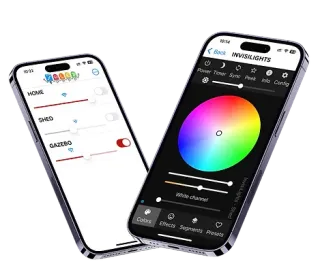
Can I set timers and events for Invisilights?
Yes, Invisilights feature advanced programmable settings that allow you to schedule lighting for specific events and automate timers. This functionality ensures that your lighting preferences are perfectly aligned with your lifestyle, turning on and off at predetermined times without any manual intervention.
Is it possible to achieve warm or soft white with Invisilights?
Absolutely, Invisilights are equipped with RGBW technology, which includes a dedicated white LED alongside the standard red, green, and blue LEDs. This addition allows the system to produce authentic warm white, soft white, and various other shades of white with greater accuracy and intensity compared to traditional RGB systems. This capability ensures that you can effortlessly tailor the lighting to fit the desired ambiance and aesthetic of any environment, providing precise control over both vibrant colors and the subtlety of different white tones.
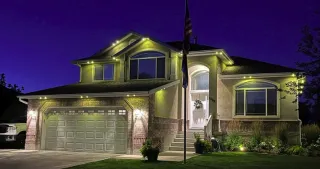
How do you ship your product?
Our products are shipped directly from our warehouse using reliable shipping carriers to ensure timely and safe delivery. Each product is securely packaged to prevent damage during transit, and we provide tracking information so you can follow your order’s journey to your doorstep.
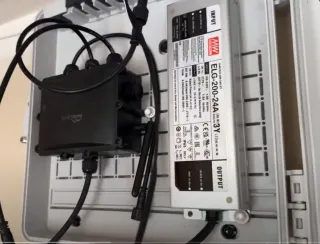
Where are the controller and power supplies installed?
The controller and power supplies for Invisilights are typically installed in an accessible location such as a garage or utility room. These components connect to your home’s WiFi network, allowing seamless control over the lighting system via our user-friendly mobile app.
How long do Invisilights last?
Invisilights are engineered to last, with each LED bulb boasting a lifespan of over 50,000 hours. Given a typical usage of 10 hours per night, this translates to approximately 5,000 nights. This means your Invisilights could illuminate your home's exterior for nearly 14 years under these conditions, ensuring that your investment not only adds beauty but also long-term value to your property.
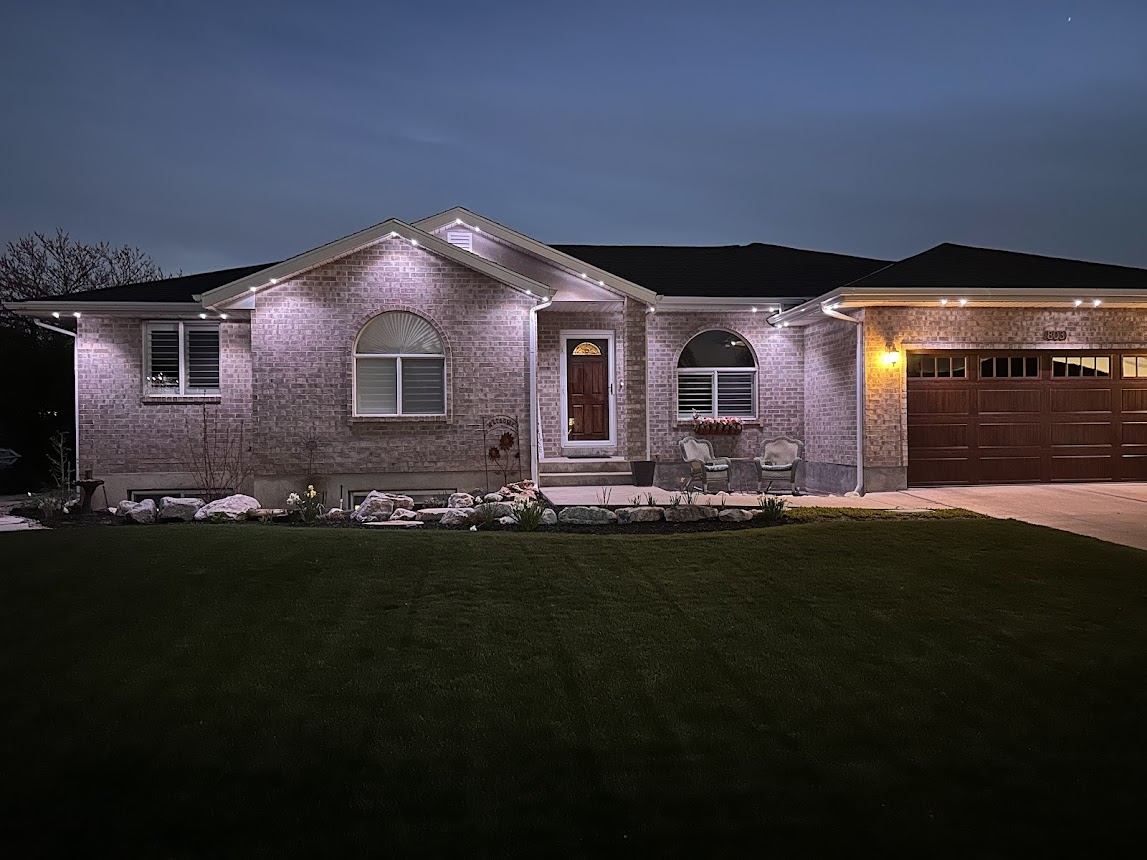
Are Invisilights dimmable?
Yes, all Invisilights are fully dimmable. This feature allows you to adjust the intensity of the light to suit various occasions, from a soft glow for a romantic evening to bright, vibrant colors for a festive celebration.
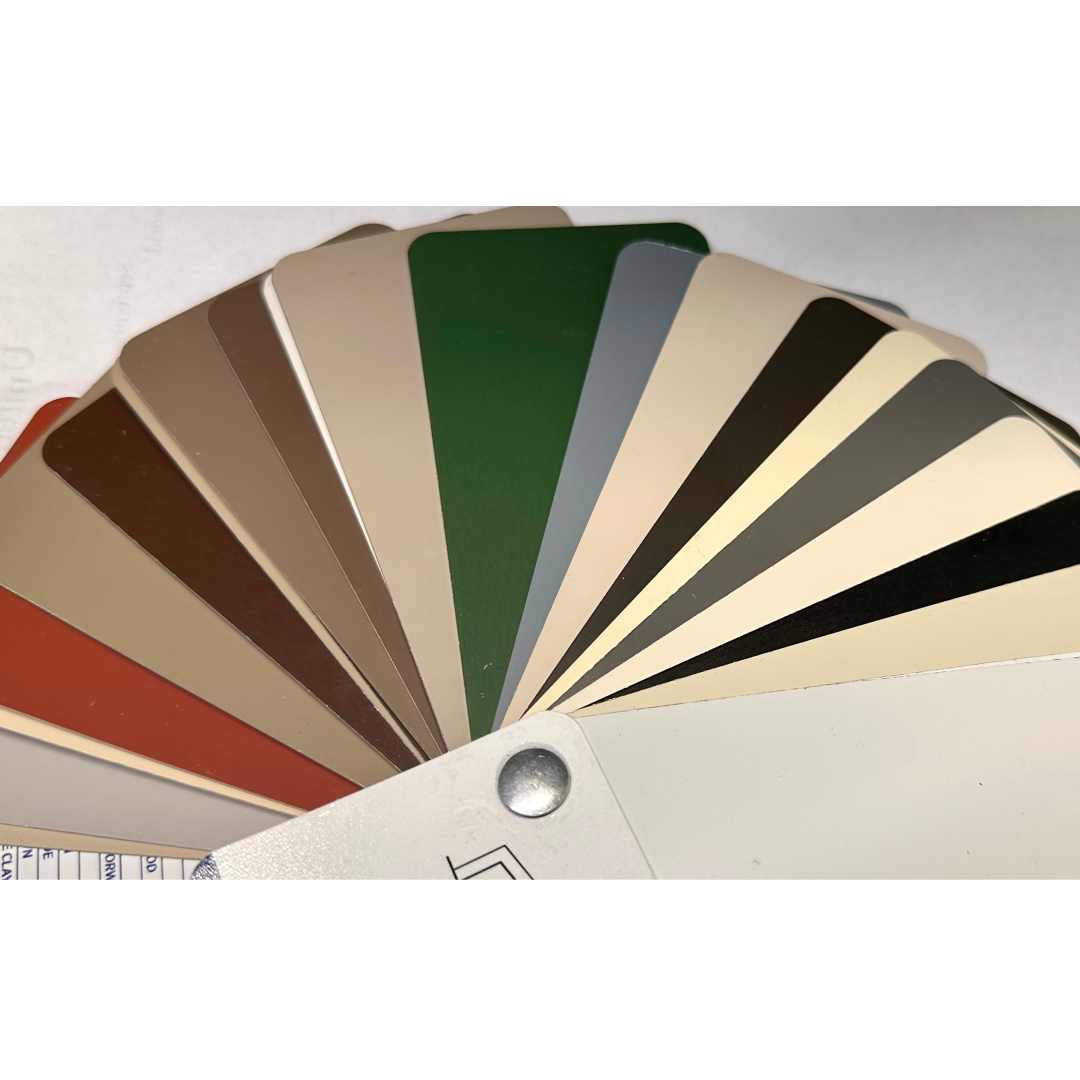
What types of custom channels are available?
Invisilights offers two types of custom channels, available in 40 different colors, ensuring a nearly invisible installation. These channels are designed to blend seamlessly with your home’s architecture, providing discreet yet effective lighting.
Can I control different zones independently?
Yes, the Invisilights system supports multiple zones which can be controlled independently or synchronized. This functionality allows for intricate lighting designs that can vary across different areas of your home, enhancing the overall impact and utility of your installation.
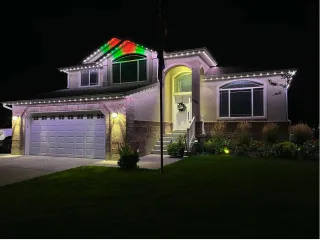
What is outdoor permanent lighting?
Permanent lighting refers to architectural-grade lighting systems that are installed permanently on your property to provide year-round illumination.
How does permanent lighting differ from traditional holiday lighting?
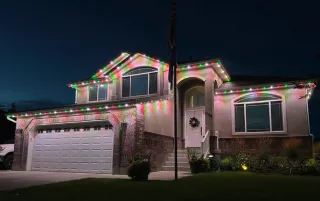
Unlike traditional holiday lighting, which is typically temporary and used only during specific seasons, permanent lighting is installed once and can be used throughout the year for various occasions
Discover Expert Tips on Our Blog
How to Actually Grow Your Business in 2026
The transition from one year to the next represents the most critical planning period for Christmas lights installation businesses. While competitors rest on their laurels or procrastinate until spring, successful installers use December and January to analyze what worked, identify growth opportunities, and create strategic plans that will double their revenue in the coming year.
This isn't theoretical advice—it's the proven methodology that has helped installers grow from zero to $1.2 million in three years, from $150,000 to $300,000 in a single season, and from struggling solo operators to multi-crew operations generating six and seven figures annually. The difference between businesses that double and businesses that stagnate comes down to strategic planning executed during the off-season.
This comprehensive guide reveals how to analyze your 2025 performance to identify growth levers, set realistic goals and work backwards to create actionable plans, determine marketing investments that generate predictable returns, increase average tickets through packaging and pricing strategies, and build systems that enable scaling beyond solo operations.
Reflecting on 2025: The Foundation for Growth
Growth without analysis is gambling. Before setting 2026 goals, successful installers conduct thorough post-season analysis identifying exactly what drove revenue and what held them back.
The Critical Metrics to Analyze
Average ticket: What was your average job value? If it was $1,000 for Christmas lights, you needed 100 jobs to reach $100,000. If competitors averaged $2,000, they only needed 50 jobs for identical revenue—half the installations, callbacks, and headaches.
Lead sources: Where did your customers come from? Yard signs? Facebook ads? Google Business Profile? Referrals? One installer discovered 60% of his revenue came from yard signs costing $4,000, while Facebook ads costing $8,000 generated only 15% of revenue. The analysis was clear: triple yard sign investment, eliminate Facebook ads.
Close rates by source: Yard sign leads might convert at 30% while Facebook leads convert at 12%. This reveals lead quality differences that impact marketing allocation.
Revenue per lead: Calculate total marketing cost divided by customers acquired. If you spent $10,000 on marketing and acquired 50 customers, your cost per customer was $200. At $2,000 average ticket, that's a 10:1 return—excellent. At $1,000 average ticket, it's 5:1—marginal.
Jobs per installation day: How many jobs did crews complete daily? If averaging one job per day, operational inefficiency is destroying profitability. Premium installers complete 2-3 jobs daily through neighborhood clustering and efficient systems.
The Story of Doubling Through Analysis
One installer generated $150,000 annually spending $10-$20 daily on Google Ads. After analyzing lead sources and calculating ROI, he discovered Google Ads generated his highest-quality leads at lowest cost per customer.
His 2026 strategy: increase Google Ad spend from $20 daily to $100-$200 daily. Result: revenue jumped to $300,000—not from working harder, but from strategic investment in what already worked.
Another installer discovered yard signs generated 70% of his revenue despite representing only 40% of marketing spend. In 2026, he shifted budget allocation to match results: 70% on yard signs, 30% on everything else. Revenue increased 85% year-over-year.
The lesson: Double down on what works, eliminate or reduce what doesn't. Most installers spread budgets evenly across channels without analyzing which channels actually drive revenue.
Setting Real Goals and Working Backwards
Vague goals like "grow my business" or "make more money" produce vague results. Specific goals like "generate $200,000 revenue" create actionable roadmaps.
The Revenue Math Formula
For Christmas lights at $2,000 average ticket:
$100,000 revenue = 50 jobs
$200,000 revenue = 100 jobs
$500,000 revenue = 250 jobs
$1,000,000 revenue = 500 jobs
For Christmas lights at $1,000 average ticket:
$100,000 revenue = 100 jobs
$200,000 revenue = 200 jobs
$500,000 revenue = 500 jobs
The difference is stark. Doubling average ticket from $1,000 to $2,000 cuts required job volume in half for identical revenue. Fewer installations mean fewer callbacks, less employee management, reduced material costs, and dramatically higher profit margins.
The 10% Marketing Investment Rule
Industry standard: invest 10% of revenue goal in marketing to achieve that goal consistently.
$100,000 revenue goal = $10,000 marketing investment
How to allocate $10,000:
Yard signs (1,000 signs): $3,000-$4,000
Google Ads/Local Service Ads: $3,000-$4,000
Facebook ads or organic social media: $2,000-$3,000
Miscellaneous (door hangers, vehicle wraps, networking): $1,000
$200,000 revenue goal = $20,000 marketing investment
Scale proportionally, but concentrate investment in proven channels identified during post-season analysis.
Writing Down Goals and Committing
The psychological research is clear: writing goals increases achievement probability by 42%. Reviewing written goals daily increases probability to 76%.
The Think and Grow Rich methodology (referenced in multiple successful installer stories):
Write specific revenue goal: "I will generate $200,000 in Christmas lights revenue in 2026"
Write specific actions required: "I will deploy 1,000 yard signs, maintain 100+ Google reviews, post 5x daily on social media, hire two crew members"
Read goals aloud morning and night with emotion and belief
Visualize achievement: picture yourself completing 100 jobs, depositing $200,000, celebrating success
This isn't mysticism—it's neuroscience. Repeated visualization and affirmation create neural pathways that influence behavior, decision-making, and risk tolerance. Installers who visualize success act differently than installers who visualize struggle.
Increasing Average Ticket: The Fastest Path to Doubling Revenue
The fastest path to doubling revenue isn't doubling job volume—it's doubling average ticket while maintaining or slightly increasing job volume.
The Package Strategy vs. Line Item Strategy
Two successful approaches exist:
Approach 1: Comprehensive line-item proposals (recommended for in-person quotes)
List every possible service separately:
Front rooflines: $800
Ridge caps: $600
Ground stakes (walkway): $300
Tree wrapping (2 trees): $400
Column wrapping (4 columns): $400
Wreaths (3): $300
Garland (door): $200
Total: $3,000
This approach works when sitting at customer tables explaining each element. Friends and family present create social pressure to accept recommendations. The installer acts as trusted advisor: "Your house needs this, and this would look amazing here."
Approach 2: Tiered packages (recommended for online quotes)
Basic Package ($1,500): Front rooflines and peaks only
Premium Package ($2,500): Rooflines, peaks, ridge caps, ground stakes
Ultimate Package ($4,000): Everything included—rooflines, ridges, trees, columns, wreaths, garland
Customers naturally select middle option (Premium), driving average tickets to $2,500 instead of $1,500 basic package.
The Pricing Psychology Reality
Installers closing 50-75% of quotes are dramatically underpriced. Premium services targeting affluent customers close 15-25% of leads—higher rates indicate you're not filtering out price shoppers.
The uncomfortable truth: If everyone says yes, you're leaving massive profit on the table. The customers paying $1,000 would have gladly paid $2,000, but you never asked.
One installer increased pricing from $6/foot to $8-$12/foot and discovered: "I was shocked how many people still said yes. I closed fewer total jobs but made way more money with less work."
Another jumped from $800 to $1,600-$2,000 average ticket and completed fewer jobs than previous year while doubling revenue: "Same leads, less work, double the money."

Building Systems That Enable Scaling
Solo installers max out at $75,000-$100,000 revenue regardless of how hard they work. Physics limits how many installations one person completes daily. Scaling beyond $100,000 requires systems enabling delegation.
The Five Critical Systems for Growth
System 1: CRM for customer management
Jobber or similar CRM becomes non-negotiable above $50,000 revenue. Benefits:
Centralized customer database accessible by entire team
Automated appointment reminders reducing no-shows
Digital quotes sent in minutes, not hours
Payment processing integrated (critical for collecting money efficiently)
Job history tracking enabling upsells and repeat business
System 2: Quality control and SOPs
Create standard operating procedures for every installation scenario:
Pre-installation safety checklist
Step-by-step installation process for different property types
Post-installation quality inspection checklist
Customer communication templates
Callback prevention checklist
Document everything. Film training videos showing proper techniques. Test employees on knowledge before allowing independent work.
System 3: Neighborhood scheduling
Cluster jobs geographically. Don't send crews zigzagging across service areas. Schedule all jobs in Northwest neighborhoods on Mondays, Northeast on Tuesdays, etc. This reduces drive time, increases jobs per day, and enables crews to help each other when problems arise.
System 4: Communication systems
Automated customer updates prevent 90% of "where are you?" calls:
Confirmation text when job scheduled
"We're on our way" text 30 minutes before arrival
Completion photo with "We're finished" message
Payment request with easy tap-to-pay link
Follow-up request for Google review
System 5: Financial tracking
Know your numbers. Track:
Revenue per lead source
Cost per customer acquired
Average ticket by neighborhood/property type
Material costs per foot installed
Labor costs per foot installed
Net profit per job after all costs
Without financial tracking, you're flying blind. One installer thought he was profitable at $6/foot until careful analysis revealed actual costs left him at $0.75/foot net profit—unsustainable.
Getting Off the Truck: The Scaling Requirement
You cannot scale while installing personally. Period. Your highest-value activities are:
Sales and quoting ($200/hour value)
Marketing strategy and execution ($150/hour value)
Hiring and training quality employees ($150/hour value)
Quality control and customer service ($100/hour value)
Every hour spent installing ($40-$60/hour value) costs you $100-$160 in opportunity cost from neglected high-value activities.
The hiring timeline for growth:
At $50,000-$75,000: Hire first installation crew member, focus your time on sales and marketing
At $100,000-$150,000: Hire second crew member enabling complete crew, focus on quality control and hiring crew #2
At $200,000-$300,000: Hire office support (phone answering, quote generation, scheduling), add crew #2
At $400,000-$500,000: Hire operations manager coordinating all crews and logistics, focus entirely on sales and strategic growth
Most installers resist hiring because "I can't afford it." Reality: you can't afford NOT to hire. Paying a crew member $25/hour who completes $4,000 in installations daily while you close $10,000 in new sales generates $14,000 daily revenue. Working solo installing generates $2,000-$4,000 daily revenue.
The 2026 Trends: Video and Personal Branding
Two major trends will dominate 2026: video content creation and personal branding over corporate branding.
Why Video Will Dominate
AI is fundamentally changing how Google and social platforms surface content. Written content increasingly competes with AI-generated summaries. Video content remains difficult for AI to replicate authentically.
The installers winning in 2026:
Post daily video content (long-form, short-form, or both)
Show installation process, customer reactions, behind-the-scenes content
Answer common customer questions on video
Demonstrate expertise through educational content
Create personal connection impossible with text alone
One installer committed to daily video (shorts on Instagram/TikTok, long-form on YouTube) and generated 100+ monthly leads organically with zero advertising spend. Another posts 2x weekly and struggles to generate 20 monthly leads despite $2,000 in Facebook ads.
The difference: consistent video creates omnipresence. Potential customers see you repeatedly, building trust before ever contacting you.
Personal Branding Over Corporate Branding
The fastest-growing installer businesses in 2024-2025 built personal brands, not corporate brands. Bobby Duncan generates $750,000 annually posting primarily on personal Facebook page. Customers hire "Bobby" who happens to run a Christmas lights business—not "ABC Christmas Lights Company."
Why personal branding works:
Humans trust humans, not corporations
Personal posts generate higher engagement than business page posts
Personal connections create loyalty resistant to price competition
Personal brands weather algorithm changes better than corporate pages
The 2026 strategy: Build both personal and business presence, but emphasize personal content showing your face, personality, and expertise.

What's the realistic timeline for doubling my Christmas lights revenue from $100,000 to $200,000?
Most installers double revenue in 1-2 seasons with strategic execution. The keys: increase average ticket from $1,000-$1,500 to $2,000-$2,500 (achievable through package selling and premium pricing), increase marketing investment from $10,000 to $20,000 focused on proven channels, hire first crew member enabling you to focus on sales instead of installation, implement CRM and systems enabling efficient operations. One installer jumped from $150,000 to $300,000 in single season by increasing Google Ad spend from $20 daily to $100-$200 daily—same market, same competition, just strategic investment in what already worked.
Should I invest 10% of my goal revenue in marketing even when starting from zero?
Yes—the 10% rule applies regardless of current revenue. If your goal is $100,000 and you're currently at $30,000, invest the full $10,000 (not 10% of $30,000). This feels uncomfortable but is necessary. The alternative is incremental growth over 5-10 years instead of 1-2 years. However, invest strategically: don't spend $10,000 on unproven channels. Start with yard signs ($3,000-$4,000 for 1,000 signs) and Google Local Service Ads ($3,000-$4,000), track results religiously, then scale what works.
How do I increase my average ticket from $1,000 to $2,000 without losing all my customers?
You're not trying to increase existing customer tickets—you're attracting different customers. Target affluent neighborhoods with $500,000-$1,000,000 homes instead of $150,000-$300,000 homes. Present comprehensive packages showing rooflines, ridge caps, ground stakes, tree wrapping, columns, wreaths, and garland—not just basic roofline installation. Use professional mockups showing complete vision instead of basic quotes. Price at $10-$12 per foot instead of $5-$7 per foot. You'll close fewer total leads (15-25% instead of 40-50%) but average tickets will be $2,000-$3,000 instead of $1,000-$1,500. Same or better revenue, fewer jobs, higher profit.
What's the best marketing channel for Christmas lights in 2026?
No universal answer—analyze YOUR results from 2025. However, consistently successful channels across multiple markets: yard signs (highest ROI when deployed in affluent neighborhoods, 200-400 signs minimum), Google Local Service Ads (high-intent leads, pay per lead not per click), organic social media (daily posting on personal Facebook page generating engagement and referrals), Google Business Profile optimization (100+ photos, daily posts during season, systematic review collection). Video content will increase in importance throughout 2026 as AI changes search landscape.
When should I hire my first employee, and how do I afford it?
Hire when you're consistently working 60+ hours weekly or when you're scheduling 10+ jobs weekly. Calculate opportunity cost: if hiring someone at $25/hour enables you to close additional $10,000 weekly in sales (just 5 additional $2,000 jobs), they generate $10,000 while costing $1,000 in wages—10:1 ROI. Most installers think "I'm making $30/hour, I can't afford to pay someone $25/hour." Wrong math. Correct math: "Paying someone $25/hour to install frees me to sell. I'll close $50,000 monthly in sales while they complete $30,000 in installations—total revenue $80,000 vs. $30,000 working solo."
How do I compete with installers charging $4-$6 per foot when I'm trying to charge $10-$12 per foot?
You don't compete with them—you target completely different customers. Installers charging $4-$6 per foot serve price-shopping customers in lower-income neighborhoods. You serve value-focused customers in affluent neighborhoods who prioritize quality, reliability, and convenience over lowest price. Differentiate through: professional vehicle wraps, 50+ five-star Google reviews, professional mockups, comprehensive packages, superior customer service, systematic communication, guaranteed callbacks. Market exclusively in $500,000+ home neighborhoods through targeted Facebook ads, strategic yard sign placement, and neighborhood-specific content. Never mention competitors' pricing—present your value confidently at your pricing.
Should I build packages or line-item everything separately for quotes?
Depends on your sales process. For in-person quotes (sitting at customer tables), line-item everything separately and walk through each element explaining value and recommendations. This maximizes upsells and creates $3,000-$5,000 jobs from customers who called for "basic lighting." For online quotes (email/text proposals without in-person meetings), use tiered packages: Basic ($1,500), Premium ($2,500), Ultimate ($4,000). Customers naturally select middle option, driving average tickets to $2,500. Line-item online quotes often result in customers selecting only cheapest items, creating $1,000 jobs instead of $2,500 jobs.
What systems are absolutely essential before trying to scale beyond $100,000 revenue?
Invest in these four systems immediately: CRM (Jobber recommended—manages customers, quotes, scheduling, payments, job history), quality control checklists (pre-installation safety, installation procedures, post-installation inspection preventing callbacks), financial tracking (know cost per customer, revenue per lead source, profit per job), communication automation (appointment confirmations, "we're on our way" texts, completion photos, payment requests, review requests). Without these systems, growth creates chaos. With these systems, growth becomes manageable and sustainable. Budget $2,000-$3,000 for annual CRM subscription and system setup.
How can I use video content when I hate being on camera and think I look/sound terrible?
Everyone hates their first 50-100 videos—that's normal. Your perceived flaws matter far less than you think. Customers care about expertise and authenticity, not Hollywood production value. Start with simple content: installation time-lapses (no talking required), customer reaction videos (focus on customer, not you), before/after transformations, answering common questions (written captions, minimal talking). Post daily for 30 days—you'll become dramatically more comfortable. One installer posts 15 times daily and generates 100+ monthly leads organically. Another avoids video and struggles to generate 20 monthly leads despite $2,000 ad spend. Video isn't optional in 2026—it's required for growth.
What's the biggest mistake holding most Christmas lights businesses back from doubling revenue?
Thinking small and believing limiting beliefs. The installer convinced "my area won't pay more than $6 per foot" never charges $10 per foot regardless of market reality (installers in same market successfully charge $10-$15 per foot). The installer believing "I need more customers" when real problem is $1,000 average ticket (raising to $2,000 doubles revenue with identical customer count). The installer saying "I can't afford to hire" while working 80 hours weekly at $25/hour equivalent instead of hiring help and focusing on $200/hour sales activities. Change thinking, change results. The fastest path to doubling revenue is believing it's possible, then executing strategies proven by installers who already doubled.
Copyright ©2026 All Right Reserved website designed by christmaslights.io
Terms of Service / Privacy Policy
Have questions or need assistance?
Contact us at (855)619-LITE