Invisilights
Permanent Holiday Lighting
Customizable Lights for Any Event
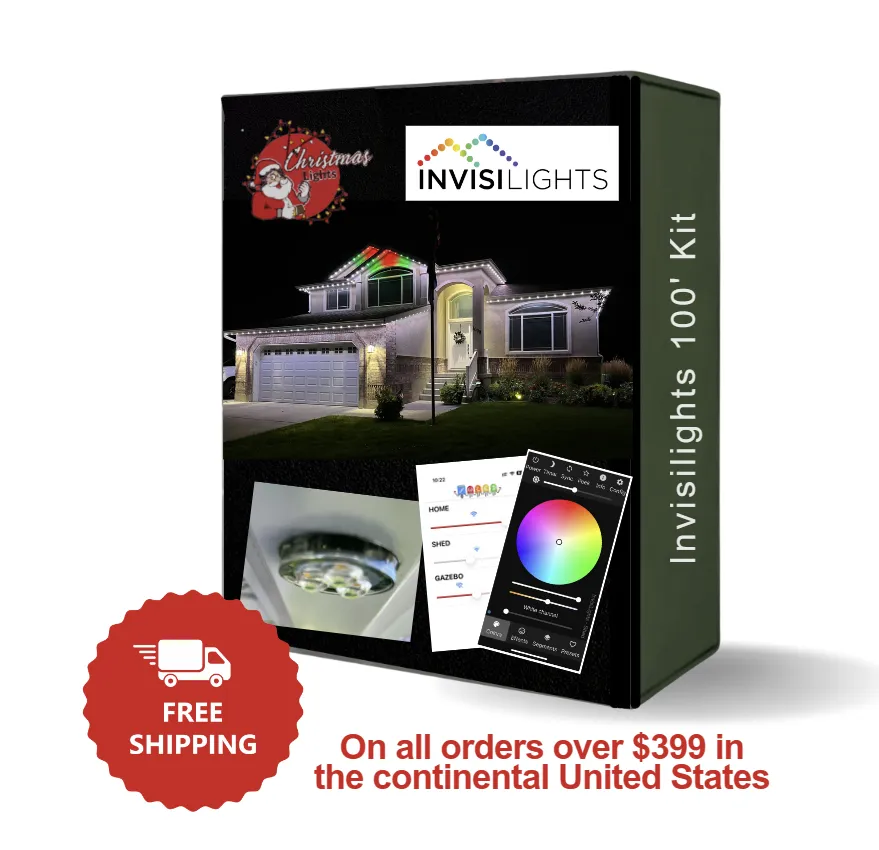
Permanent Christmas Lights 24V Kit
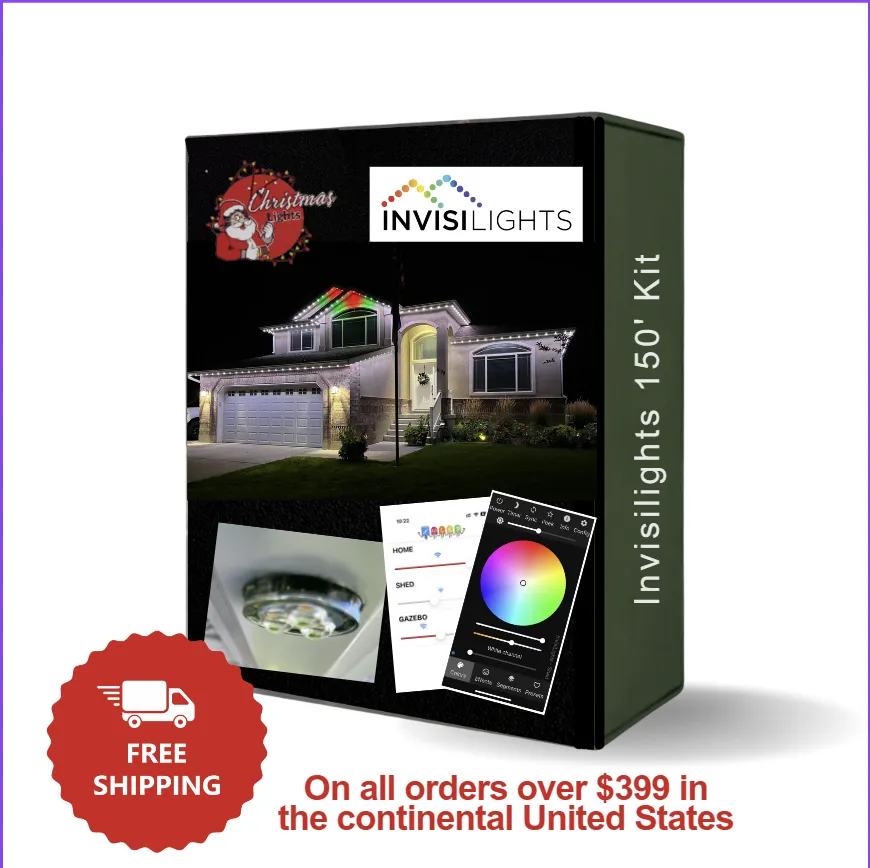
Permanent Christmas Lights 36V Kit
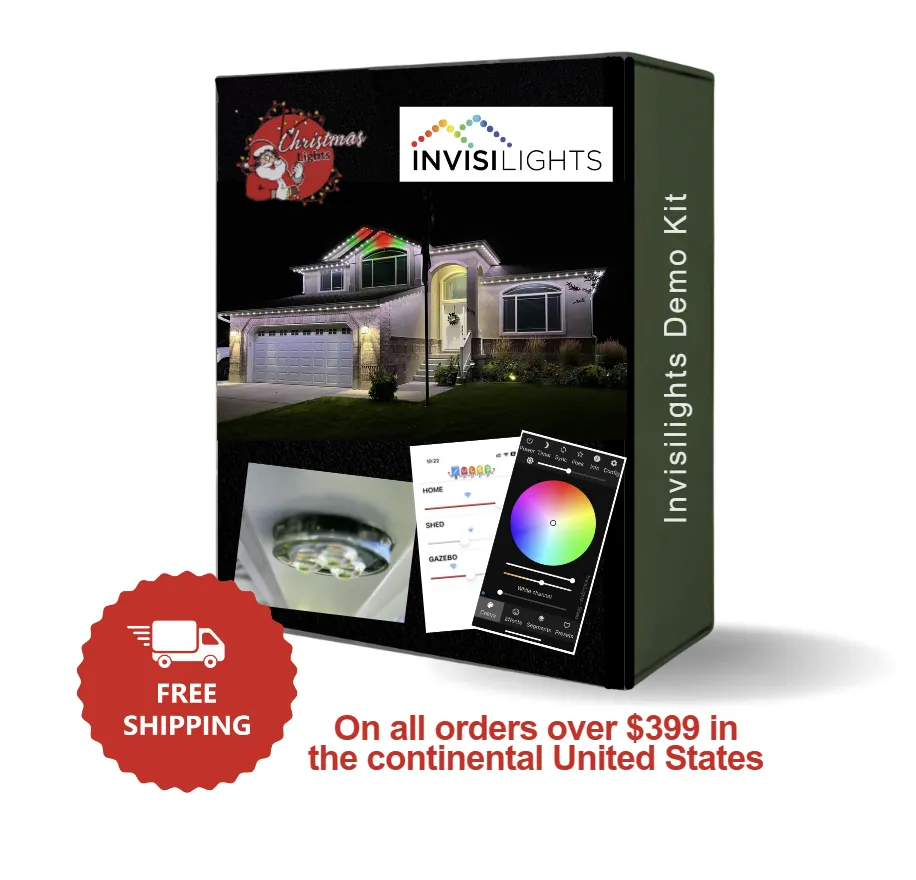
Permanent Christmas Lights
Demo Kit
WHAT YOU NEED TO KNOW BEFORE ORDERING
Total Linear footage of the installation.
This should include footage of lights and channel along with any Extensions or jumps you'll need to make
Where your controller box will be located
This is the most important step to planning out an installation, Without knowing where the controller will be you'll have no way to know the right materials to buy when it comes to extensions and accessories.
What Voltage system you want to use 24V or 36V
This is a decision you will make based on convince and efficiency, the most important factor with this will be the footage of each lighting run. If the total footage of a run is over 100' you'll need to either power inject on that run or switch to the 36V system that can go up to 200' before needing power injection.
Draw a Map
By mapping out the installation you'll be able to better understand and plan out the install giving you a better idea of what all you'll need to purchase to complete the job.
take the measurements from your map and add up the total number of materials you'll need.
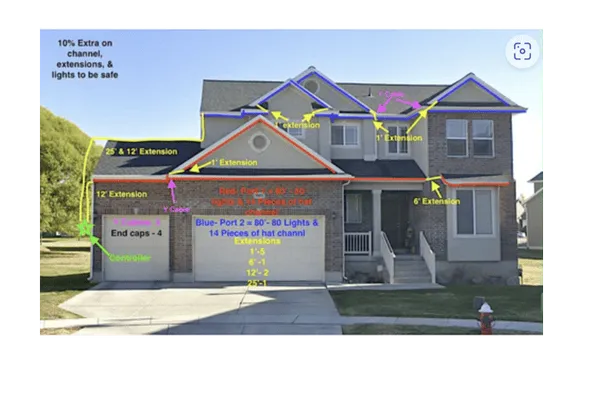
For the Map out example above the total material breakdown is:
System Voltage: 36V
Color of channel: Cameo
Channel Type: Hat
Total Lighted Footage: 160'
Power injection: NO
Controller: 1
Channel: 27- 6' sticks
Screws- 200
Lights: 175
1' extensions-7
6' Extensions-2
12' extensions-2
25- extensions- 1
Y Cables- 3
End caps- pack of 10
Absolute necessities
-Controller
-Lights
-Channel
-Screws
-Extension cables
Other Accessories
-Y Cable
-End Caps
- Signal boosters
-Power injection material
When would you need to power inject?
The controller will come with 3 outputs for your lighting runs, each 36V output can do a Max of 200', the 24V system can do a max of 100'. After that max you'll need to inject power. After you do so you can go an additional 100' with the 24V or 200' with the 36V system.
Power injection is needed due to voltage drop, voltage drop happens due to the length traveled away from the power source along with the gauge of the wire. due to the gauge of wire the lights and extensions run on it drops in voltage enough at 100' with the 24V system and 200' with the 36V system to effect the lights performance requiring a addition of power (Power Injection)
Materials needed for power injection 36V
Power injection pig female pig tale
Power injection Extension cables
Power injection T Cable.
Materials needed to Power inject 24V
16/2 - 12/2 Low voltage landscaping wire
Cut and Splice T cable
Water Proof Wire connectors
Discover the Transformative Power of Invisilights: Expertly Installed Permanent Lighting Solutions
Enhance your installation offerings with Invisilights, the premier permanent lighting solution designed for seamless integration into any property’s exterior architecture.
Crafted with high-quality aluminum channels and advanced LED technology, Invisilights delivers durability and superior energy efficiency—key selling points for your clients seeking long-lasting, cost-effective lighting solutions. Our system not only provides brilliant illumination but also boosts the aesthetic appeal and functionality of any home.
Offer your clients peace of mind with our robust 5-year warranty, ensuring reliable performance and minimal maintenance needs. This warranty supports your commitment to quality and customer satisfaction, making it easier for you to sell and install with confidence.
Our flexible, programmable system allows you to meet any client’s specific desires—from subtle accents to full-scale holiday displays—making it an adaptable choice for various applications. With Invisilights, you can cater to a wide range of preferences and needs, increasing your market reach and customer retention.
Choose Invisilights for your installations and add a transformative product to your portfolio that will impress clients and ensure your services remain in demand for years to come.
Frequently Asked Questions
What exactly comes in the 150' InvisiLights permanent outdoor lighting kit?
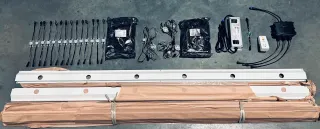
The InvisiLights kit is comprehensively equipped to ensure you have everything you need for installation. Each kit includes:
27 sticks of 6-foot Aluminum Channel to house and protect the lighting elements.
150 feet of dynamic RGBW LED Lights, which includes 23 sets of 6-count and 14 sets of 1-count lights, allowing for extensive coverage and diverse configuration options.
2 Data Boosters to enhance signal strength across the lighting installation, ensuring consistent control and color output.
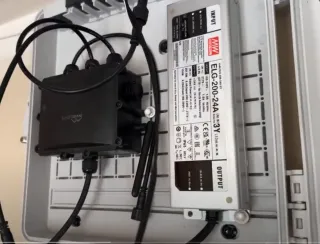
A 320W Power Supply capable of supporting up to 190 puck lights, providing ample power for even the most extensive setups.
1 GFCI Outlet Adapter to ensure safe outdoor electrical connections.
1 Controller that allows you to manage and customize the lighting effects easily.
Will I need any additional components besides what's included in the Invisilights permanent lighting kit?
While the Invisilights kit comes with all the essential components for a standard installation, there are a couple of scenarios where you might need additional items:
Jumper Wires: Depending on the layout of your installation and the number of gaps or 'jumps' between the sections of lights, you may require jumper wires. These wires help bridge the gaps without losing the continuity of the light sequence, ensuring a smooth and uniform display across more complex architectures.
Data Boosters: If any section of your lighting setup is more than 15 feet away from the control box, additional data boosters will be necessary. Data boosters help maintain the integrity and brightness of the lights over longer distances, ensuring consistent performance throughout your installation.
Can I choose the color of the aluminum channel for my InvisiLights kit?
Yes, you can select your preferred color for the aluminum channel to match your home’s exterior or personal taste. Please make sure to specify your color choice in the notes at checkout when you place your order.
How do the included components of the InvisiLights kit enhance the lighting system?
Each component in the InvisiLights kit plays a crucial role in creating an effective and stunning lighting display:
Aluminum Channels: Provide a durable, weather-resistant housing for the LED lights, which helps in maintaining a clean and nearly invisible look during the day.
RGBW LED Lights: Offer vibrant, full-spectrum color and white light combinations, making it perfect for any occasion from festive holidays to elegant ambient lighting.
Data Boosters: Ensure that the signal remains strong across longer distances, which is crucial for larger installations.
Power Supply: Designed to efficiently handle the energy needs of the system without overload, ensuring safety and durability.
GFCI Outlet Adapter: Adds an extra layer of safety by protecting against electrical shorts and surges, particularly important in outdoor settings.
Controller: Provides the flexibility to customize and control the lighting sequences, colors, and patterns right from your smartphone or controller, adding convenience and advanced functionality to your lighting system.
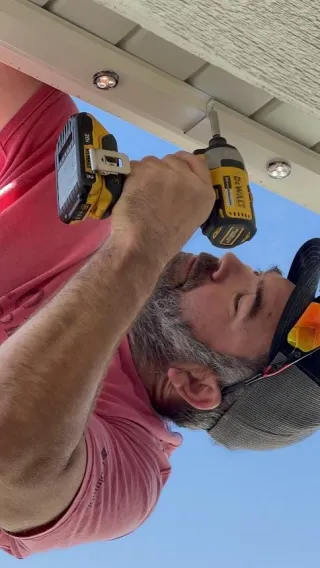
Can I use Invisilights year-round?
Absolutely! Invisilights are designed for versatile use throughout all seasons. Whether you're celebrating a special occasion, setting a mood for a party, Love your favorite sports team, or simply enhancing your home's ambiance, our lighting systems provide the perfect solution for any event, big or small.
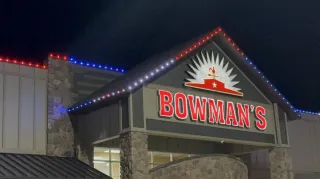
Can I set timers and events for Invisilights?
Yes, Invisilights feature advanced programmable settings that allow you to schedule lighting for specific events and automate timers. This functionality ensures that your lighting preferences are perfectly aligned with your lifestyle, turning on and off at predetermined times without any manual intervention.
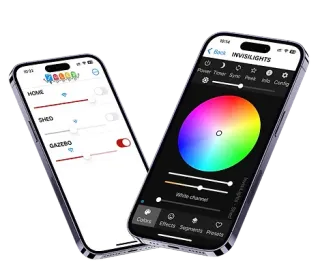
Is it possible to achieve warm or soft white with Invisilights?
Absolutely, Invisilights are equipped with RGBW technology, which includes a dedicated white LED alongside the standard red, green, and blue LEDs. This addition allows the system to produce authentic warm white, soft white, and various other shades of white with greater accuracy and intensity compared to traditional RGB systems. This capability ensures that you can effortlessly tailor the lighting to fit the desired ambiance and aesthetic of any environment, providing precise control over both vibrant colors and the subtlety of different white tones.
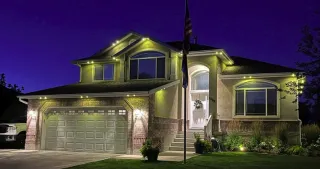
How do you ship your product?
Our products are shipped directly from our warehouse using reliable shipping carriers to ensure timely and safe delivery. Each product is securely packaged to prevent damage during transit, and we provide tracking information so you can follow your order’s journey to your doorstep.
Where are the controller and power supplies installed?
The controller and power supplies for Invisilights are typically installed in an accessible location such as a garage or utility room. These components connect to your home’s WiFi network, allowing seamless control over the lighting system via our user-friendly mobile app.
How long do Invisilights last?
Invisilights are engineered to last, with each LED bulb boasting a lifespan of over 50,000 hours. Given a typical usage of 10 hours per night, this translates to approximately 5,000 nights. This means your Invisilights could illuminate your home's exterior for nearly 14 years under these conditions, ensuring that your investment not only adds beauty but also long-term value to your property.
Are Invisilights dimmable?
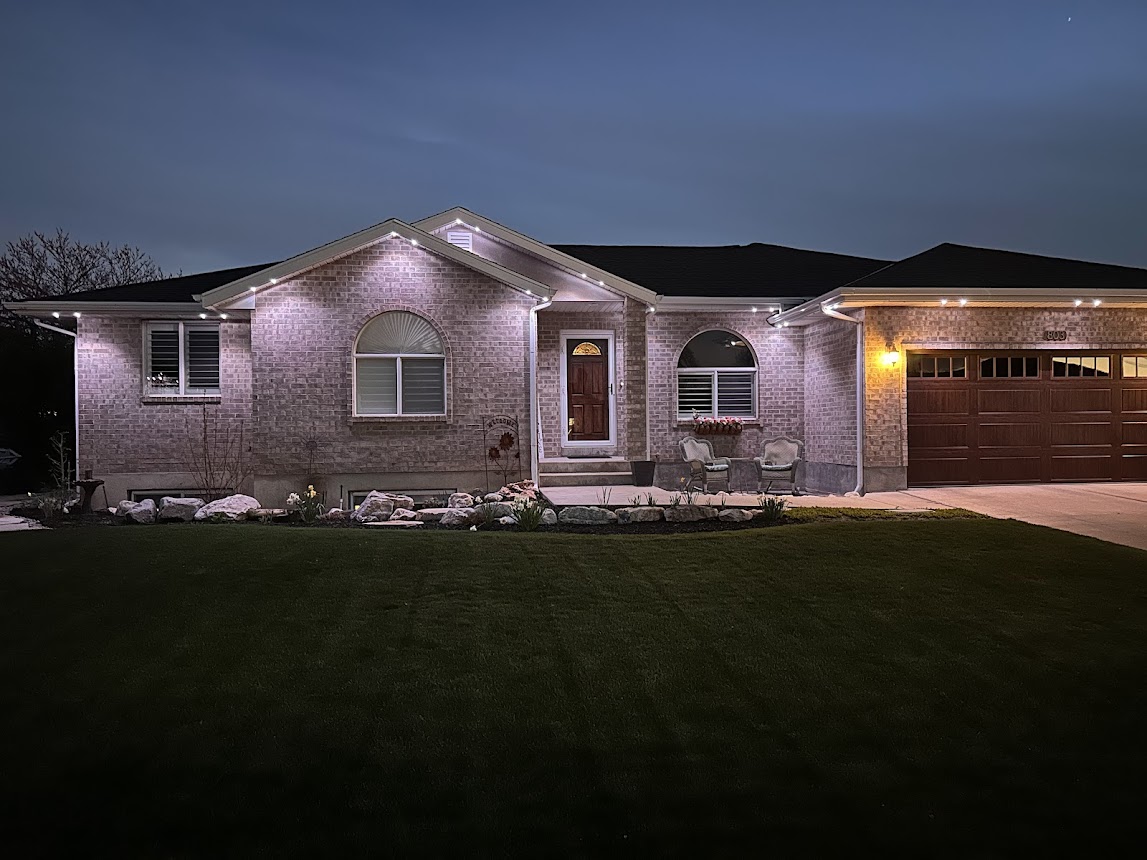
Yes, all Invisilights are fully dimmable. This feature allows you to adjust the intensity of the light to suit various occasions, from a soft glow for a romantic evening to bright, vibrant colors for a festive celebration.
What types of custom channels are available?
Invisilights offers two types of custom channels, available in 40 different colors, ensuring a nearly invisible installation. These channels are designed to blend seamlessly with your home’s architecture, providing discreet yet effective lighting.

Can I control different zones independently?
Yes, the Invisilights system supports multiple zones which can be controlled independently or synchronized. This functionality allows for intricate lighting designs that can vary across different areas of your home, enhancing the overall impact and utility of your installation.
What is outdoor permanent lighting?
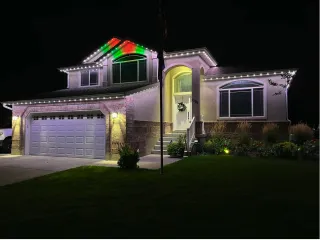
Permanent lighting refers to architectural-grade lighting systems that are installed permanently on your property to provide year-round illumination.
How does permanent lighting differ from traditional holiday lighting?
Unlike traditional holiday lighting, which is typically temporary and used only during specific seasons, permanent lighting is installed once and can be used throughout the year for various occasions
Discover Expert Tips on Our Blog
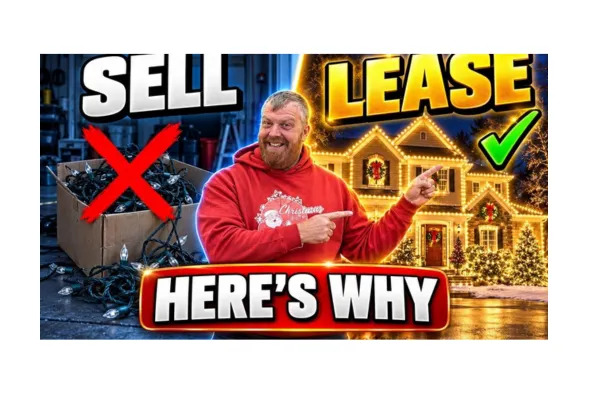
Sell or Lease? Why the All-Inclusive "Red Carpet" Service Beats Selling Christmas Lights
Every Christmas light installer eventually faces the same question: do you sell the lights to your customers, or do you lease them with an all-inclusive service that installs, maintains, takes down, and stores everything? Many installers who start out selling lights ask how to move over to the all-inclusive model. Those who have made the switch say it changed their business.
This guide breaks down the pros and cons of both, shows what the all-inclusive "red carpet service" includes, and covers pricing, reviews, pitch, and installation habits that go with it. If you want more strategies for building a profitable Christmas light business, start here.
Make It Easy for the Customer
Before comparing models, ask one question: are you making it easy for the customer? The all-inclusive model works because the customer has nothing to worry about.
A Real Example: From Almost Booked to a $100,000 October
One installer attended a training session with only five or six spots left for the entire season. He was busy, but he wasn't making great money. He had two choices: start hiring people, or raise his prices a lot. He raised his prices and switched from selling lights to the all-inclusive model. This season he hit a $100,000 October. That isn't a $100,000 Christmas light year. That is $100,000 in one month.
Others have already put up $300,000, $400,000, or even half a million dollars of Christmas lights in October. But for this installer, $100,000 in a month is a huge milestone, because most people don't make $100,000 in a year. He credits the switch to rental as a big part of it.
Selling Christmas Lights: Pros and Cons
Selling lights isn't always wrong. Some installers have a good model for it. The good ones don't sell at $4 or $5 a foot. They sell the lights at $15, $18, or $20 a foot, then come back in year two and install them for 50% of the original price.
Where Selling Goes Wrong
Many installers sell lights at about what an all-inclusive service would cost, then come back the next year to install them for $200 or $300. That's how you go broke.
The Pros of Selling
You can charge extra whenever something goes wrong. If a light goes bad, or you have a callback, you charge to fix it, because the lights belong to the customer. If a squirrel eats a light, you charge for the repair.
You can sell the lights at a high price per foot, as above.
The Cons of Selling
There is no recurring revenue beyond repair calls.
You end up nickel-and-diming the customer, and next year they will probably go with someone else.
The All-Inclusive Red Carpet Service
With the all-inclusive model, the customer gets everything. You come out and fix any problem. If a squirrel eats a light, you fix it. You take the lights down. You store them. Next year, if the customer wants new colors, they can change them. If the lights need replacing in two or three years, which they won't for a long time, you replace them for free.
The Guarantee
The guarantee is simple: if a bulb is missing or a strand is out, the customer calls and you are out there within 24 hours. Their lights are on all the time. The customer's only job is to give you a credit card. They don't worry about a light going out or about takedown. It's stress-free: they pay, and you take care of everything.
The Recurring Money
Charge $8 to $12 a foot, and that is recurring money every year. You are not selling lights once and coming back next year to make $200 or $300.
Why You Need Profit
Profit is not a bad word. Everyone talks about the top number, but the top number means nothing if the bottom number is zero or close to it.
With real profit, you can:
Put money into marketing
Pay your employees a living wage
Carry workers' comp on them
That last one matters. Two people got hurt hanging Christmas lights this week. One hurt himself handling a ladder, twisting to do different things, and the other fell down a ladder. If you aren't making enough money, you can't pay workers' comp, and you won't keep paying the injured employee's salary either.
Many New Installers Go Out of Business
Every year people say there are so many new installers and so much competition. That has been said since 2014. What nobody mentions is how many go out of business every year. Many new installers set their price at $5 or $6 a foot and go right back out because they aren't making a profit. Charging $8 to $12 a foot is how you stay in business.
Is it easy to get $8 to $12 a foot? No. The key question is whether you are selling the bulb or the feeling and the emotion. About 90% of people buy on emotion and 10% buy on the bulb.
What to Say When Customers Own Their Lights
A common objection: "I own my own lights. Will you hang them?" The best answer is no. Explain why:
Your insurance doesn't cover what someone else installed.
You don't know whether the wires were cut properly. People often tie wires together, sometimes with a piece of tape and sometimes with nothing.
Wires that touch a gutter can spark and arc and burn up the gutter.
Customers bring a big bucket of glob, or claim "these are professional lights" and hand you a box of incandescent lights duct taped together.
If someone argues, saying they just bought the lights last year, ask why the original company isn't coming back to reinstall. A common answer is that the customer has called ten times and nobody answers, so the company is probably out of business. They went cheap, and now they're gone.
Pitch Beats Price
An installer with about 30 calls and two sales, both around $1,000 tickets, said the problem was price. The reality: if you believe the problem is price, the customer will believe it too, and you will never get $8 to $10 a foot. It's usually the pitch.
If you talk about LEDs and clips, you are selling the wrong thing. Customers don't care that you use LEDs or which clips you use. Instead, talk about how amazing and beautiful the home will look and how everyone will want to drive by. Ask: "Are your grandkids coming over? What are their names? Can you wait to see Johnny's face when he comes over?" That is the difference between selling bulbs and selling the magic.
Record and Grade Your Calls
One negative word in a sales script can lose the sale, no matter what else you say. Record your calls and listen to them, or put them into AI and ask where you did well and where you missed. You can often tell within the first 30 seconds whether a call will become a sale, and the only way to get better is reps.
If you're thinking, "I'm wasting my time sending quotes and mock-ups all day," kill that mindset. You are learning and growing.
Raise Your Price One Dollar at a Time
An installer between $6 and $7 a foot should go to $8. If a customer won't pay $700, they probably won't pay $800 either, and if they'll pay $800, they probably would have paid $700. Going from $7 to $8 a foot adds a dollar a foot of profit right away.
Discounts and Minimums
Giving a discount for following years is split about 50/50 among installers. If you charge $10 a foot, you could give 10% off. If you are at $6 a foot, don't discount at all: 10% off is $5.50, and if you measured wrong, you could be at $3 or $4 a foot. Build any discount into your price instead.
A $750 minimum is a good price. As you get into the business, you'll raise it to $1,000. Some installers have a $1,500 minimum and won't go out for less.
Marketing That's Working Right Now
Yard signs: This is go time. Put out 100 signs this week and 100 a week from here on. Signs out on Friday get seen on Saturday, when people drive around with their kids.
A free job in a big community: One installer did a job for free, and the customer posted about it in a Facebook group. He got over 50 leads in two days.
Google Ads and Facebook: Google Ads have been working well for some installers. Facebook is mixed, and several installers say their Facebook ads aren't doing as well this year as in the past. Posting, showing up, and building your brand also works. Become "five-mile famous."
Get Google Reviews That Help You Rank
Reviews matter for both Google and AI. When customers write what you did and where, it helps AI tools and Google find you.
Keep Your Reviews on the Right Page
Count the reviews on your Christmas light installation Google Business Profile specifically, not your landscape or pressure washing page. In many areas, 20, 30, or 50 reviews will put you at double the next highest. One installer had reviews on his Facebook and pressure washing page but no Google Business Profile, so none of them helped.
How to Ask
Ask early. Ask during the sales process and again at the end of the job.
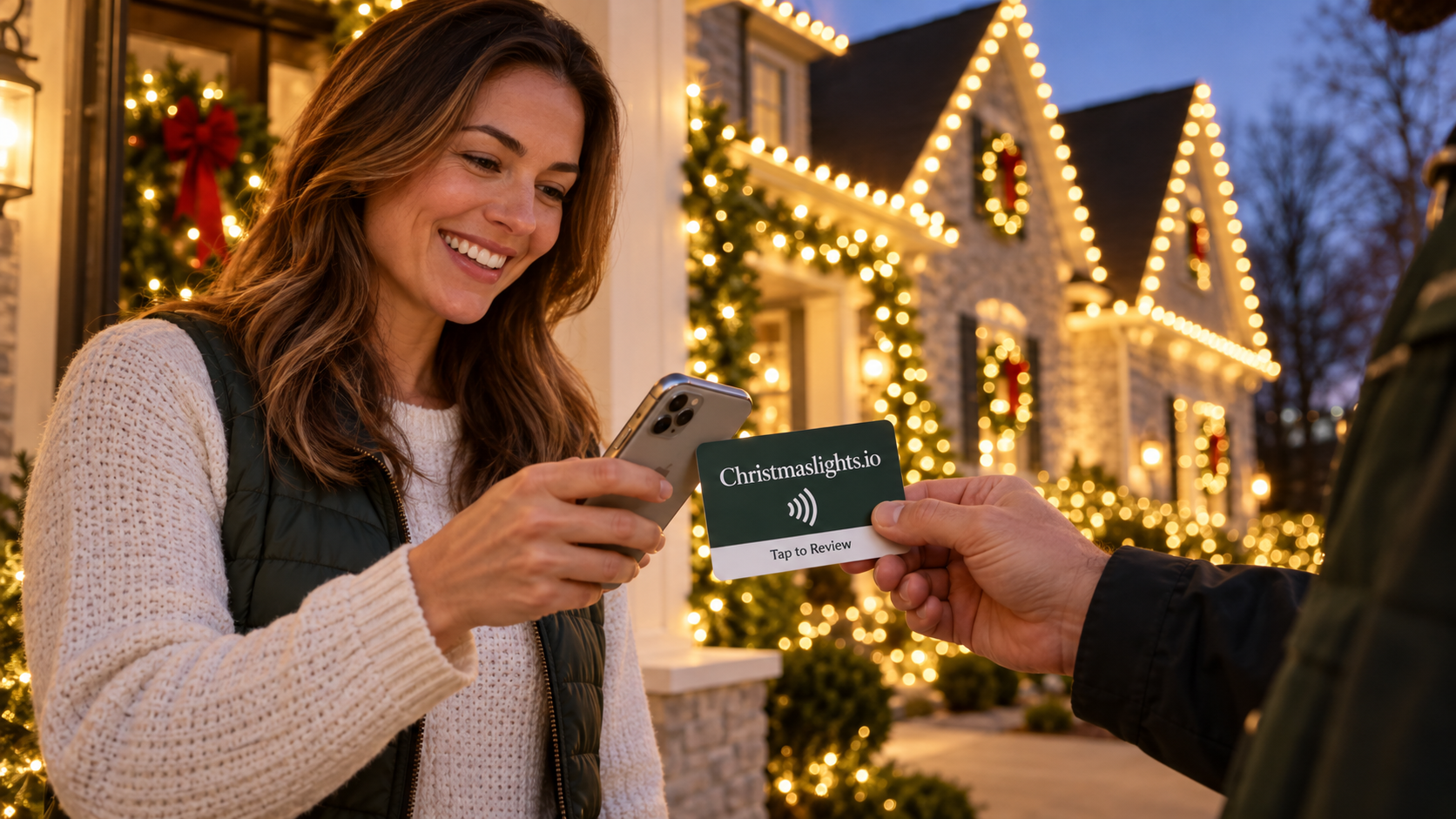
Use the close: "Is there any reason you wouldn't give me a five-star review?" Then hand over a tap card.
Have a backup: If the customer can't log in, because not everyone uses Gmail, ask for a video review instead.
Ask for detail. You don't want "They were great." Skip the owner's name and any employee's name too, because Google can flag those reviews.
Use cards. A tap card, a business card with the review link, or a sturdier card with a referral on one side and the Google review on the other.
Follow up. On the next-day follow-up call, ask how it went and ask for the review. The most aggressive installers send two emails and two texts after the job.
Yelp Matters for AI
Yelp is where ChatGPT finds a lot of its information. If you get Yelp reviews, you have to pay $12 a month or Yelp will show only the bad ones and hide the good ones. It's worth it.
Responding to a Bad Review
One installer's client of four years changed a five-star review to two stars because he wouldn't cut his price by half. When you respond to a review, you aren't responding to that customer. You are responding to everyone reading it. Talk about your professional work, your insurance, and your workers' comp.
Installing, Taking Down, and Storing Lights
Keep it simple, the same way you make it simple for customers to buy.
Use clips. They pull right off at takedown. Skip zip ties on the install, since you'd have to remove them later. If you label, zip ties are your friend.
Pre-bulb and pre-clip in a garbage can. Lay the lights in a big garbage can and carry them to the roof. To keep them from tangling, put a piece of cardboard every 100 feet, so a problem only costs you 50 feet.
Store without tangles. Hold the bulb and socket, reach out, and bring up the next bulb. Wrap the male or female end around the bulbs two or three times and plug it in. Next year, unplug and unwrap it and it falls right out.
Try newer clips. There is a tile clip and a Tuff clip that make pointing bulbs out on a roof easier than a shingle tab. Find them at Christmas Lights HQ.
Label or reuse sections. Some installers label everything, and others put 50- to 100-foot sections in 55-gallon containers to reuse on the next house. Installers swear by both.
Stay safe on the roof. Have the proper roof gear: a pitch hopper, the right shoes, and a way to tie off. On some roofs, use a lift or a ladder instead. If it snows, ladder it and get it done. Falling off a roof can kill you or hurt you badly.
What About Permanent Lights?
Google Trends shows permanent lights get a lot of searches, possibly more than Christmas lights. But there has been less talk about them this year than last, and they may not be where they need to be yet. People still want the feeling of Christmas lights and the big bulbs they remember as kids.
One approach: sell them Christmas lights this year and credit the cost toward permanent lights next year. You can buy permanent lights from Christmas Lights HQ.
Get the Supplies You Need
Christmas Lights HQ carries the colored and white wreaths, garlands, C9 bulbs, clips, and male and female plugs. Orders typically ship the same day, depending on when the afternoon UPS pickup comes. Browse Christmas Lights HQ to stock up.
Take Action
There's no such thing as perfect. Take action, answer the phone, and get quotes out fast. One coached installer started out as a garbage man and is on track for a $1.4 to $1.5 million business. Nothing special set him apart. He showed up and acted.
For more training and support, visit ChristmasLights.io or the online class.

Should I sell my Christmas lights or lease them?
Leasing with an all-inclusive service gives you recurring revenue and a better customer experience. Selling only works if you sell at $15, $18, or $20 a foot and install in year two at half price. Selling at lease price and installing for $200 to $300 will put you out of business.
What does the all-inclusive red carpet service include?
Installation, repairs, takedown, storage, color changes, and free replacement if lights ever need it. If a bulb or strand is out, the customer calls and you're there within 24 hours.
How much should I charge for the all-inclusive service?
$8 to $12 a foot, which is recurring revenue every year.
What do I say if a customer wants me to hang their own lights?
Say no. Your insurance doesn't cover work someone else did, and you can't know if wires were cut properly. Learn more at ChristmasLights.io.
Why am I not closing jobs at $8 to $10 a foot?
Usually it's the pitch, not the price. Talk about grandkids and how beautiful the home will look, not LEDs and clips.
Should I give discounts for returning customers?
It's split about 50/50. At $10 a foot, 10% off is fine. At $6 a foot, don't discount, and build any discount into your price.
What's a good minimum price?
$750 is a good minimum. Many installers move to $1,000, and some have a $1,500 minimum.

How do I get more Google reviews?
Ask during the sales process and at the end of the job, use a tap card or card with the review link, ask for a video review if they can't log in, and follow up the next day. Keep the owner's and employees' names out of the review.
Do I need Yelp?
Yes. Yelp is where ChatGPT finds a lot of its information, and you must pay $12 a month to have your good reviews shown.
How do I keep lights from tangling in a garbage can?
Put a piece of cardboard every 100 feet, so if a section tangles you only have 50 feet to sort out. Shop clips and supplies at Christmas Lights HQ.

Copyright ©2026 All Right Reserved website designed by christmaslights.io
Terms of Service / Privacy Policy
Have questions or need assistance?
Contact us at (855)619-LITE