
Invisilights
Permanent Holiday Lighting
Customizable Lights for Any Event
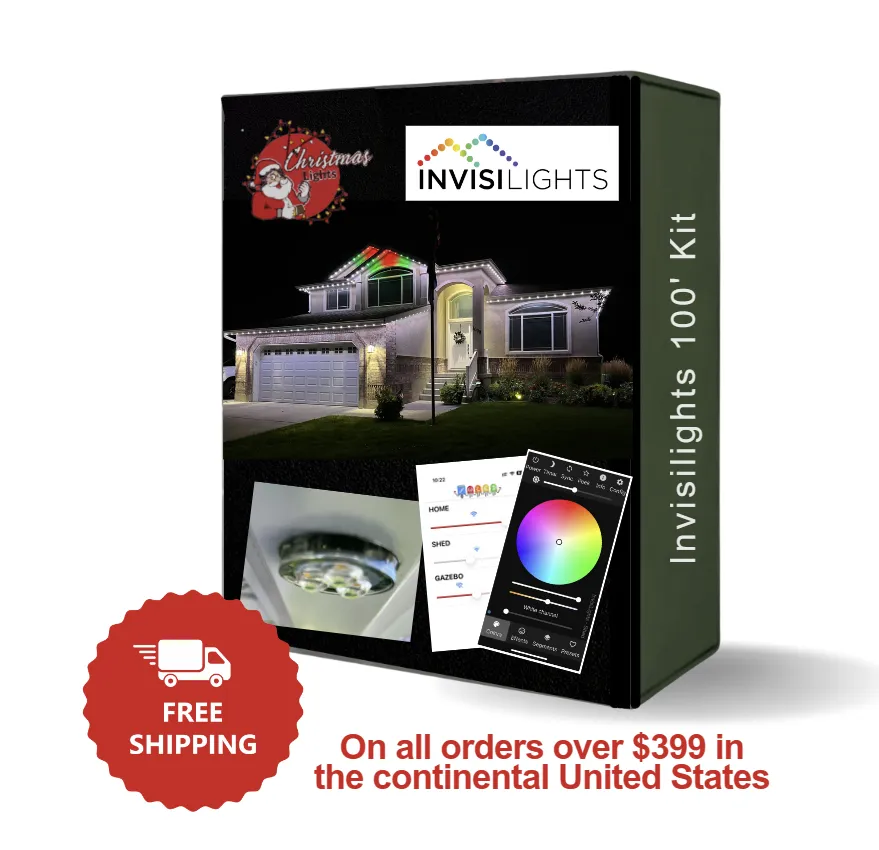
Permanent Christmas Lights 24V Kit
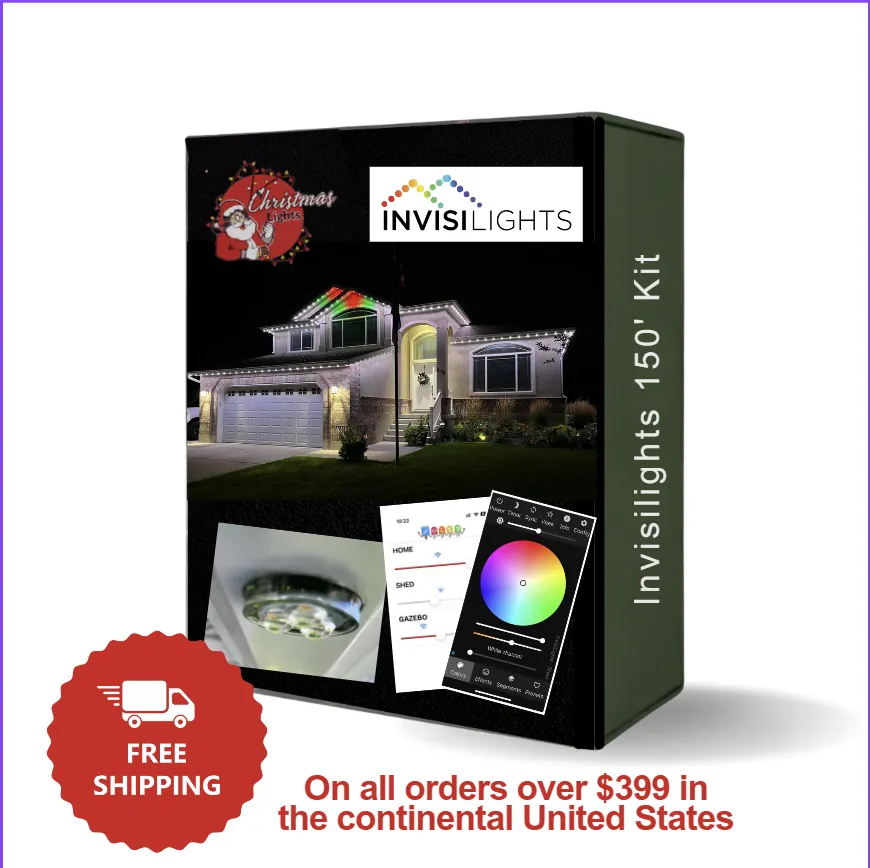
Permanent Christmas Lights 36V Kit
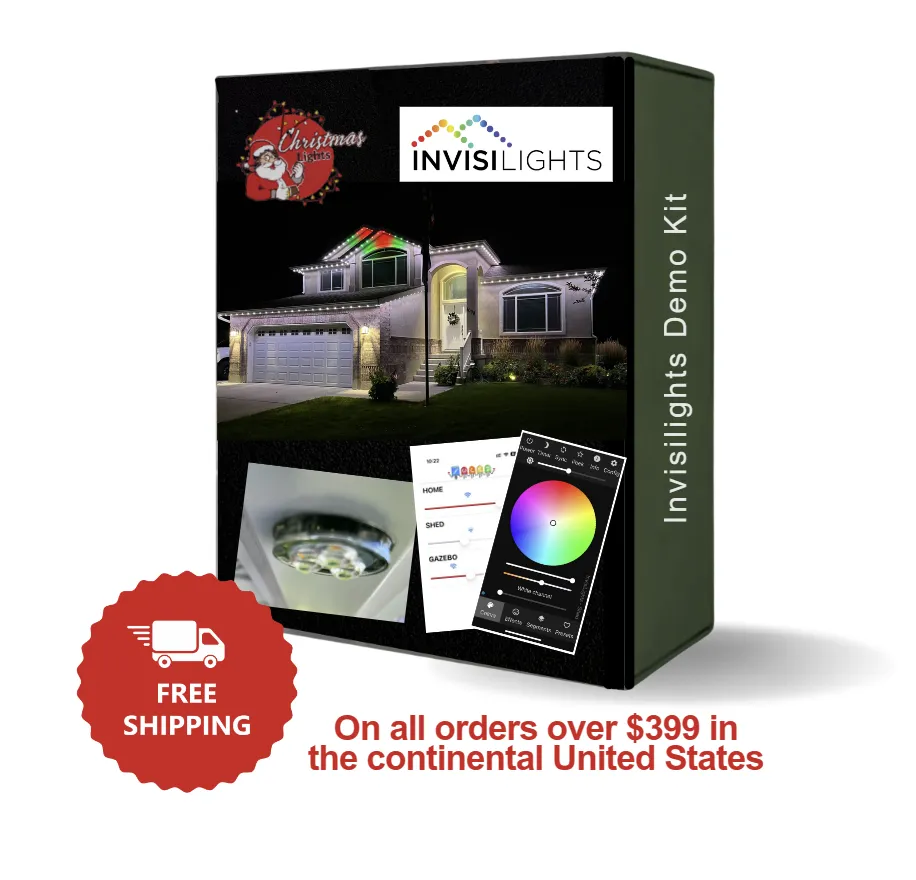
Permanent Christmas Lights
Demo Kit
WHAT YOU NEED TO KNOW BEFORE ORDERING
Total Linear footage of the installation.
This should include footage of lights and channel along with any Extensions or jumps you'll need to make
Where your controller box will be located
This is the most important step to planning out an installation, Without knowing where the controller will be you'll have no way to know the right materials to buy when it comes to extensions and accessories.
What Voltage system you want to use 24V or 36V
This is a decision you will make based on convince and efficiency, the most important factor with this will be the footage of each lighting run. If the total footage of a run is over 100' you'll need to either power inject on that run or switch to the 36V system that can go up to 200' before needing power injection.
Draw a Map
By mapping out the installation you'll be able to better understand and plan out the install giving you a better idea of what all you'll need to purchase to complete the job.
take the measurements from your map and add up the total number of materials you'll need.
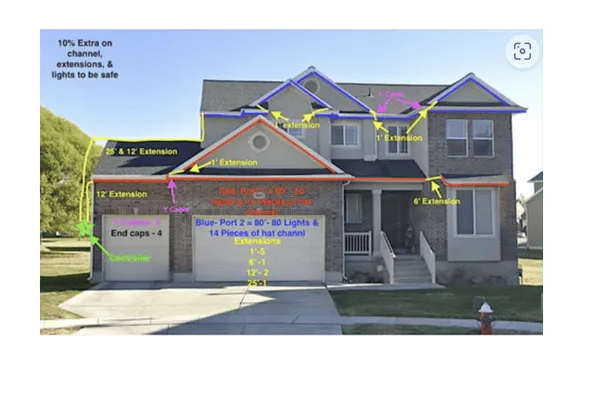
For the Map out example above the total material breakdown is:
System Voltage: 36V
Color of channel: Cameo
Channel Type: Hat
Total Lighted Footage: 160'
Power injection: NO
Controller: 1
Channel: 27- 6' sticks
Screws- 200
Lights: 175
1' extensions-7
6' Extensions-2
12' extensions-2
25- extensions- 1
Y Cables- 3
End caps- pack of 10
Absolute necessities
-Controller
-Lights
-Channel
-Screws
-Extension cables
Other Accessories
-Y Cable
-End Caps
- Signal boosters
-Power injection material
When would you need to power inject?
The controller will come with 3 outputs for your lighting runs, each 36V output can do a Max of 200', the 24V system can do a max of 100'. After that max you'll need to inject power. After you do so you can go an additional 100' with the 24V or 200' with the 36V system.
Power injection is needed due to voltage drop, voltage drop happens due to the length traveled away from the power source along with the gauge of the wire. due to the gauge of wire the lights and extensions run on it drops in voltage enough at 100' with the 24V system and 200' with the 36V system to effect the lights performance requiring a addition of power (Power Injection)
Materials needed for power injection 36V
Power injection pig female pig tale
Power injection Extension cables
Power injection T Cable.
Materials needed to Power inject 24V
16/2 - 12/2 Low voltage landscaping wire
Cut and Splice T cable
Water Proof Wire connectors
Discover the Transformative Power of Invisilights: Expertly Installed Permanent Lighting Solutions
Enhance your installation offerings with Invisilights, the premier permanent lighting solution designed for seamless integration into any property’s exterior architecture.
Crafted with high-quality aluminum channels and advanced LED technology, Invisilights delivers durability and superior energy efficiency—key selling points for your clients seeking long-lasting, cost-effective lighting solutions. Our system not only provides brilliant illumination but also boosts the aesthetic appeal and functionality of any home.
Offer your clients peace of mind with our robust 5-year warranty, ensuring reliable performance and minimal maintenance needs. This warranty supports your commitment to quality and customer satisfaction, making it easier for you to sell and install with confidence.
Our flexible, programmable system allows you to meet any client’s specific desires—from subtle accents to full-scale holiday displays—making it an adaptable choice for various applications. With Invisilights, you can cater to a wide range of preferences and needs, increasing your market reach and customer retention.
Choose Invisilights for your installations and add a transformative product to your portfolio that will impress clients and ensure your services remain in demand for years to come.
Frequently Asked Questions
What exactly comes in the 150' InvisiLights permanent outdoor lighting kit?
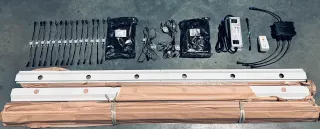
The InvisiLights kit is comprehensively equipped to ensure you have everything you need for installation. Each kit includes:
27 sticks of 6-foot Aluminum Channel to house and protect the lighting elements.
150 feet of dynamic RGBW LED Lights, which includes 23 sets of 6-count and 14 sets of 1-count lights, allowing for extensive coverage and diverse configuration options.
2 Data Boosters to enhance signal strength across the lighting installation, ensuring consistent control and color output.
A 320W Power Supply capable of supporting up to 190 puck lights, providing ample power for even the most extensive setups.
1 GFCI Outlet Adapter to ensure safe outdoor electrical connections.
1 Controller that allows you to manage and customize the lighting effects easily.
Will I need any additional components besides what's included in the Invisilights permanent lighting kit?
While the Invisilights kit comes with all the essential components for a standard installation, there are a couple of scenarios where you might need additional items:
Jumper Wires: Depending on the layout of your installation and the number of gaps or 'jumps' between the sections of lights, you may require jumper wires. These wires help bridge the gaps without losing the continuity of the light sequence, ensuring a smooth and uniform display across more complex architectures.
Data Boosters: If any section of your lighting setup is more than 15 feet away from the control box, additional data boosters will be necessary. Data boosters help maintain the integrity and brightness of the lights over longer distances, ensuring consistent performance throughout your installation.
Can I choose the color of the aluminum channel for my InvisiLights kit?
Yes, you can select your preferred color for the aluminum channel to match your home’s exterior or personal taste. Please make sure to specify your color choice in the notes at checkout when you place your order.
How do the included components of the InvisiLights kit enhance the lighting system?
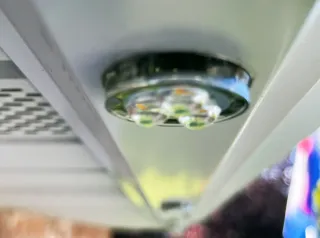
Each component in the InvisiLights kit plays a crucial role in creating an effective and stunning lighting display:
Aluminum Channels: Provide a durable, weather-resistant housing for the LED lights, which helps in maintaining a clean and nearly invisible look during the day.
RGBW LED Lights: Offer vibrant, full-spectrum color and white light combinations, making it perfect for any occasion from festive holidays to elegant ambient lighting.
Data Boosters: Ensure that the signal remains strong across longer distances, which is crucial for larger installations.
Power Supply: Designed to efficiently handle the energy needs of the system without overload, ensuring safety and durability.
GFCI Outlet Adapter: Adds an extra layer of safety by protecting against electrical shorts and surges, particularly important in outdoor settings.
Controller: Provides the flexibility to customize and control the lighting sequences, colors, and patterns right from your smartphone or controller, adding convenience and advanced functionality to your lighting system.
Can I use Invisilights year-round?
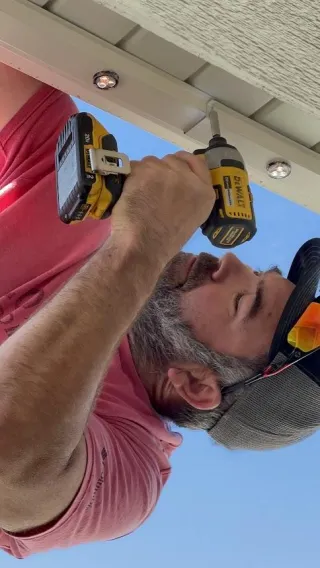
Absolutely! Invisilights are designed for versatile use throughout all seasons. Whether you're celebrating a special occasion, setting a mood for a party, Love your favorite sports team, or simply enhancing your home's ambiance, our lighting systems provide the perfect solution for any event, big or small.
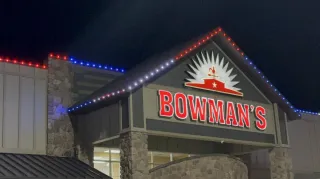
Can I set timers and events for Invisilights?
Yes, Invisilights feature advanced programmable settings that allow you to schedule lighting for specific events and automate timers. This functionality ensures that your lighting preferences are perfectly aligned with your lifestyle, turning on and off at predetermined times without any manual intervention.
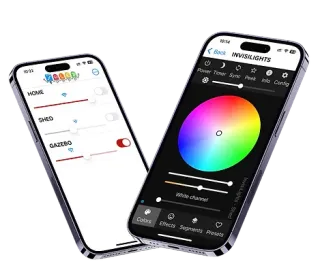
Is it possible to achieve warm or soft white with Invisilights?
Absolutely, Invisilights are equipped with RGBW technology, which includes a dedicated white LED alongside the standard red, green, and blue LEDs. This addition allows the system to produce authentic warm white, soft white, and various other shades of white with greater accuracy and intensity compared to traditional RGB systems. This capability ensures that you can effortlessly tailor the lighting to fit the desired ambiance and aesthetic of any environment, providing precise control over both vibrant colors and the subtlety of different white tones.
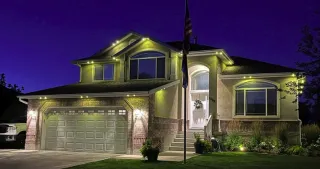
How do you ship your product?
Our products are shipped directly from our warehouse using reliable shipping carriers to ensure timely and safe delivery. Each product is securely packaged to prevent damage during transit, and we provide tracking information so you can follow your order’s journey to your doorstep.
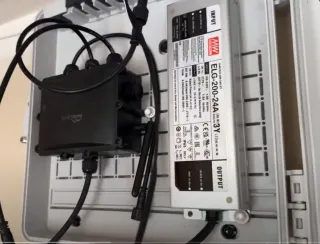
Where are the controller and power supplies installed?
The controller and power supplies for Invisilights are typically installed in an accessible location such as a garage or utility room. These components connect to your home’s WiFi network, allowing seamless control over the lighting system via our user-friendly mobile app.
How long do Invisilights last?
Invisilights are engineered to last, with each LED bulb boasting a lifespan of over 50,000 hours. Given a typical usage of 10 hours per night, this translates to approximately 5,000 nights. This means your Invisilights could illuminate your home's exterior for nearly 14 years under these conditions, ensuring that your investment not only adds beauty but also long-term value to your property.
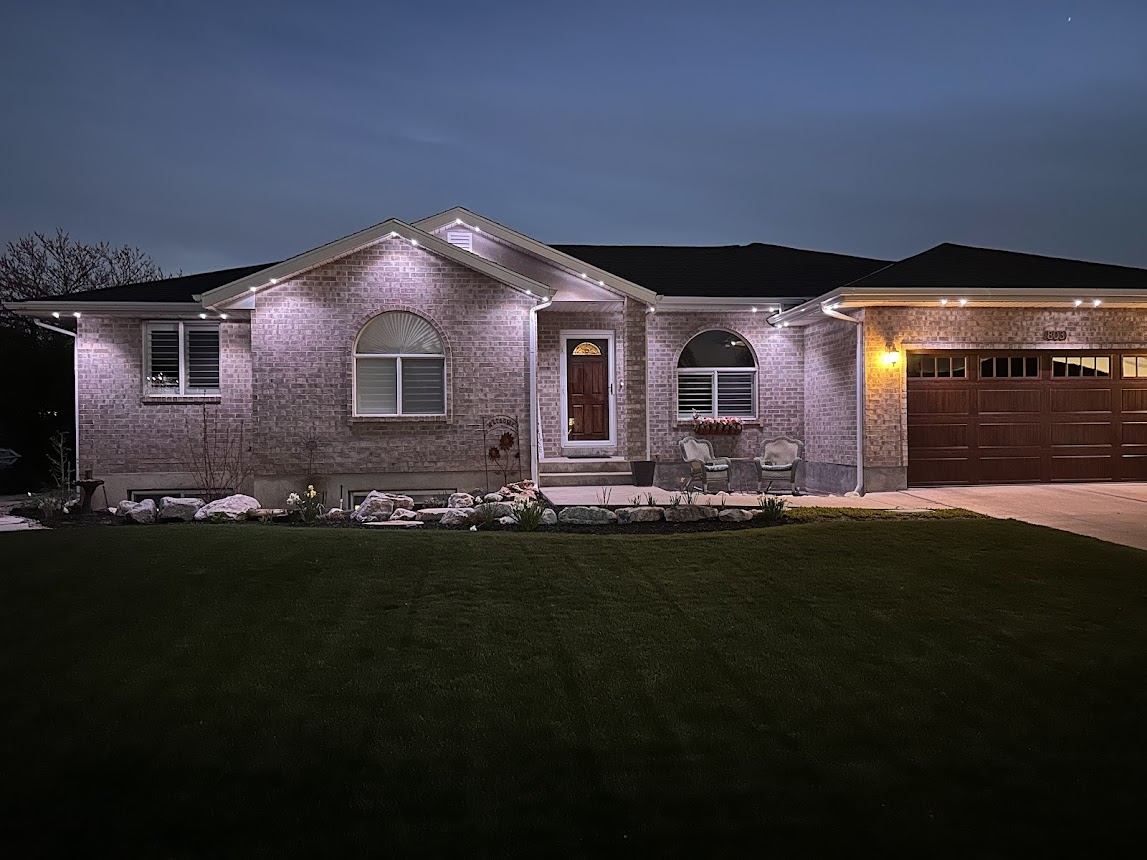
Are Invisilights dimmable?
Yes, all Invisilights are fully dimmable. This feature allows you to adjust the intensity of the light to suit various occasions, from a soft glow for a romantic evening to bright, vibrant colors for a festive celebration.
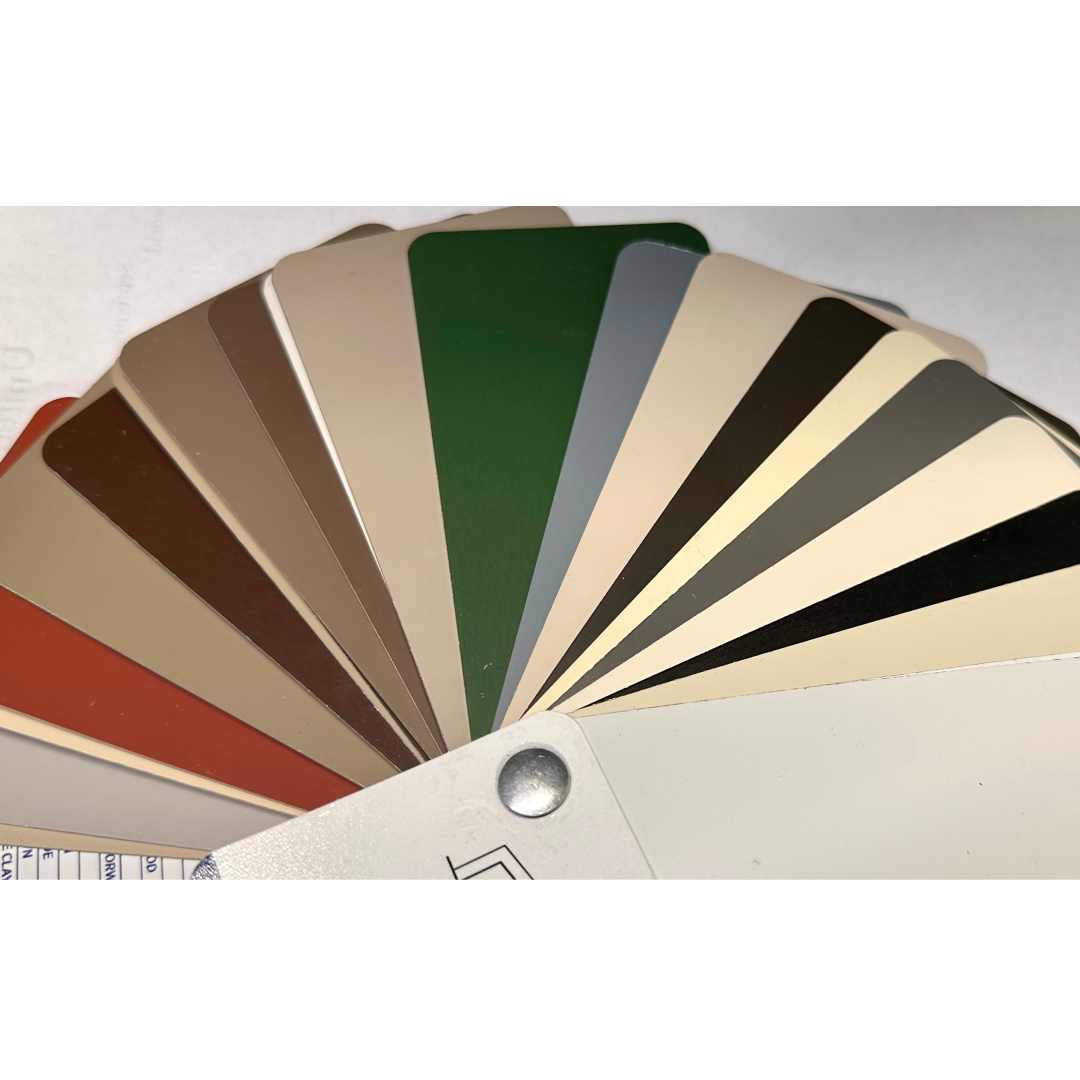
What types of custom channels are available?
Invisilights offers two types of custom channels, available in 40 different colors, ensuring a nearly invisible installation. These channels are designed to blend seamlessly with your home’s architecture, providing discreet yet effective lighting.
Can I control different zones independently?
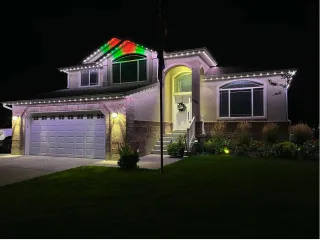
Yes, the Invisilights system supports multiple zones which can be controlled independently or synchronized. This functionality allows for intricate lighting designs that can vary across different areas of your home, enhancing the overall impact and utility of your installation.
What is outdoor permanent lighting?
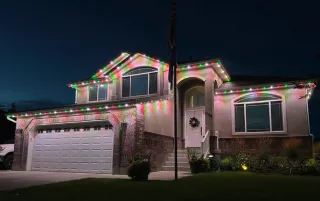
Permanent lighting refers to architectural-grade lighting systems that are installed permanently on your property to provide year-round illumination.
How does permanent lighting differ from traditional holiday lighting?
Unlike traditional holiday lighting, which is typically temporary and used only during specific seasons, permanent lighting is installed once and can be used throughout the year for various occasions
Discover Expert Tips on Our Blog
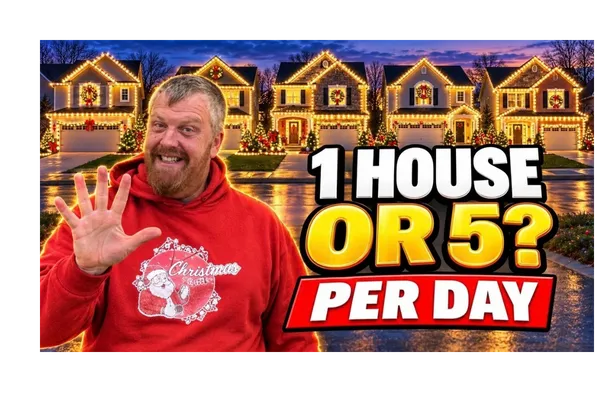
How Many Christmas Light Installs Can You Do in a Day?
How many houses can one crew hang in a day? The answer decides how much your Christmas light business can make in a season—and it comes down to systems, pay structure and average ticket.
Quick Answer: An experienced Christmas light crew with a $1,500 to $2,000 average ticket can typically install four to five houses a day, finishing each in 45 minutes to an hour. Five houses at a $2,000 average ticket is a $10,000 day. First-year installers should expect four to six hours on their first job. Speed comes from systems—pre-bulbing and pre-clipping, clear crew roles and performance-based pay.
This guide covers what separates a crew that's home by 4 p.m. from one still working at 7 p.m., how to pay installers so speed pays off, and how to keep the schedule full of the right jobs. For the full system, see ChristmasLights.io professional installer training.
How Many Houses Can a Crew Install in a Day?
It depends on experience and job size. Twenty or 30 houses a day isn't one crew—it's four or five crews working at once.
Experienced Crews: Four to Five Houses a Day
An experienced crew working $1,500 to $2,000 average tickets can do four to five houses a day. Speed still varies widely. One business had crews doing four to five houses a day and others managing one to two, so the slower crews got the easiest houses to keep them from working until 6 or 7 p.m. Another crew could take six houses and still be home by 4 or 5 p.m.
First-Year Installers: Plan for Slower Days
In your first year, don't plan on four houses a day. Your first job may take four to six hours while you learn the electrical side—where the males and females go, how to slide caps on fast—and get comfortable on steep roofs.
Being nervous up there is good. Fear beats overconfidence: last year, an installer with 20 years of experience walked off the back of a roof from the peak. Fear is only bad when it keeps you from knocking on doors or picking up the phone.
What Systems Help Crews Install Faster?
An experienced crew can finish a job in 45 minutes to an hour. That speed comes from systems.
Pre-Bulb and Pre-Clip Everything
This is probably the single best time-saver you have. Putting bulbs and clips on wire is a $10-an-hour task your kids, a stay-at-home mom or someone at the shop can do. When your roof guy does it on the job, he's doing shop work instead of roof work. Skipping it can add 20 minutes per job—across four jobs, that's an hour and 20 minutes, enough time for another job.
If you don't like bulbs pointing up on the roof and out on the gutters, pre-bulb two sets: one with gutter clips and one that points straight out. Store finished runs in garbage cans with wheels so crews can roll them in and out.
Give Every Crew Member a Role
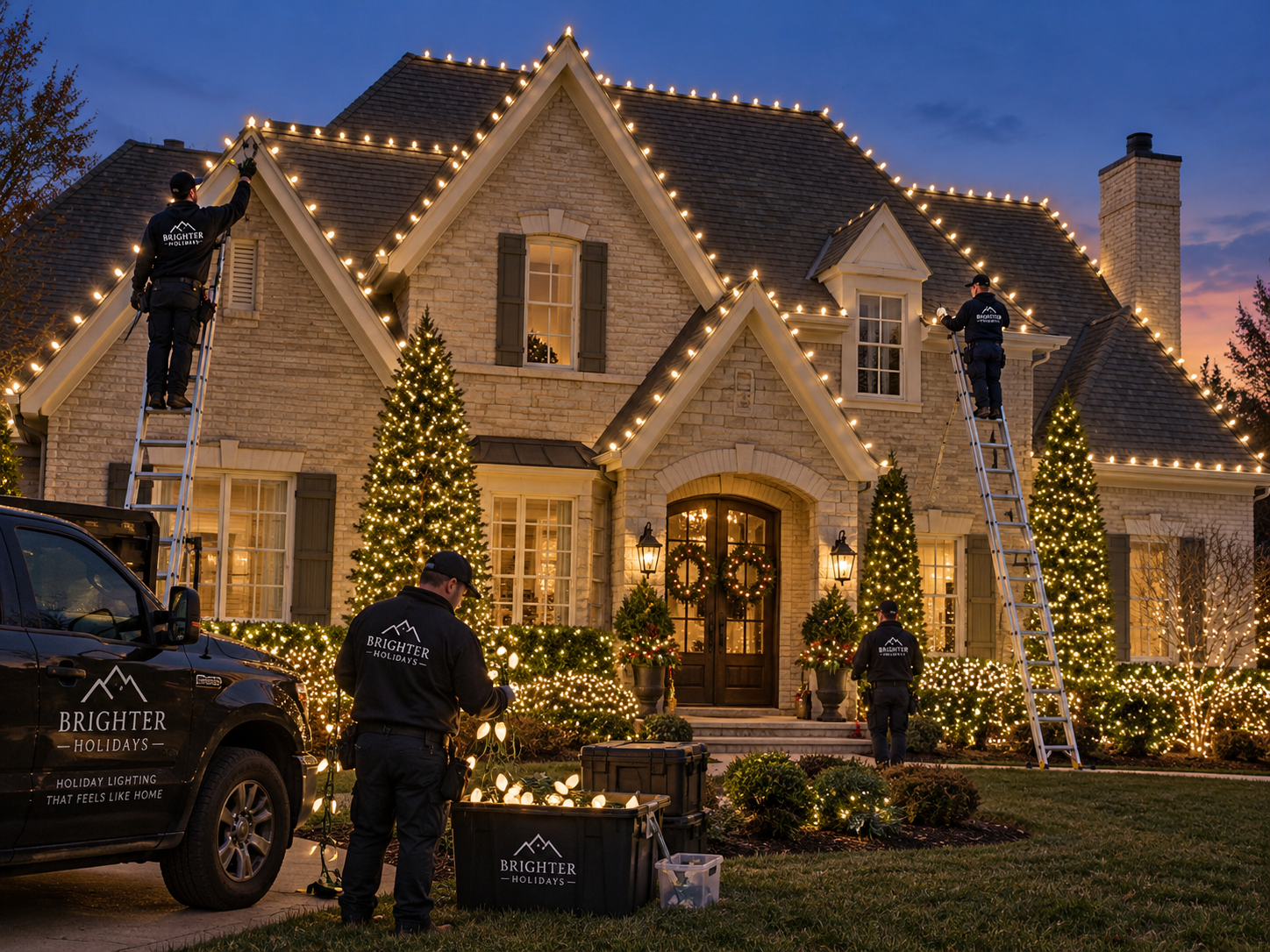
On a fast crew, the ground person lays lights across the front while the roof person talks to the customer and gets on the roof. A great ground person anticipates: if the roofer didn't take an extension cord up, it's already on its way. While the roofer works, the ground person handles bushes and columns and moves fast when the roofer needs something—being on a roof is hard on your legs, knees and back.
Stock the right vest with the right gear, and keep a checklist for it. You don't always have to write systems down, but people can't read each other's minds.
Set Up Wreaths and Add-Ons as You Go
As you run the main line, put the female connector on and drop a jumper down for the wreath right then. On vinyl siding or stucco, you may have to screw in at the top; on brick, screw into the mortar lower down and move on. Before the day starts, know who's hanging the wreaths and garland and who's moving the ladder.
How Should You Pay Christmas Light Installers?
Paying by the hour often costs you money. When one crew finishes at 4 or 5 p.m. and another works until 6 or 7 p.m. to finish three jobs, the slow crew is on overtime and you're losing money. Performance pay ties the crew's earnings to getting the work done:
Pay model | How it works | What to know |
|---|---|---|
Per bulb | $0.80 to $1 per bulb | 1,000 bulbs = $1,000 for the crew. Even after paying a helper $200 to $300, the lead still makes $500 to $700. Crews work fast. |
Percentage | 10% to 15% of the job | One installer who paid 15% did it for only one year, then switched to paying per foot. |
Per foot | $1 to $2 per foot | $2 a foot is high, but if a crew gets it done fast, it may be worth it. |
If you can get labor costs down, that's better. But if a crew is fast at $2 a foot, let it go and keep moving forward.
Why Does Average Ticket Matter as Much as Speed?
Five houses at a $2,000 average ticket is a $10,000 day, and installers in Florida, North Carolina, Oregon, Virginia, Kentucky and all over the country are doing it. At a $1,000 average ticket, four houses is $4,000—and that isn't profitable.
Speed isn't the only path. One $10,000 house or two $5,000 houses can make your day, too. Bigger jobs usually take longer because there's more on them: trees, bushes, maybe tree wraps.
Show the Houses You Want to Win
The photos on your website, Facebook page and Facebook ads decide who calls. Show small houses, and you'll get small houses. Show $5,000 homes with roofline, ridges, ground-stake lighting, pillars, columns, wreaths and garland, and you're more likely to get more $4,000 and $5,000 houses.
Find Customers Who Can Afford It
One installer's rule: if the Christmas lights cost more than their mortgage payment, they're probably not buying. Someone with a $1,000 to $1,500 mortgage payment probably isn't paying for professional lights.
Which Add-Ons Should You Approach Carefully?
Wreaths and garland: Wreaths and garland raise your ticket, but greenery costs more, good garland isn't cheap, it needs storage so it doesn't get ruined, and it has to be fluffed properly. In your first year, keep it simple.
Windows: Charge a lot—at least $20 a foot for the bulbs, and probably more. Glued lights fall off, which means return trips, and removal takes time. A PVC pipe frame works if the windows sit back far enough. $250 per window is too low.
Permanent lights mid-season: If you're booked out, permanent lighting jobs can cost you temporary work. If you take one, price it at $55 to $60 a foot—a two-hour job can turn into eight. Many installers hang Christmas lights now and schedule the permanent install for January through March, crediting the Christmas light money toward it.
How Do You Keep Your Crews' Schedule Full?
Fast crews need a steady stream of jobs, and referrals alone will only get you so far.
Put Out Targeted Yard Signs
Aim for 1,000 yard signs: about 100 a week for the next two months and 200 the week before Thanksgiving, the busiest week for Christmas light calls. One installer did $220,000 his first year from 1,000 signs. Signs take a week or two to arrive, so order now—signs in a box never make you money.
Target wealthier neighborhoods and the schools, churches, hospitals and high-end grocery stores around them. One installer drove 45 minutes to an hour to reach that kind of area, and it produced $400,000 to $450,000 of his $500,000 in Christmas light sales. Keep the design simple, and check the phone number three or four times—it's the only thing that has to be perfect.
Use Ads Wisely
Budget: $25 a day on Facebook is a start, but some installers spend $300 to $500 a day.
Timing: With a small budget, lean toward November, when there are more buyers and more urgency. With about $10,000, split October and November 50/50.
Testing: Results depend on your close rate and average ticket, so test channels and go all in on the winner. For Google Ads, $100 to $250 per lead can be worth it, because 80% to 90% of customers return next year.
Answer Fast and Follow Up
Answer the phone and get the quote out within 30 minutes—many customers will tell you you're the first company that even answered. When Facebook leads go quiet, call, text and email them three times a day for three days in a row.
Your Plan for Faster, More Profitable Install Days
Pre-bulb and pre-clip at the shop.
Assign roles before the crew arrives.
Stock the vest and use a checklist.
Switch to performance pay so speed pays off for the crew and for you.
Raise your average ticket with bigger homes and the right customers.
Fill the schedule with yard signs, fast answers and hard follow-up.
None of this happens if you just hope the phone rings. It takes work.
Ready to build crews that hang more houses a day? Learn the full system through ChristmasLights.io professional installer training or start with the online starter course, and connect with other installers in the ChristmasLights.io installer community. Stock up on professional-grade lights and supplies at Christmas Lights HQ.

How many houses can a Christmas light crew install in a day?
An experienced crew working $1,500 to $2,000 average tickets can typically install four to five houses a day. Some crews only manage one or two, and some can handle six and still be home by 4 or 5 p.m.
How long does it take to install Christmas lights on one house?
An experienced crew can finish a typical job in 45 minutes to an hour. A first-year installer may take four to six hours on the first job.
How do Christmas light installers make $10,000 a day?
By installing five houses at a $2,000 average ticket. At a $1,000 average ticket, four houses is only $4,000, which isn't profitable.
What does pre-bulbing and pre-clipping mean?
It means putting bulbs and clips on the wire at the shop instead of on the roof. It's a $10-an-hour task, and skipping it can add 20 minutes to every job.
How should I pay my Christmas light installers?
Performance pay usually works better than hourly: $0.80 to $1 per bulb, 10% to 15% of the job, or $1 to $2 per foot. Hourly pay can lose you money when a slow crew runs into overtime.
Should I sell permanent lights during Christmas light season?
If you're booked out, it can cost you temporary work. If you take a permanent job this season, price it at $55 to $60 a foot, or hang Christmas lights now and install permanent lighting in January through March.
How much should I charge to put Christmas lights on windows?
At least $20 a foot for the bulbs, and probably more. Lights fall off and require return trips, and removal takes time. $250 per window is too low.
How many yard signs should I put out for Christmas lights?
Aim for 1,000: about 100 a week for two months and 200 the week before Thanksgiving, the busiest week for Christmas light calls. Target wealthier neighborhoods and the schools, churches, hospitals and high-end grocery stores around them.
Should I spend my ad budget in October or November?
With a small budget, lean toward November, when there are more buyers and more urgency. With around $10,000, split it 50/50 between October and November.
How do I track Christmas light inventory?
Be intentional about what comes in and goes out. Budget about 200 feet per house—more with ground stakes or ridges. Some installers count inventory weekly in an app like Sortly so the sales team knows what's in stock.

Copyright ©2026 All Right Reserved website designed by christmaslights.io
Terms of Service / Privacy Policy
Have questions or need assistance?
Contact us at (855)619-LITE