Invisilights
Permanent Holiday Lighting
Customizable Lights for Any Event
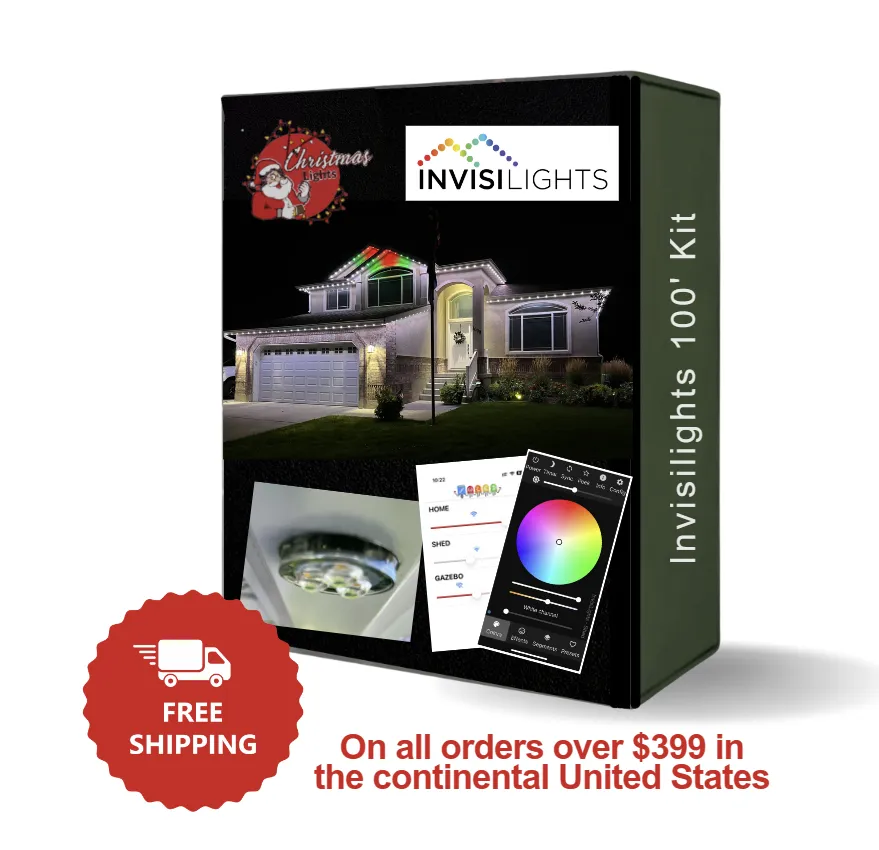
Permanent Christmas Lights 24V Kit
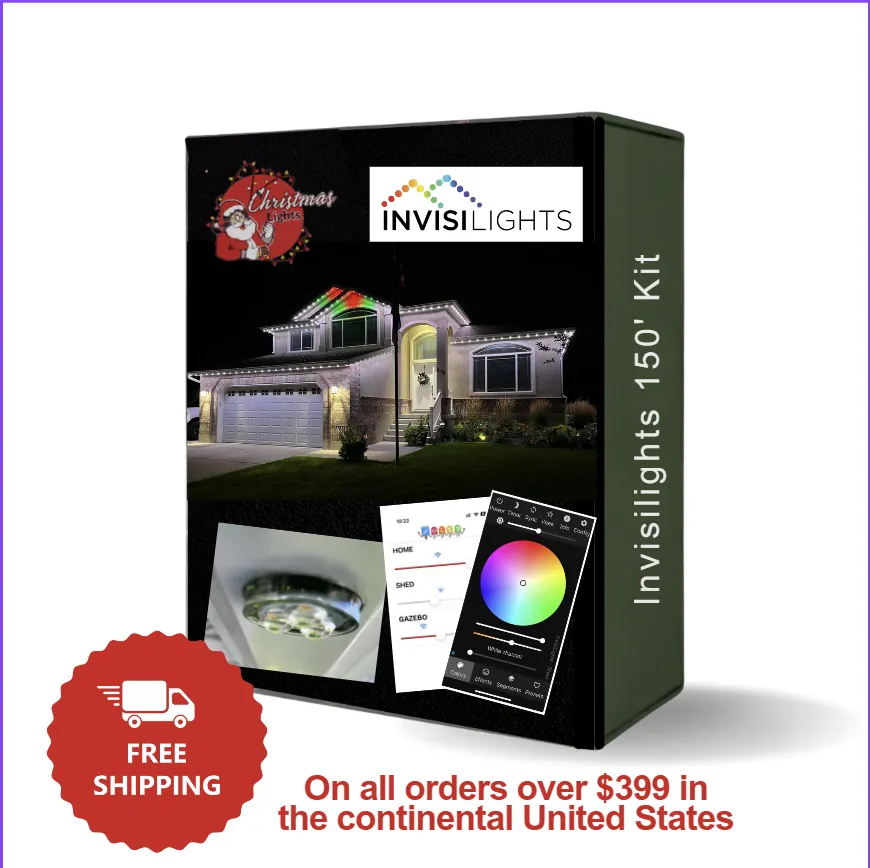
Permanent Christmas Lights 36V Kit
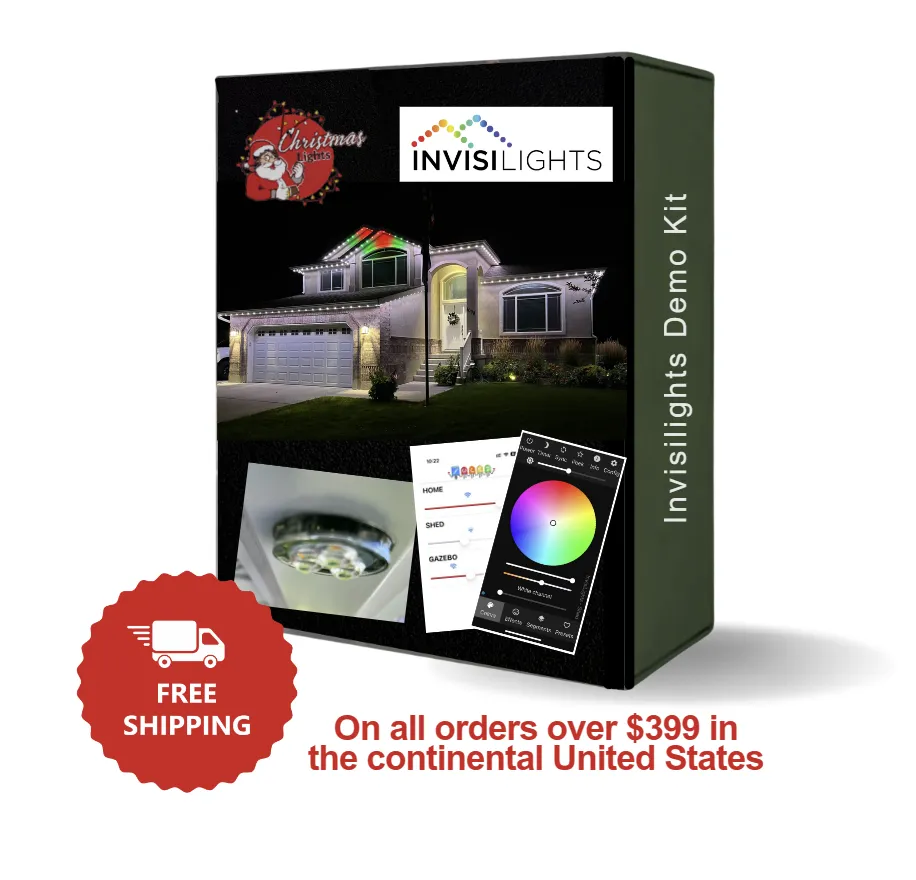
Permanent Christmas Lights
Demo Kit
WHAT YOU NEED TO KNOW BEFORE ORDERING
Total Linear footage of the installation.
This should include footage of lights and channel along with any Extensions or jumps you'll need to make
Where your controller box will be located
This is the most important step to planning out an installation, Without knowing where the controller will be you'll have no way to know the right materials to buy when it comes to extensions and accessories.
What Voltage system you want to use 24V or 36V
This is a decision you will make based on convince and efficiency, the most important factor with this will be the footage of each lighting run. If the total footage of a run is over 100' you'll need to either power inject on that run or switch to the 36V system that can go up to 200' before needing power injection.
Draw a Map
By mapping out the installation you'll be able to better understand and plan out the install giving you a better idea of what all you'll need to purchase to complete the job.
take the measurements from your map and add up the total number of materials you'll need.
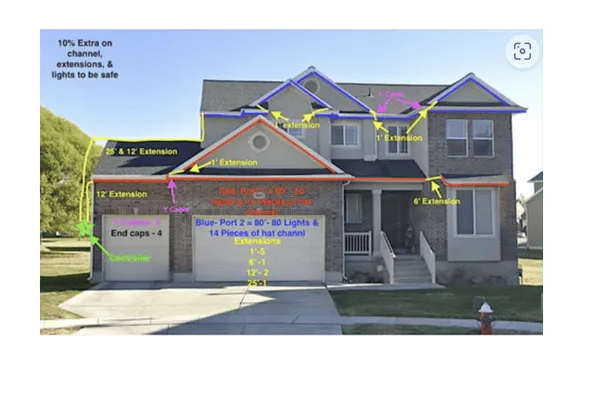
For the Map out example above the total material breakdown is:
System Voltage: 36V
Color of channel: Cameo
Channel Type: Hat
Total Lighted Footage: 160'
Power injection: NO
Controller: 1
Channel: 27- 6' sticks
Screws- 200
Lights: 175
1' extensions-7
6' Extensions-2
12' extensions-2
25- extensions- 1
Y Cables- 3
End caps- pack of 10
Absolute necessities
-Controller
-Lights
-Channel
-Screws
-Extension cables
Other Accessories
-Y Cable
-End Caps
- Signal boosters
-Power injection material
When would you need to power inject?
The controller will come with 3 outputs for your lighting runs, each 36V output can do a Max of 200', the 24V system can do a max of 100'. After that max you'll need to inject power. After you do so you can go an additional 100' with the 24V or 200' with the 36V system.
Power injection is needed due to voltage drop, voltage drop happens due to the length traveled away from the power source along with the gauge of the wire. due to the gauge of wire the lights and extensions run on it drops in voltage enough at 100' with the 24V system and 200' with the 36V system to effect the lights performance requiring a addition of power (Power Injection)
Materials needed for power injection 36V
Power injection pig female pig tale
Power injection Extension cables
Power injection T Cable.
Materials needed to Power inject 24V
16/2 - 12/2 Low voltage landscaping wire
Cut and Splice T cable
Water Proof Wire connectors
Discover the Transformative Power of Invisilights: Expertly Installed Permanent Lighting Solutions
Enhance your installation offerings with Invisilights, the premier permanent lighting solution designed for seamless integration into any property’s exterior architecture.
Crafted with high-quality aluminum channels and advanced LED technology, Invisilights delivers durability and superior energy efficiency—key selling points for your clients seeking long-lasting, cost-effective lighting solutions. Our system not only provides brilliant illumination but also boosts the aesthetic appeal and functionality of any home.
Offer your clients peace of mind with our robust 5-year warranty, ensuring reliable performance and minimal maintenance needs. This warranty supports your commitment to quality and customer satisfaction, making it easier for you to sell and install with confidence.
Our flexible, programmable system allows you to meet any client’s specific desires—from subtle accents to full-scale holiday displays—making it an adaptable choice for various applications. With Invisilights, you can cater to a wide range of preferences and needs, increasing your market reach and customer retention.
Choose Invisilights for your installations and add a transformative product to your portfolio that will impress clients and ensure your services remain in demand for years to come.
Frequently Asked Questions
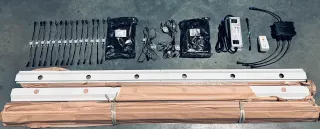
What exactly comes in the 150' InvisiLights permanent outdoor lighting kit?
The InvisiLights kit is comprehensively equipped to ensure you have everything you need for installation. Each kit includes:
27 sticks of 6-foot Aluminum Channel to house and protect the lighting elements.
150 feet of dynamic RGBW LED Lights, which includes 23 sets of 6-count and 14 sets of 1-count lights, allowing for extensive coverage and diverse configuration options.
2 Data Boosters to enhance signal strength across the lighting installation, ensuring consistent control and color output.
A 320W Power Supply capable of supporting up to 190 puck lights, providing ample power for even the most extensive setups.
1 GFCI Outlet Adapter to ensure safe outdoor electrical connections.
1 Controller that allows you to manage and customize the lighting effects easily.
Will I need any additional components besides what's included in the Invisilights permanent lighting kit?
While the Invisilights kit comes with all the essential components for a standard installation, there are a couple of scenarios where you might need additional items:
Jumper Wires: Depending on the layout of your installation and the number of gaps or 'jumps' between the sections of lights, you may require jumper wires. These wires help bridge the gaps without losing the continuity of the light sequence, ensuring a smooth and uniform display across more complex architectures.
Data Boosters: If any section of your lighting setup is more than 15 feet away from the control box, additional data boosters will be necessary. Data boosters help maintain the integrity and brightness of the lights over longer distances, ensuring consistent performance throughout your installation.
Can I choose the color of the aluminum channel for my InvisiLights kit?
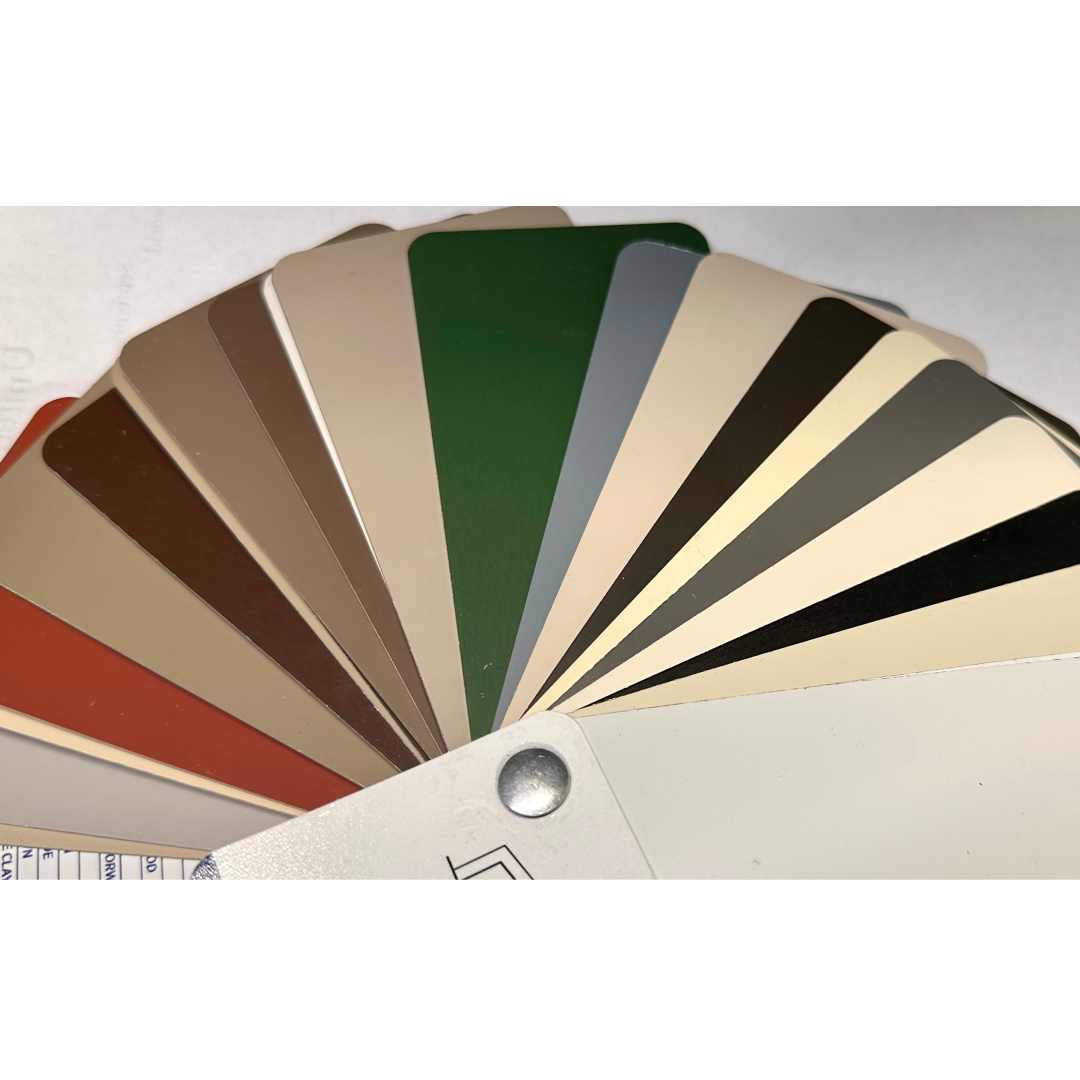
Yes, you can select your preferred color for the aluminum channel to match your home’s exterior or personal taste. Please make sure to specify your color choice in the notes at checkout when you place your order.
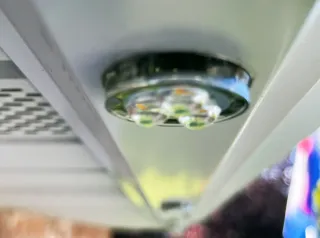
How do the included components of the InvisiLights kit enhance the lighting system?
Each component in the InvisiLights kit plays a crucial role in creating an effective and stunning lighting display:
Aluminum Channels: Provide a durable, weather-resistant housing for the LED lights, which helps in maintaining a clean and nearly invisible look during the day.
RGBW LED Lights: Offer vibrant, full-spectrum color and white light combinations, making it perfect for any occasion from festive holidays to elegant ambient lighting.
Data Boosters: Ensure that the signal remains strong across longer distances, which is crucial for larger installations.
Power Supply: Designed to efficiently handle the energy needs of the system without overload, ensuring safety and durability.
GFCI Outlet Adapter: Adds an extra layer of safety by protecting against electrical shorts and surges, particularly important in outdoor settings.
Controller: Provides the flexibility to customize and control the lighting sequences, colors, and patterns right from your smartphone or controller, adding convenience and advanced functionality to your lighting system.
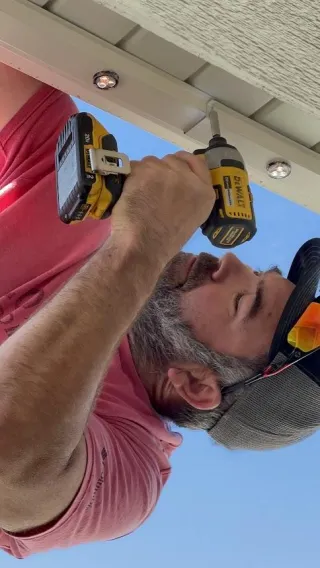
Can I use Invisilights year-round?
Absolutely! Invisilights are designed for versatile use throughout all seasons. Whether you're celebrating a special occasion, setting a mood for a party, Love your favorite sports team, or simply enhancing your home's ambiance, our lighting systems provide the perfect solution for any event, big or small.
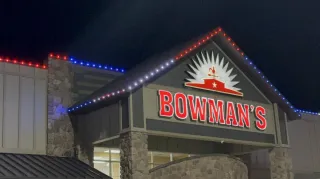
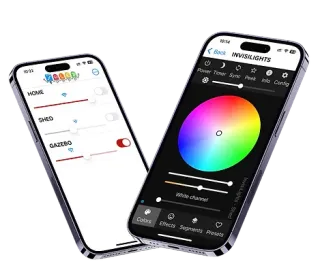
Can I set timers and events for Invisilights?
Yes, Invisilights feature advanced programmable settings that allow you to schedule lighting for specific events and automate timers. This functionality ensures that your lighting preferences are perfectly aligned with your lifestyle, turning on and off at predetermined times without any manual intervention.
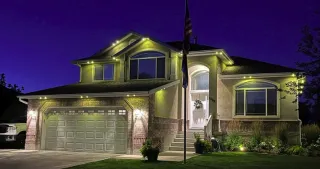
Is it possible to achieve warm or soft white with Invisilights?
Absolutely, Invisilights are equipped with RGBW technology, which includes a dedicated white LED alongside the standard red, green, and blue LEDs. This addition allows the system to produce authentic warm white, soft white, and various other shades of white with greater accuracy and intensity compared to traditional RGB systems. This capability ensures that you can effortlessly tailor the lighting to fit the desired ambiance and aesthetic of any environment, providing precise control over both vibrant colors and the subtlety of different white tones.
How do you ship your product?
Our products are shipped directly from our warehouse using reliable shipping carriers to ensure timely and safe delivery. Each product is securely packaged to prevent damage during transit, and we provide tracking information so you can follow your order’s journey to your doorstep.
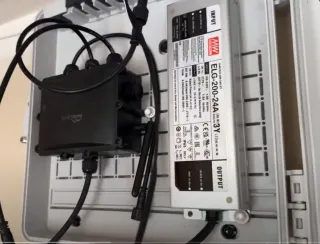
Where are the controller and power supplies installed?
The controller and power supplies for Invisilights are typically installed in an accessible location such as a garage or utility room. These components connect to your home’s WiFi network, allowing seamless control over the lighting system via our user-friendly mobile app.
How long do Invisilights last?
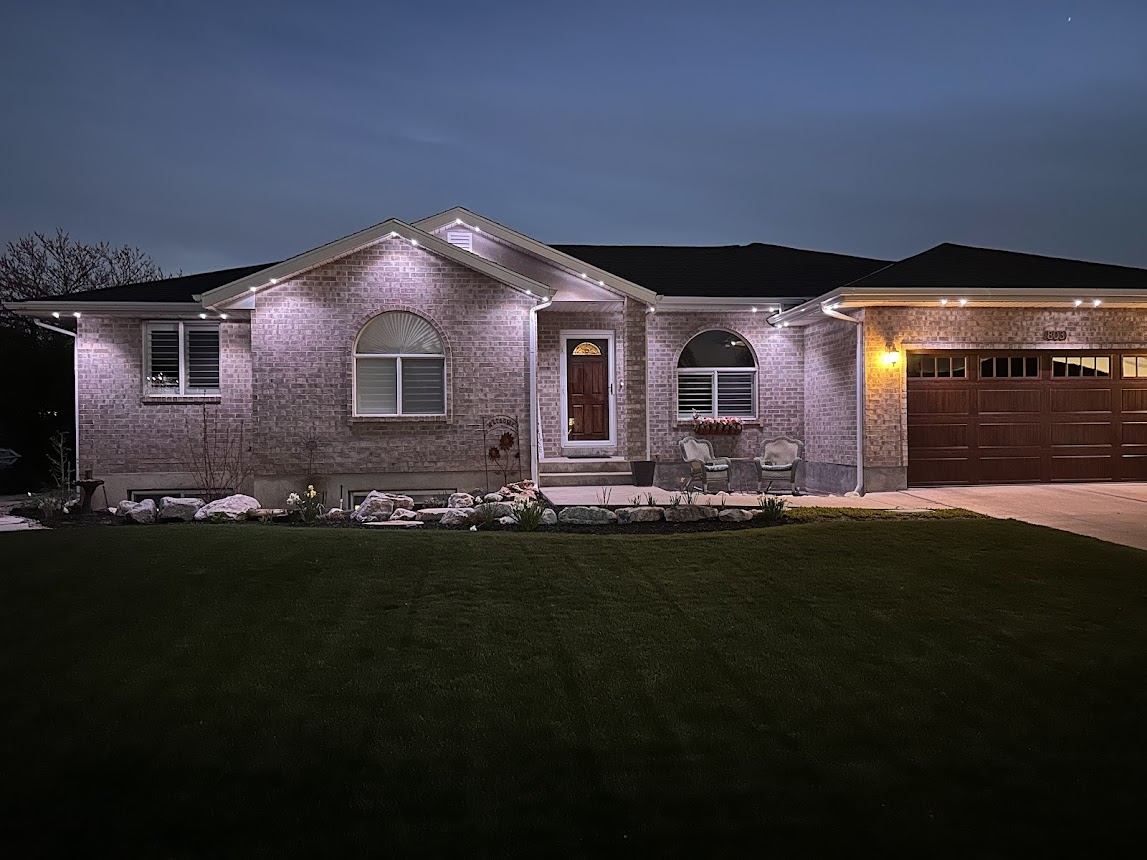
Invisilights are engineered to last, with each LED bulb boasting a lifespan of over 50,000 hours. Given a typical usage of 10 hours per night, this translates to approximately 5,000 nights. This means your Invisilights could illuminate your home's exterior for nearly 14 years under these conditions, ensuring that your investment not only adds beauty but also long-term value to your property.
Are Invisilights dimmable?
Yes, all Invisilights are fully dimmable. This feature allows you to adjust the intensity of the light to suit various occasions, from a soft glow for a romantic evening to bright, vibrant colors for a festive celebration.
What types of custom channels are available?
Invisilights offers two types of custom channels, available in 40 different colors, ensuring a nearly invisible installation. These channels are designed to blend seamlessly with your home’s architecture, providing discreet yet effective lighting.
Can I control different zones independently?
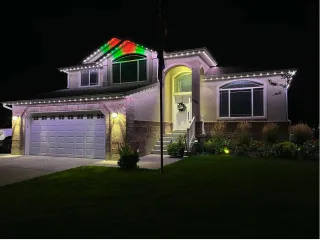
Yes, the Invisilights system supports multiple zones which can be controlled independently or synchronized. This functionality allows for intricate lighting designs that can vary across different areas of your home, enhancing the overall impact and utility of your installation.
What is outdoor permanent lighting?
Permanent lighting refers to architectural-grade lighting systems that are installed permanently on your property to provide year-round illumination.
How does permanent lighting differ from traditional holiday lighting?
Unlike traditional holiday lighting, which is typically temporary and used only during specific seasons, permanent lighting is installed once and can be used throughout the year for various occasions
Discover Expert Tips on Our Blog
5 Christmas Light Pricing Mistakes That Are Killing Your Profit
My first full Christmas light season, I grossed $40,000 and thought I was crushing it. I wasn't. I was just busy and broke on a ladder. Every dollar I left on the table that year came down to the same handful of pricing errors — the wrong price per foot, bad labor math, and no idea how to present a full job. The jobs kept coming, so I never stopped to ask why I was working harder than everyone and keeping less.
Here's the truth most installers never hear: the gap between a $40,000 season and a six-figure season usually isn't more hustle. It's knowing exactly where to quote and stopping the money that leaks out before the estimate ever gets sent. Below are the five pricing mistakes that quietly drain profit from established installation businesses — and how to fix each one this season.
Mistake #1: Pricing From Your Own Wallet Instead of Your Customer's Reality
This is the most expensive mistake in the business, and almost everyone makes it. You pull up to a $600,000 home, picture writing a check for $4,000 worth of lights yourself, flinch, and quote $1,500 instead. You just decided your customer's budget based on your bank account.
Your customer is not you. A homeowner in a $600,000 house with today's interest rates is likely paying $5,000 to $6,000 a month just to live there. To that person, a beautiful, fully installed display is a rounding error — and it buys them something they genuinely can't get any other way: time, safety, and the feeling of having the best-looking house on the block.
The numbers prove it. There are installers charging $6 a foot complaining they can't get more in their market, while another company a few miles away charges $12 to $15 a foot to the same customers and stays booked. One installer who attended training and charged what the market would actually bear did over $220,000 in his very first season hanging lights. Another, working in rural Tennessee, did $50,000 his first year charging $8 a foot in an area "experts" online swore would only pay $6.
The fix is simple to say and hard to live: price the job, then ask whether your best customer would flinch — not whether you would. Profit is not a dirty word. When you underprice, you aren't being generous; you're taking money out of your own pocket and convincing yourself the customer made you do it.
Mistake #2: Getting the Labor Math Wrong
The second profit-killer hides in your time estimates. You bid a job assuming it'll take an hour. The roof is steeper than it looked, the access is awkward, and three or four hours later you're still up there. You priced for one hour of labor and bought yourself half a day.
Two things drive this. First, new crews are slow — and that's normal. A second-year crew will install dramatically faster than a first-year crew, even one that only completed a handful of jobs. Speed comes from reps, better gear, and getting comfortable on roofs, not from talent. If you're thinking about adding installation to your business, the takeaway is to start this season even if it feels late. Three or four jobs this year means you'll install twice as fast next year.
Second, most installers never build labor reality into their per-foot price. Your rate has to assume real-world conditions — difficult pitches, second stories, the time it takes to pre-bulb and pre-clip strands at the shop, drive time, and takedown in January. When your price only covers a perfect, fast install, every imperfect job eats your margin. Price for the job you actually get, not the job you hope for.
Mistake #3: Quoting Only What the Customer Asked For
A homeowner calls and says, "I just want lights on the roofline." So you quote the front roofline, send an $800 estimate, and then wonder why your average ticket never climbs above $1,200.
You gave them exactly what they asked for and nothing more — and in doing so you skipped the entire job. The customer doesn't know what's possible. That's your job. Walk the property and present the whole display:
The full roofline, not just the front — peaks, ridges, and the back lines, which can easily double your linear footage.
A wreath over the garage or on the front of the house. A large statement wreath is one of the highest-margin, highest-visual upsells you can offer.
Columns and porch posts, priced individually.
Tree wrapping, priced by the foot of tree height — a single 20-foot evergreen wrapped properly can rival the price of the roofline.
Bushes and shrubs, lit with mini-light strands.
Walk through a typical home this way and an $800 "roofline only" quote becomes a $2,800 to $3,500 ticket — for the same trip, the same crew, the same drive time. The homeowner may not take everything, and that's fine. But if you only present the roofline, the roofline is all you'll ever sell.
Mistake #4: Selling Light Bulbs Instead of Selling the Magic
Here's where most pricing problems actually start: in how you talk about the work. If you describe the right bulb size, the clip spacing, and how you "pick the bulbs and cut them to length," you've already lost — because your customer doesn't care about any of that.
You are not selling Christmas lights. You're selling the feeling a family gets when they pull into the driveway at night, the grandkids in the back seat, coming home from Christmas Eve service, and the whole house is glowing. You're selling the magical look on a child's face, the neighbors' jealousy, and the relief of a homeowner who knows they will never have to climb a ladder in December. Some customers cry when they see their finished home. That is the product.
When you sell the magic, price stops being the conversation. A homeowner deciding between two installers who both quote "lights on the roof" will pick the cheap one. A homeowner who can picture their home as the most beautiful house on the street — and trusts you to deliver it — will happily pay a premium. Lead with the feeling, then put the line items underneath it.
Mistake #5: Losing the Sale Before You Ever Talk Price
You can fix the first four mistakes and still bleed profit if you can't sell on the phone. The first ten to twenty seconds of a call set the tone for the entire sale — and plenty of installers lose the job in the first five seconds without realizing it.
Speed matters more than almost anything: the faster you respond to a new lead, the higher your win rate. So does language. Never use the word "minimum" — it sounds like a barrier. Say "our packages start at $1,200," which is an invitation. Lead by asking what the homeowner is hoping for and whether they've ever had lights professionally installed; their answer tells you exactly how to position yourself.
If you're not sure where your calls fall apart, record yourself and review the transcripts honestly. You don't have to be a natural salesperson — you have to know where you talk too much, where you should listen, and where you fail to paint the picture. Then close the loop after the install: get the review. Reviews are still king, and they matter more than ever for how AI tools and search engines recommend local businesses. Use tap cards or QR codes to make leaving a review effortless, and collect them on Google, Yelp, and beyond — because plenty of platforms and AI assistants pull from those sources.
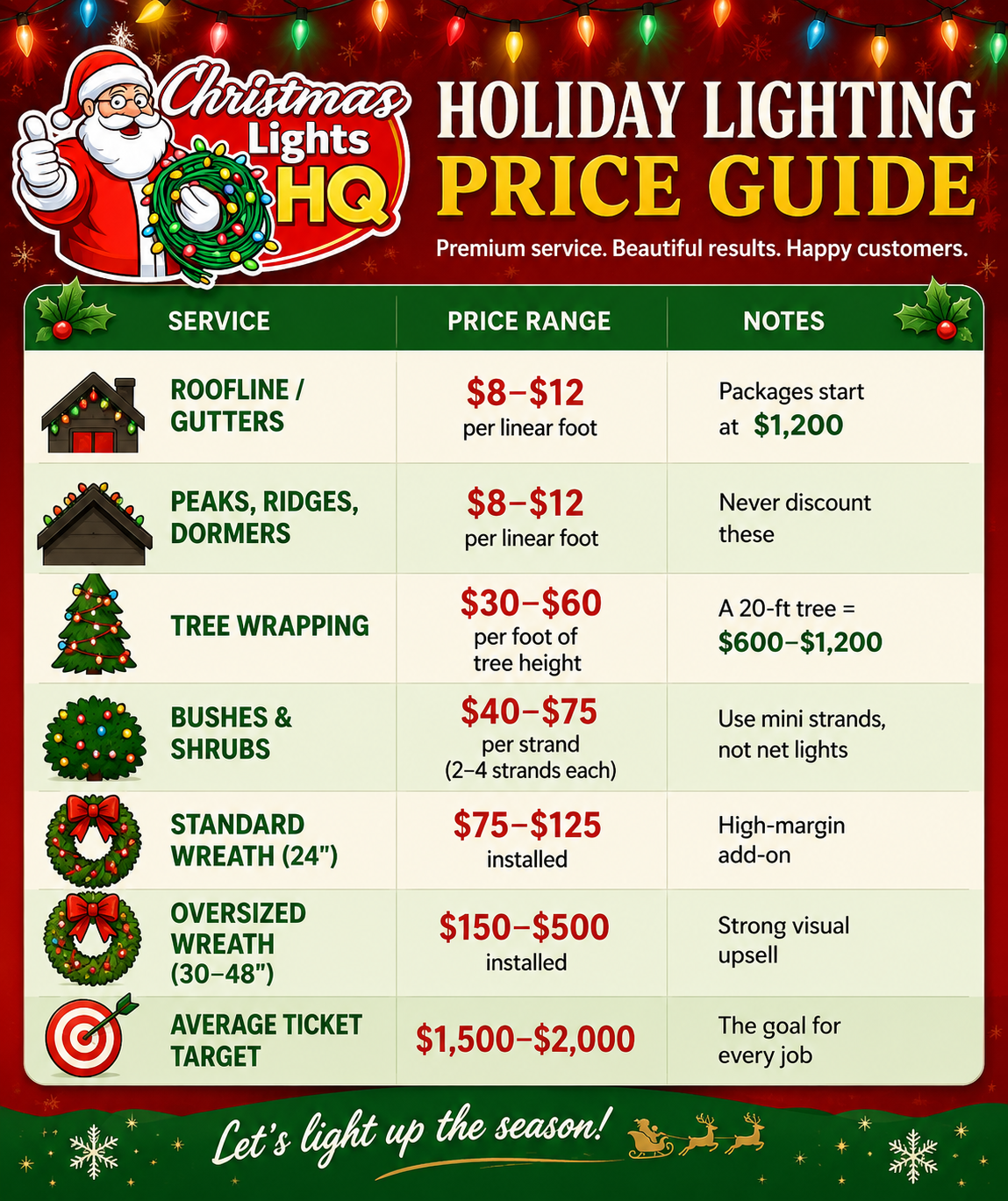
A Quick Christmas Light Pricing Reference
Use these field-tested ranges as your starting point. Adjust for your market, but resist the urge to drop below them:
The Real Difference Is Between Your Ears
Here's the math that should change how you think. An installer doing 35 jobs at a $1,000 average ticket makes $35,000. The same installer doing the same 35 jobs at a $2,000 average ticket makes $70,000 — double the money for the exact same work, the same drive time, the same number of roofs.
That's the whole game. You don't need more jobs; you need a higher average ticket. And the only thing standing between most installers and that number is the belief that their market "won't pay it." Find out where that belief came from. Usually it's advice from someone who underprices their own work or wants to sell you cheaper product. Surround yourself instead with operators charging premium rates and getting it.
A six-figure season is achievable in your first year. Seven figures is achievable for installers who treat this like a real business — set their prices with confidence, present the full display, sell the feeling, and pick up the phone. Whatever you decide today won't matter unless you take action on it. Price the next job the right way, and watch what happens.
Want hands-on help pricing, selling, and scaling your installation business? Explore the training and marketing resources at ChristmasLights.io.
How much should I charge per foot for Christmas light installation?
Most professional installers charge between $8 and $12 per linear foot for roofline installation, and many in stronger markets charge $12 to $15 or more. If you're charging $6 to $7 a foot, you're almost certainly leaving significant profit on the table. Price based on what your best customer will pay, not on what you personally would spend.
What is a good average ticket for a Christmas light job?
A healthy target average ticket is $1,500 to $2,000 per job. Raising your average from $1,000 to $2,000 doubles your revenue without adding a single extra job, which is why your average ticket — not your job count — is the number to focus on first.
How do I price tree wrapping for Christmas lights?
Price tree wrapping by the foot of tree height rather than charging a flat fee per tree. A common range is $30 to $60 per foot of height, so a 10-foot tree runs roughly $300 to $600 and a 20-foot tree runs $600 to $1,200. Charging one flat rate per tree almost always undercharges the tall, high-value trees.
Can I really charge premium prices in my market?
Yes. In nearly every market there are installers charging double what their cheapest competitors charge, serving the same customers and staying booked. Premium homeowners care about quality, reliability, and not climbing a ladder — not about finding the lowest price. The belief that your area "won't pay" is usually the only thing holding your prices down.
Why shouldn't I just quote what the customer asks for?
Because the customer doesn't know what's possible — that's your expertise to bring. If someone asks for "just the roofline," presenting the full display (back rooflines, peaks, wreaths, columns, trees, and bushes) can turn an $800 estimate into a $2,800 to $3,500 ticket on the same visit. Always present the complete vision and let the homeowner choose.
How do I stop underestimating how long a job takes?
Build real-world conditions into your pricing instead of assuming a perfect, fast install. Account for steep pitches, second stories, difficult access, shop prep time, and drive time. New crews are also naturally slower — that's normal — so price for the job you actually get, and your speed will improve dramatically by your second season.
Is it too late to start a Christmas light business this year?
No. Starting late and landing even three or four jobs this year is far better than waiting, because the experience makes you roughly twice as fast next season. Every install builds the reps, confidence, and gear knowledge that let you charge more and work faster going forward.
How important are online reviews for getting jobs?
Reviews are critical, and they matter more than ever as AI tools and search engines increasingly recommend local businesses based on reputation signals. Make leaving a review effortless with tap cards or QR codes, and gather reviews across multiple platforms — including Google and Yelp — since many search and AI systems pull from those sources.
What is the biggest mistake new installers make with pricing?
Pricing from their own wallet. They imagine paying for the lights themselves, get sticker shock, and quote low. The fix is to price the job and then ask whether your best customer would flinch — not whether you would. Your budget should never set your customer's price.
Why does "selling the magic" matter more than the lights themselves?
Because price objections shrink when a homeowner can picture their finished home and trusts you to deliver it. Customers don't buy bulbs and clips; they buy the feeling of the best-looking house on the street and the joy on their family's faces. Lead with that feeling and the line-item price becomes a much easier conversation.
Copyright ©2026 All Right Reserved website designed by christmaslights.io
Terms of Service / Privacy Policy
Have questions or need assistance?
Contact us at (855)619-LITE