

Podcast
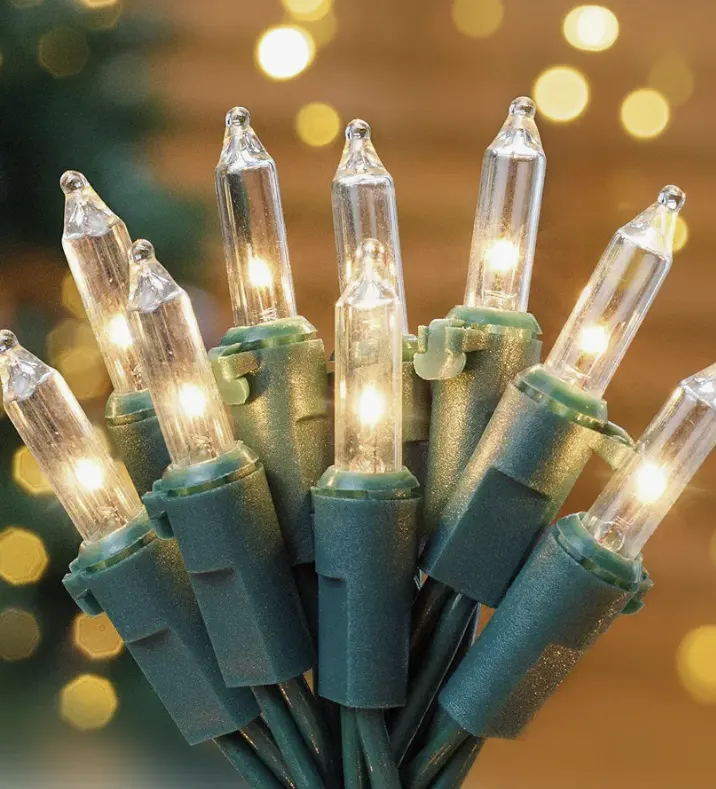
How to Change a Fuse in Mini Christmas Lights
A whole string of mini Christmas lights that goes dark is almost always a blown fuse. You can fix it in two minutes with a small screwdriver. Here is how to change a fuse in a mini Christmas light strand, step by step.
I hung lights for a living for years. I ran four crews and passed $1 million a year before I sold the company in 2018. I have swapped more of these little fuses than I can count, and it is the easiest repair in the whole business.
Watch me troubleshoot and change the fuses in the video above. The steps below match what I do on camera.
How do you know the fuse is blown?
Look at the symptom first. It tells you where the problem is.
| What you see | Likely cause | What to do |
|---|---|---|
| The whole strand is dark | Blown fuse or a bad plug | Check the fuses in the plug |
| One section is dark | A loose or dead bulb | Check the bulbs in that section |
| Half the strand is out | A bad bulb or a break in the wire | Check bulbs, then look for damage |
| Lights flicker | A loose bulb or a wet connection | Reseat bulbs and dry the plugs |
If only a few lights are out and the rest glow, leave the fuse alone. The problem is a bulb.
What do you need?
- A small flathead screwdriver.
- A spare fuse. Most strands ship with one in the package.
- Good light to see by.
Do not use a household fuse. Fuses for mini strands are tiny glass fuses made for that plug. Use the same type and the same rating as the one you pull out.
How do you change the fuse, step by step?
- Unplug the strand. Always. Pull the plug from the wall before you touch anything.
- Find the fuse door. Look on the male plug, the end that goes into the outlet. There is a small sliding door on top.
- Slide the door open. Use the screwdriver to push it. Go slow so you do not crack the plastic.
- Look at the two fuses. They are tiny glass tubes. A blown one has dark residue inside, or a broken wire.
- Pull out the blown fuse. Pop it out with the screwdriver tip. Take your time.
- Press in the new fuse. Match the rating. Push it in until it seats in the slot.
- Close the door. Slide it shut until it clicks.
- Plug the strand back in. The lights should come on.
Why do you need two good fuses?
Most mini light plugs hold two fuses. Check that both have metal contacts at each end. A fuse with no metal at the ends is a spare, not a working fuse. It will not protect the strand. If your plug shows only one real fuse, replace the empty slot with a proper one.
Why did the fuse blow in the first place?
A fuse is a safety part. It gives up so your wiring does not.
- Too many strands in a row. Every strand has a limit for how many sets can connect end to end. Read the tag and stay under it.
- A short in the wire. A cut or pinched cord can trip it.
- Water in the plug. Wet connections cause shorts. Keep plugs up off the ground.
- A bad bulb or socket. A damaged socket can pull too much power.
If the new fuse blows right away, stop. Do not try a bigger fuse. Do not wrap the fuse in foil. Something is wrong with the strand, and it is time to replace it.
What if the strand still will not light?
- Check that the fuse door is fully closed.
- Look at the plug for burn marks or melted plastic.
- Look at every bulb. One loose or missing bulb can stop a whole section.
- Check the wire for cuts, pinches, or crushed spots.
- Test the outlet with a lamp. It might be the GFCI that tripped.
If the strand still does not light after all that, buy a new one. A cheap fix that keeps failing costs more than a good set.
How do you keep fuses from blowing again?
Prevention is easy. It takes five minutes before the season.
- Test every strand on the floor. Plug it in at the garage before it goes on a tree. Fix problems where it is safe and warm.
- Read the tag. Count how many sets can connect end to end. Stay under that number.
- Choose LED over old incandescent. LEDs draw far less power. A retrofit C9 LED bulb draws under 1 watt, and an old incandescent C9 draws about 7 watts. Less draw means less stress on the fuse.
- Keep plugs dry. Lift the connection off the ground. Point the plug down so water runs away from it.
- Do not force it. If a plug fights you, stop and check it.
Should you fix the strand or replace it?
Here is my rule. A fuse change is worth two minutes every time. A bulb swap is worth a few minutes too. A cut wire, a melted plug, or corroded sockets are not worth your time. Toss the strand.
Contractors do the same thing on every job. We test every string at the shop. We fix the quick problems. We retire the bad strings so nobody climbs a ladder to fix a callback. You can copy that habit at home.
What about C9 and other big strings?
The steps above are for mini strands. Larger C9 strings work differently. They often have a fuse or a plug built in a different way, and some are wired in sections. If you run C9 lights on a roofline, the fix may be a single bulb, a section, or a plug. Read the tag and follow the maker's directions.
What lights should you buy instead?
If you are replacing a strand, pick one that lasts. Our mini string lights are made for tree wraps and bushes. For a softer effect, look at the twinkle LED mini lights. Need more reach from the outlet? See the extension cables and splitters so you do not chain too many strands together.
A timer also helps. It keeps the lights from running around the clock. Look at the outdoor timers and set them once.
Mini Light Fuse FAQ
Where is the fuse on a Christmas light strand?
It sits in the male plug, the end you push into the outlet. Look for a small sliding door on top.
Can I use a regular household fuse?
No. Use the small glass fuse made for your strand and match the rating. Household fuses do not fit and do not protect the strand.
Why does the new fuse keep blowing?
Too many strands may be connected end to end, or the strand has a short or water inside. Remove a set first. If it still blows, replace the strand.
Do I need to unplug the lights first?
Yes, every time. Pull the plug from the outlet before you open the fuse door.
What if I do not have a spare fuse?
Check the package for a spare or look at other strands. Fuses are cheap at a hardware store. Bring the old one to match the size.
What is the strangest reason a strand of lights has ever gone dark on you?

Copyright ©2026 All Right Reserved website designed by christmaslights.io
Terms of Service / Privacy Policy
Have questions or need assistance?
Contact us at (855)619-LITE