

Precision Control for Your Holiday Illuminations: Professional-Grade Outdoor Timers
Elevate your holiday lighting displays with our collection of professional-grade outdoor timers. These essential tools offer precise control and energy efficiency for your festive illuminations. Whether you're a professional installer or a homeowner looking to enhance your holiday decor, our range of timers provides the perfect solution for managing your lights with ease. From photo cell timers that automatically adjust to daylight changes, to digital and mechanical options offering customizable schedules, our selection ensures your displays shine at just the right times. Designed for both indoor and outdoor use, these durable timers combine convenience with reliability, helping you create magical holiday atmospheres while conserving energy. Discover how our timers can transform your lighting management and take your seasonal displays to the next level.
Timers
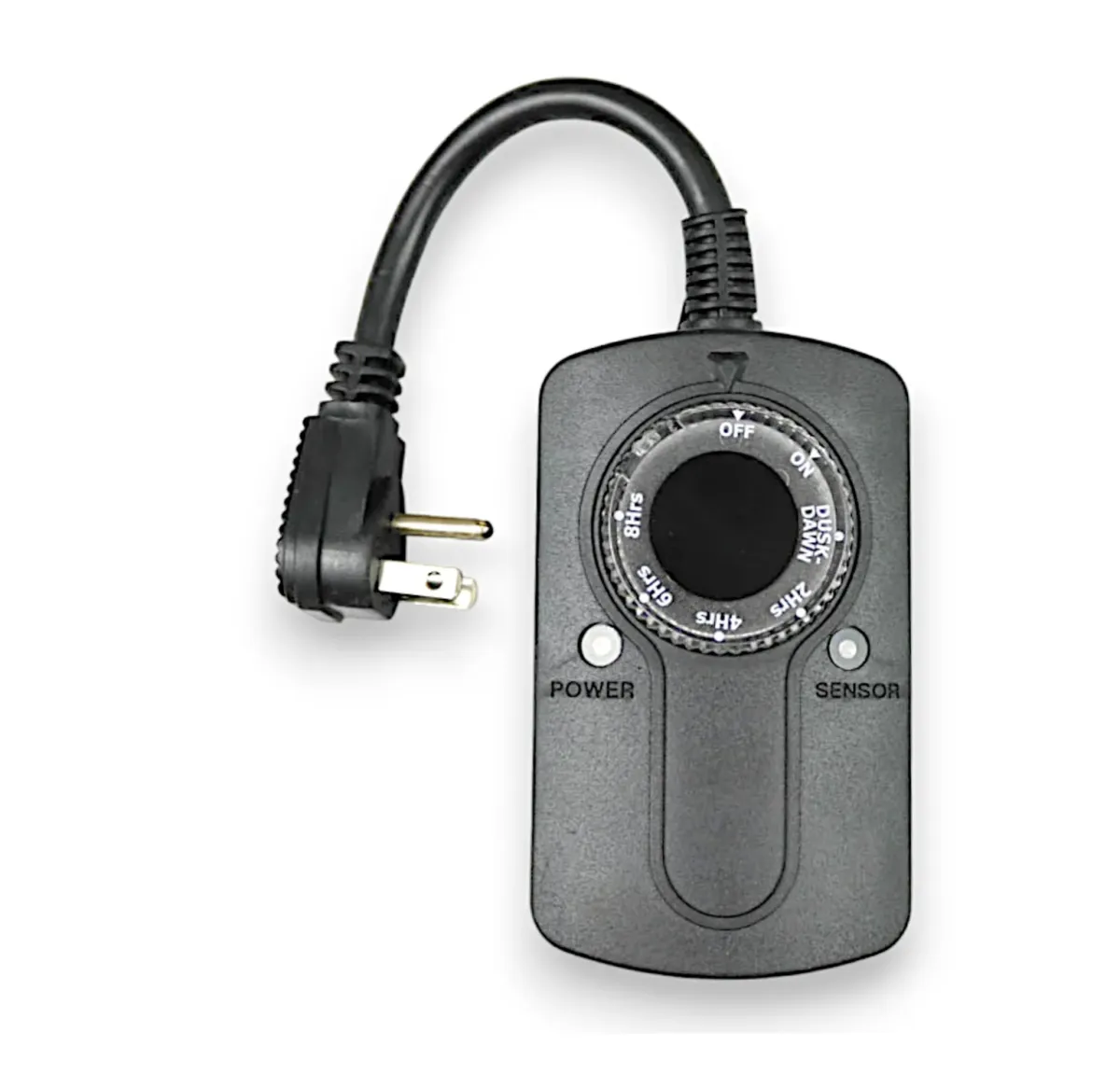
Photo Cell Timer
Enhance your holiday lighting control with our versatile Photo Cell Timer featuring a convenient right-angle plug. This intelligent device offers two outlets, providing flexible options for managing multiple light strings or decorations. The timer comes with a range of settings to suit your specific needs: choose between Off, On, Dusk to Dawn, or preset durations of 2, 4, 6, or 8 hours. The photo cell technology automatically detects ambient light levels, ensuring your lights turn on as darkness falls and off when daylight returns, perfect for the "Dusk to Dawn" setting. The right-angle plug design helps maximize space usage and reduces strain on your outlets. Whether you're looking to conserve energy, enhance security, or simply enjoy the convenience of automated lighting, this Photo Cell Timer is an essential tool for effortless and efficient holiday light management.
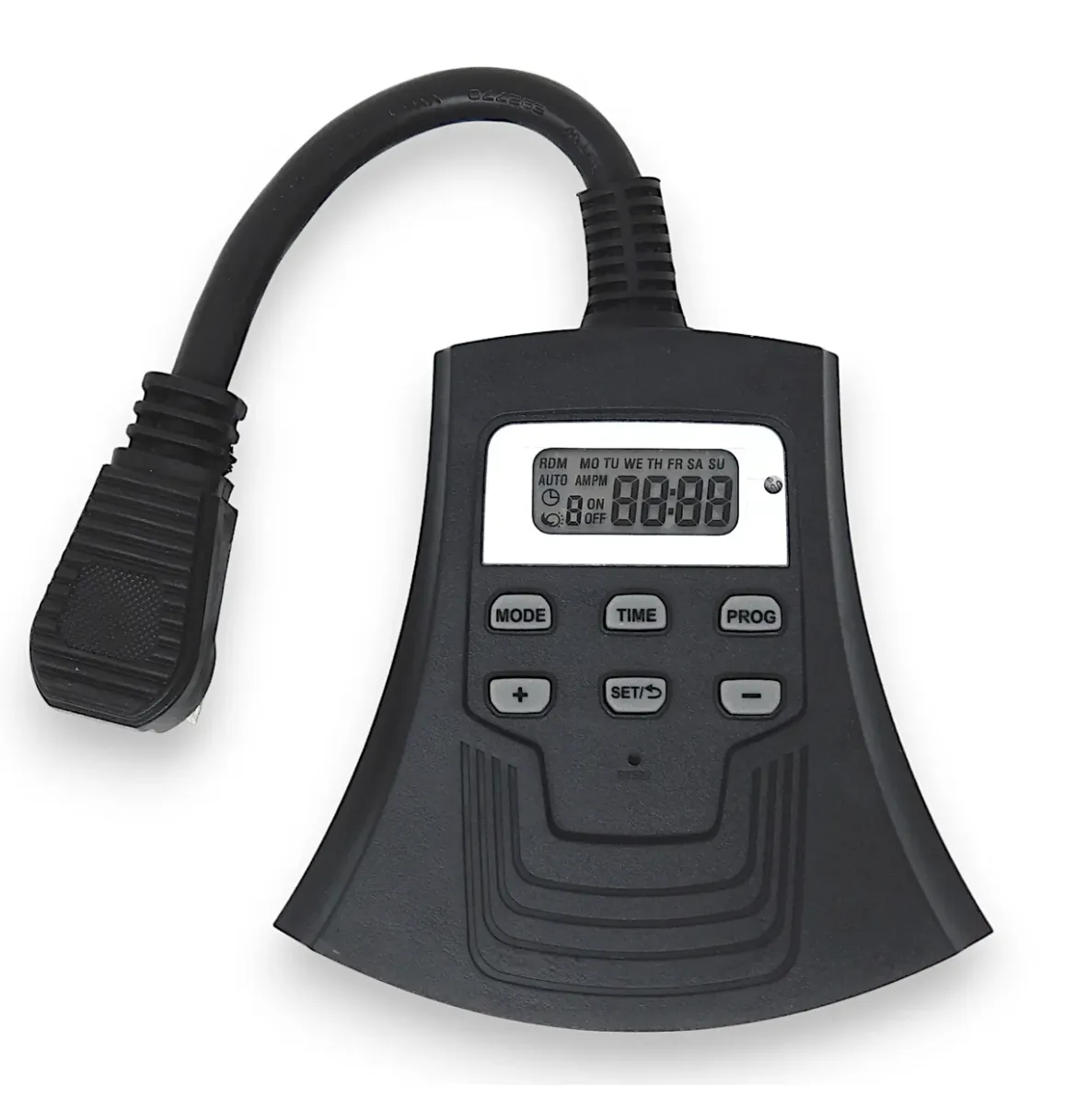
15 AMP Digital Timer
Streamline your outdoor lighting control with our efficient Mechanical Light Timer Switch Outlet. This versatile device is perfect for managing lamps, fans, garden lights, porch illumination, or holiday and Christmas displays, helping you reduce energy waste and extend the life of your decorations. The timer features customizable daily settings that you can adjust at any time, offering flexibility to match your changing needs or schedules. Built for durability, this wall-mounted timer comes with a three-prong, weatherproof design, ensuring reliable performance in various outdoor conditions. The three-switch outlet provides multiple connection options, allowing you to control several devices simultaneously. Whether you're looking to enhance security, create ambiance, or simply automate your outdoor lighting, this mechanical timer offers a user-friendly solution for effortless light management throughout the year.
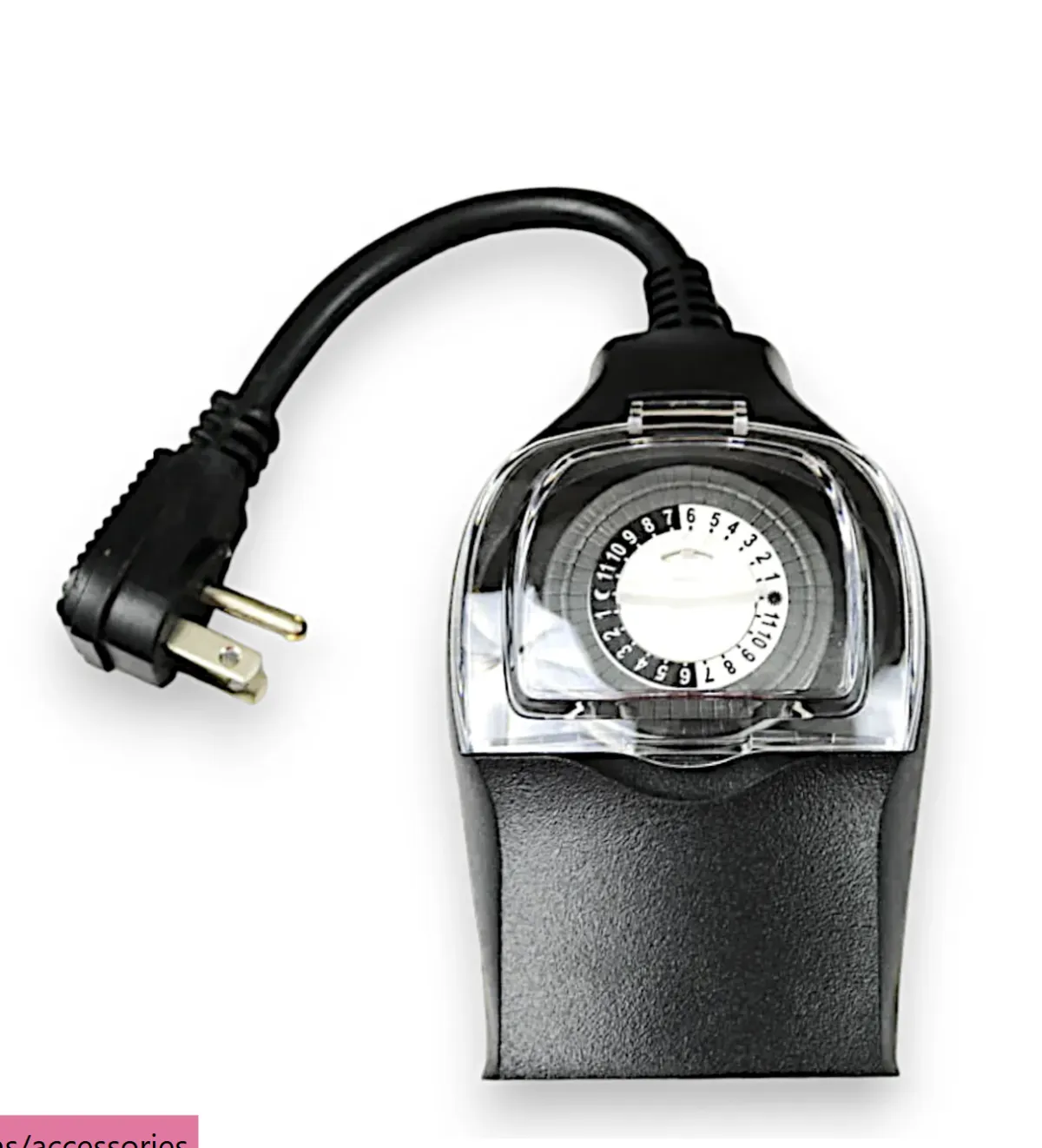
Mechanical Timer
Enhance your lighting control with our versatile In/Outdoor Mechanical Timer featuring a space-saving right-angle plug. This robust device offers two outlets, allowing you to manage multiple light strings or decorations simultaneously. Designed for both indoor and outdoor use, it's perfect for holiday displays, security lighting, or everyday household needs. The 24-hour programmable cycle provides ultimate flexibility, enabling you to set precise on/off times that repeat daily. With a powerful 15-amp capacity, this timer can handle most residential lighting and small appliance loads with ease. The mechanical design ensures reliability and ease of use, with no complicated programming required. Whether you're looking to automate your Christmas lights, control patio illumination, or simply manage energy consumption, this durable and practical timer is an essential tool for efficient light management in any setting.
Frequently Asked Questions
What types of timers do you offer?
We offer a variety of timers including Photo Cell Timers with right-angle plugs, 15 AMP Digital Timers, and Mechanical Timers. Each type has unique features to suit different needs and preferences.
Are these timers suitable for outdoor use?
Yes, all of our timers are designed for both indoor and outdoor use. They are built with weatherproof features to ensure reliable performance in various outdoor conditions.
How many outlets do these timers have?
Most of our timers, including the Photo Cell Timer and the Mechanical Timer, offer two outlets. This allows you to control multiple light strings or decorations simultaneously.
What's the benefit of a Photo Cell Timer?
A Photo Cell Timer automatically detects ambient light levels, turning your lights on at dusk and off at dawn. This "Dusk to Dawn" feature provides convenient, energy-efficient operation without manual adjustments.
Can I set specific on/off times with these timers?
Yes, our timers offer programmable cycles. For instance, the Mechanical Timer has a 24-hour programmable cycle, allowing you to set precise on/off times that repeat daily. The Photo Cell Timer also offers preset durations of 2, 4, 6, or 8 hours in addition to its Dusk to Dawn setting.
Discover Expert Tips on Our Blog

How Many Christmas Light Installs Can You Do in a Day?
How many houses can one crew hang in a day? The answer decides how much your Christmas light business can make in a season—and it comes down to systems, pay structure and average ticket.
Quick Answer: An experienced Christmas light crew with a $1,500 to $2,000 average ticket can typically install four to five houses a day, finishing each in 45 minutes to an hour. Five houses at a $2,000 average ticket is a $10,000 day. First-year installers should expect four to six hours on their first job. Speed comes from systems—pre-bulbing and pre-clipping, clear crew roles and performance-based pay.
This guide covers what separates a crew that's home by 4 p.m. from one still working at 7 p.m., how to pay installers so speed pays off, and how to keep the schedule full of the right jobs. For the full system, see ChristmasLights.io professional installer training.
How Many Houses Can a Crew Install in a Day?
It depends on experience and job size. Twenty or 30 houses a day isn't one crew—it's four or five crews working at once.
Experienced Crews: Four to Five Houses a Day
An experienced crew working $1,500 to $2,000 average tickets can do four to five houses a day. Speed still varies widely. One business had crews doing four to five houses a day and others managing one to two, so the slower crews got the easiest houses to keep them from working until 6 or 7 p.m. Another crew could take six houses and still be home by 4 or 5 p.m.
First-Year Installers: Plan for Slower Days
In your first year, don't plan on four houses a day. Your first job may take four to six hours while you learn the electrical side—where the males and females go, how to slide caps on fast—and get comfortable on steep roofs.
Being nervous up there is good. Fear beats overconfidence: last year, an installer with 20 years of experience walked off the back of a roof from the peak. Fear is only bad when it keeps you from knocking on doors or picking up the phone.
What Systems Help Crews Install Faster?
An experienced crew can finish a job in 45 minutes to an hour. That speed comes from systems.
Pre-Bulb and Pre-Clip Everything
This is probably the single best time-saver you have. Putting bulbs and clips on wire is a $10-an-hour task your kids, a stay-at-home mom or someone at the shop can do. When your roof guy does it on the job, he's doing shop work instead of roof work. Skipping it can add 20 minutes per job—across four jobs, that's an hour and 20 minutes, enough time for another job.
If you don't like bulbs pointing up on the roof and out on the gutters, pre-bulb two sets: one with gutter clips and one that points straight out. Store finished runs in garbage cans with wheels so crews can roll them in and out.
Give Every Crew Member a Role
On a fast crew, the ground person lays lights across the front while the roof person talks to the customer and gets on the roof. A great ground person anticipates: if the roofer didn't take an extension cord up, it's already on its way. While the roofer works, the ground person handles bushes and columns and moves fast when the roofer needs something—being on a roof is hard on your legs, knees and back.
Stock the right vest with the right gear, and keep a checklist for it. You don't always have to write systems down, but people can't read each other's minds.
Set Up Wreaths and Add-Ons as You Go
As you run the main line, put the female connector on and drop a jumper down for the wreath right then. On vinyl siding or stucco, you may have to screw in at the top; on brick, screw into the mortar lower down and move on. Before the day starts, know who's hanging the wreaths and garland and who's moving the ladder.
How Should You Pay Christmas Light Installers?
Paying by the hour often costs you money. When one crew finishes at 4 or 5 p.m. and another works until 6 or 7 p.m. to finish three jobs, the slow crew is on overtime and you're losing money. Performance pay ties the crew's earnings to getting the work done:
Pay model | How it works | What to know |
|---|---|---|
Per bulb | $0.80 to $1 per bulb | 1,000 bulbs = $1,000 for the crew. Even after paying a helper $200 to $300, the lead still makes $500 to $700. Crews work fast. |
Percentage | 10% to 15% of the job | One installer who paid 15% did it for only one year, then switched to paying per foot. |
Per foot | $1 to $2 per foot | $2 a foot is high, but if a crew gets it done fast, it may be worth it. |
If you can get labor costs down, that's better. But if a crew is fast at $2 a foot, let it go and keep moving forward.
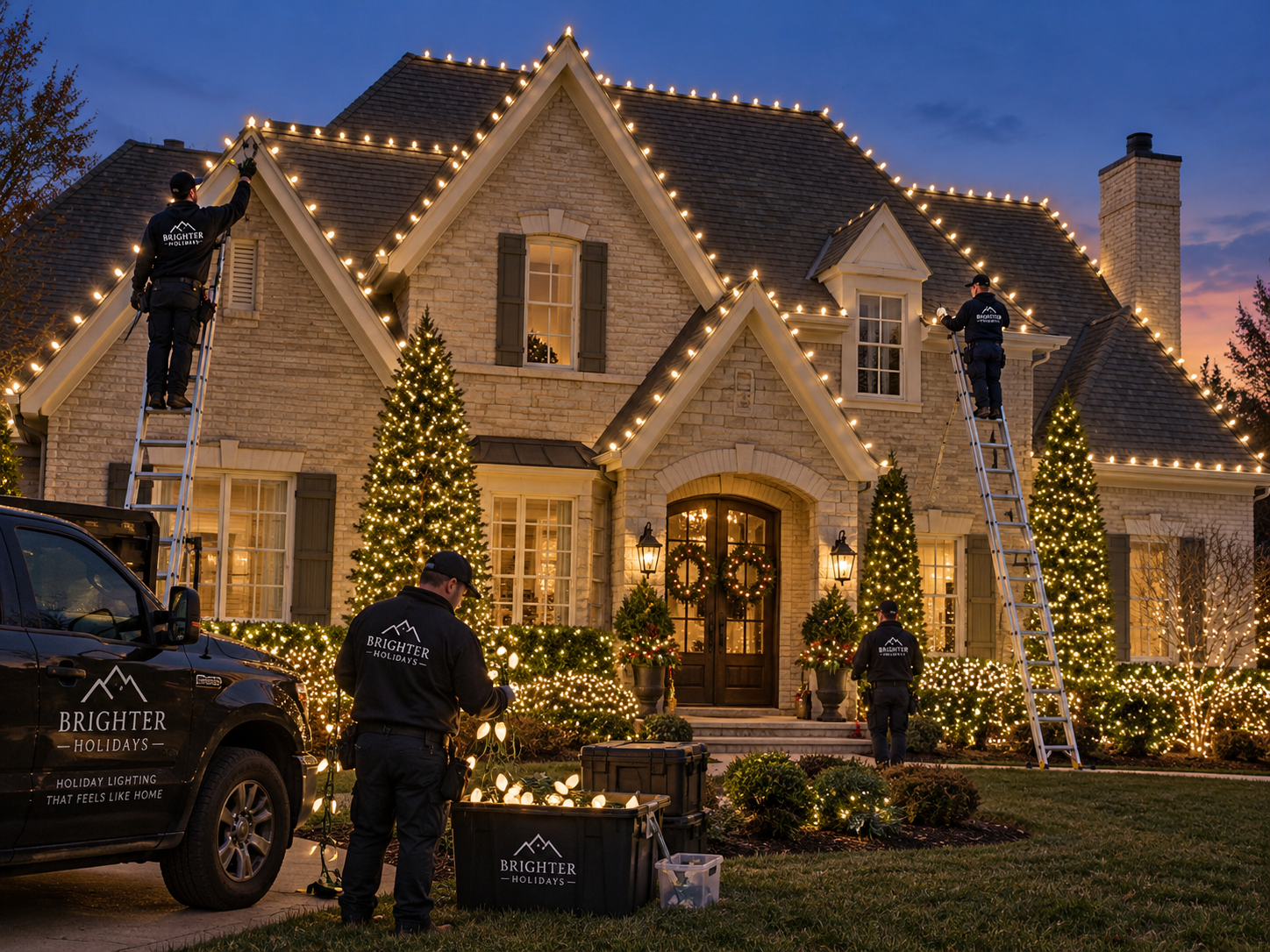
Why Does Average Ticket Matter as Much as Speed?
Five houses at a $2,000 average ticket is a $10,000 day, and installers in Florida, North Carolina, Oregon, Virginia, Kentucky and all over the country are doing it. At a $1,000 average ticket, four houses is $4,000—and that isn't profitable.
Speed isn't the only path. One $10,000 house or two $5,000 houses can make your day, too. Bigger jobs usually take longer because there's more on them: trees, bushes, maybe tree wraps.
Show the Houses You Want to Win
The photos on your website, Facebook page and Facebook ads decide who calls. Show small houses, and you'll get small houses. Show $5,000 homes with roofline, ridges, ground-stake lighting, pillars, columns, wreaths and garland, and you're more likely to get more $4,000 and $5,000 houses.
Find Customers Who Can Afford It
One installer's rule: if the Christmas lights cost more than their mortgage payment, they're probably not buying. Someone with a $1,000 to $1,500 mortgage payment probably isn't paying for professional lights.
Which Add-Ons Should You Approach Carefully?
Wreaths and garland: Wreaths and garland raise your ticket, but greenery costs more, good garland isn't cheap, it needs storage so it doesn't get ruined, and it has to be fluffed properly. In your first year, keep it simple.
Windows: Charge a lot—at least $20 a foot for the bulbs, and probably more. Glued lights fall off, which means return trips, and removal takes time. A PVC pipe frame works if the windows sit back far enough. $250 per window is too low.
Permanent lights mid-season: If you're booked out, permanent lighting jobs can cost you temporary work. If you take one, price it at $55 to $60 a foot—a two-hour job can turn into eight. Many installers hang Christmas lights now and schedule the permanent install for January through March, crediting the Christmas light money toward it.
How Do You Keep Your Crews' Schedule Full?
Fast crews need a steady stream of jobs, and referrals alone will only get you so far.
Put Out Targeted Yard Signs
Aim for 1,000 yard signs: about 100 a week for the next two months and 200 the week before Thanksgiving, the busiest week for Christmas light calls. One installer did $220,000 his first year from 1,000 signs. Signs take a week or two to arrive, so order now—signs in a box never make you money.
Target wealthier neighborhoods and the schools, churches, hospitals and high-end grocery stores around them. One installer drove 45 minutes to an hour to reach that kind of area, and it produced $400,000 to $450,000 of his $500,000 in Christmas light sales. Keep the design simple, and check the phone number three or four times—it's the only thing that has to be perfect.
Use Ads Wisely
Budget: $25 a day on Facebook is a start, but some installers spend $300 to $500 a day.
Timing: With a small budget, lean toward November, when there are more buyers and more urgency. With about $10,000, split October and November 50/50.
Testing: Results depend on your close rate and average ticket, so test channels and go all in on the winner. For Google Ads, $100 to $250 per lead can be worth it, because 80% to 90% of customers return next year.
Answer Fast and Follow Up
Answer the phone and get the quote out within 30 minutes—many customers will tell you you're the first company that even answered. When Facebook leads go quiet, call, text and email them three times a day for three days in a row.
Your Plan for Faster, More Profitable Install Days
Pre-bulb and pre-clip at the shop.
Assign roles before the crew arrives.
Stock the vest and use a checklist.
Switch to performance pay so speed pays off for the crew and for you.
Raise your average ticket with bigger homes and the right customers.
Fill the schedule with yard signs, fast answers and hard follow-up.
None of this happens if you just hope the phone rings. It takes work.
Ready to build crews that hang more houses a day? Learn the full system through ChristmasLights.io professional installer training or start with the online starter course, and connect with other installers in the ChristmasLights.io installer community. Stock up on professional-grade lights and supplies at Christmas Lights HQ.

How many houses can a Christmas light crew install in a day?
An experienced crew working $1,500 to $2,000 average tickets can typically install four to five houses a day. Some crews only manage one or two, and some can handle six and still be home by 4 or 5 p.m.
How long does it take to install Christmas lights on one house?
An experienced crew can finish a typical job in 45 minutes to an hour. A first-year installer may take four to six hours on the first job.
How do Christmas light installers make $10,000 a day?
By installing five houses at a $2,000 average ticket. At a $1,000 average ticket, four houses is only $4,000, which isn't profitable.
What does pre-bulbing and pre-clipping mean?
It means putting bulbs and clips on the wire at the shop instead of on the roof. It's a $10-an-hour task, and skipping it can add 20 minutes to every job.
How should I pay my Christmas light installers?
Performance pay usually works better than hourly: $0.80 to $1 per bulb, 10% to 15% of the job, or $1 to $2 per foot. Hourly pay can lose you money when a slow crew runs into overtime.

Should I sell permanent lights during Christmas light season?
If you're booked out, it can cost you temporary work. If you take a permanent job this season, price it at $55 to $60 a foot, or hang Christmas lights now and install permanent lighting in January through March.
How much should I charge to put Christmas lights on windows?
At least $20 a foot for the bulbs, and probably more. Lights fall off and require return trips, and removal takes time. $250 per window is too low.
How many yard signs should I put out for Christmas lights?
Aim for 1,000: about 100 a week for two months and 200 the week before Thanksgiving, the busiest week for Christmas light calls. Target wealthier neighborhoods and the schools, churches, hospitals and high-end grocery stores around them.
Should I spend my ad budget in October or November?
With a small budget, lean toward November, when there are more buyers and more urgency. With around $10,000, split it 50/50 between October and November.
How do I track Christmas light inventory?
Be intentional about what comes in and goes out. Budget about 200 feet per house—more with ground stakes or ridges. Some installers count inventory weekly in an app like Sortly so the sales team knows what's in stock.

Copyright ©2026 All Right Reserved website designed by christmaslights.io
Terms of Service / Privacy Policy
Have questions or need assistance?
Contact us at (855)619-LITE