

Christmas Lights Business Website
🎄 A Real Website for Your Christmas Light Business. Custom-built for Your Business, Your Services, Your Service Area.
The Same Site We Built for Installers Already Booking Their Season🎄
Structured for search from the first day it goes live. Not a template with your logo dropped in the corner.
Every page written from scratch for your services, your service area, and your name on the work. Built to win jobs, not just to be online.
Two ways to pay: $199 a month, or $2,000 upfront at a discount.
The Honest Truth
Your Business Grew. Your Website Should Too.
A basic starter site does one job: it makes you real. Somebody Googles your name, something shows up, you exist. That's a fine place to start.
But a starter site can't tell your story, can't rank for the towns you work in, and can't out-sell the installer down the road. When a homeowner is comparing three companies, "exists" doesn't win the job.
What This Is
The Site for When You're Done Starting
Every page custom written for your business. Your services, your towns, your crew, your name on the work. A pricing page that answers what homeowners actually search. Service area pages for every market you want to own.
Structured for search from the day it goes live.
What's Included
Everything Your Christmas Light Business Needs Online
Custom Multi-Page Website
Designed for Christmas light and permanent lighting installers. Fast, mobile-first, and built to turn a phone visitor into a booked quote.
Written for Your Market
Your services, your towns, your crew, your name on the work. Every page written from scratch for your business.
Service Area Pages
Individual pages for the towns you actually work in, so homeowners in each one can find you when they search.
Quote Request Form
Built to capture the lead and route it straight to you. Budget selector, address field, and text-message consent language included.
Analytics & Search Console
We set up Google Analytics and Google Search Console on your site at launch, tracking your traffic and your rankings from day one.
Hosting, Security & Support
Your site stays online, backed up, secure, and supported. Most issues handled within two business days.
Domain Included
Don't have a domain yet? We'll register one for you as part of the build. Already have one? We'll point it at your new site.
Built for Search From Day One
Clean page titles, real descriptions, and a structure Google understands. Done during the build.
Ready Before the Season
Only a few weeks from onboarding to launch, so your site is live and working before homeowners start searching.
The Build
10 to 15 Pages, Each One With a Job to Do
Every page targets something a homeowner is already searching for. Nothing is filler.
|
✓ Home — your offer, your proof, your quote form ✓ Residential Installation — the page that books most of your season ✓ Commercial Installation — storefronts, offices, HOAs ✓ Pricing — the question every homeowner searches first ✓ Permanent Lighting — your year-round revenue page ✓ Takedown & Storage — the service that wins the repeat customer ✓ About — your face, your family, your name on the work |
✓ Reviews — your proof, in one place ✓ Service Areas — the hub for every town you cover ✓ Individual Town Pages — built for your top markets ✓ FAQ — answers the objections before the call ✓ Contact — phone, form, and hours ✓ Terms & Privacy — published from the policies you provide |
Why Choose Our Christmas Lights Business Website?
Don't Take Our Word For It
Go Look at One We Built
Elite Christmas Lights in Fort Wayne, Indiana. Real installer, real crew, real photos off their own phones. Open it on your phone and click through it the way a homeowner would.
For Your Convenience
Two Ways to Pay. Pick Whichever Suits You.
Same website, same terms, same support either way. Spread it out monthly, or pay upfront and take the discount.
Pay Monthly
$199/month
24-month agreement. Nothing large due up front.
- The complete website build
- Domain registration if you need one
- Analytics and Search Console setup
- Hosting, security, and support
- Predictable monthly cost
Pay Upfront
$2,000
One payment. Same 24-month agreement.
- The complete website build
- Domain registration if you need one
- Analytics and Search Console setup
- Hosting, security, and support
- No monthly billing to track
Both options include the same website, the same hosting, and the same support, and both run on the same 24-month agreement. After 24 months your service converts to month-to-month, cancellable with 48 hours' notice.
Straight Answer
Why a 24-Month Agreement?
This Is a Custom Build
Every page is written and designed for your business from scratch. The agreement is what lets us build at this level without charging the full cost of a custom site on day one.
Your Site Has to Stay Live
Hosting, security, backups, and support don't stop after launch. The agreement covers keeping your site online and working through two full Christmas seasons.
Search Takes Time to Reward You
A site built right still needs months of being live before Google fully trusts it. Two seasons is where the work starts paying you back.
Your Website Starts Here
Frequently Asked Questions
Do I need technical skills?
None at all. We build the entire site for you and handle the technical side. You send us your information, we do the rest.
What's included after my site launches?
Everything that keeps your site online and working: hosting, security, backups, and technical support. Your website isn't something you have to think about again — it just stays up and does its job through the season.
How long does it take?
Faster than most people expect. Once we have your completed onboarding form, your photos, and your business information, most sites launch within a few weeks.
Can I use my own domain name?
Yes. If you already own one, we'll point it at your new site. If you don't have one, we'll register it for you as part of the build.
What if I don't have photos of my work yet?
No problem! We'll launch with professional stock imagery but we'd always rather use yours, so send whatever you've got.
What happens after 24 months?
Your service converts to a month-to-month plan that covers hosting, security, and support. You can cancel any time with 48 hours' notice.
Will this guarantee me leads?
No, and be careful with anyone who tells you otherwise. A website is the foundation. Getting found still takes reviews, Google Business Profile work, ads, and getting your name out in your market. We build you the foundation that's worth marketing.
Your Competitor's Site Is Already Up
Every day your site isn't live is a day customers in your towns are finding somebody else. There's no wrong time to fix that.
Questions first? Call (855) 619-LITE.
Discover Expert Tips on Our Blog

You Can't Get $8 a Foot? The Mindset, Pitch, and Marketing Behind Premium Christmas Light Pricing
"You can't get $8 a foot in my area." Installers say it all the time, and the honest answer is that if you don't believe you can get $8 a foot, you're absolutely right. This guide breaks down the mindset, the pitch, and the marketing that installers use to get $8, $10, and even $15 a foot, plus what to do about yard signs, Facebook ads, hiring, and answering the phone during the two busiest weeks of the season.
If you want more strategies for growing a Christmas light installation business, start here.
If You Don't Believe It, You Won't Achieve It
Mindset matters as much as sales technique. If you don't believe you can get $8 a foot, you will never get $8 a foot. If you don't believe it, neither will your customers. Think and Grow Rich is a book worth reading on this, and Who Not How is another good one.
Watch the Words You Speak
When you're thinking about $6 a foot and whether the customer will pay $8, those thoughts show up in your words, and customers hear it. You start thinking you'd better go to $3 because someone else will do it for $2, and soon you're thinking about a dollar. That's the battle in your head, and it comes out in every sales call.
Confident Is Not Cocky
There's a fine line between being cocky and being confident. Most people think cocky is close, so they stay far away from it and end up timid. Be confident: "This house is going to look the most amazing. I can help you. I'll show up and do what I need to do to make yours right." If you don't believe you're the best, you'll never get the best.
Win Reports From the Season
Wins matter, so look at them. Installers are posting results like these:
A coached installer closed over $15,000 on a single Friday and did more over the weekend.
A second-year installer decided to go for it and did $110,000 by himself, with another 15 to 25 days of work still to go.
One installer in a small town in Virginia of 80,000 to 90,000 people installed over $90,000 in lights for the second straight week. He was $10,000 short of a $100,000 week, and he has employees and sales people doing the installs.
One installer in Dallas, Texas closed $40,000 in a week, is fully booked for a week, and is selling at $7 to $15 a foot. He closed a $4,000 large bush wrap job.
One installer put up almost $300,000 in October and his crew never worked a weekend. He also reported a 92% renewal rate.
One first-year installer is at about $35,000 and may reach $50,000 to $75,000.
Where $8 a Foot Is Possible, and Where It's Hard
Some areas are harder. A customer located two counties away from a major city, out in the sticks, will have a tougher time getting $8 a foot, and may not get many customers even at $5 or $6 a foot. That's honest. But you can still do it, and it's not impossible.
Go to the High-Dollar Pockets
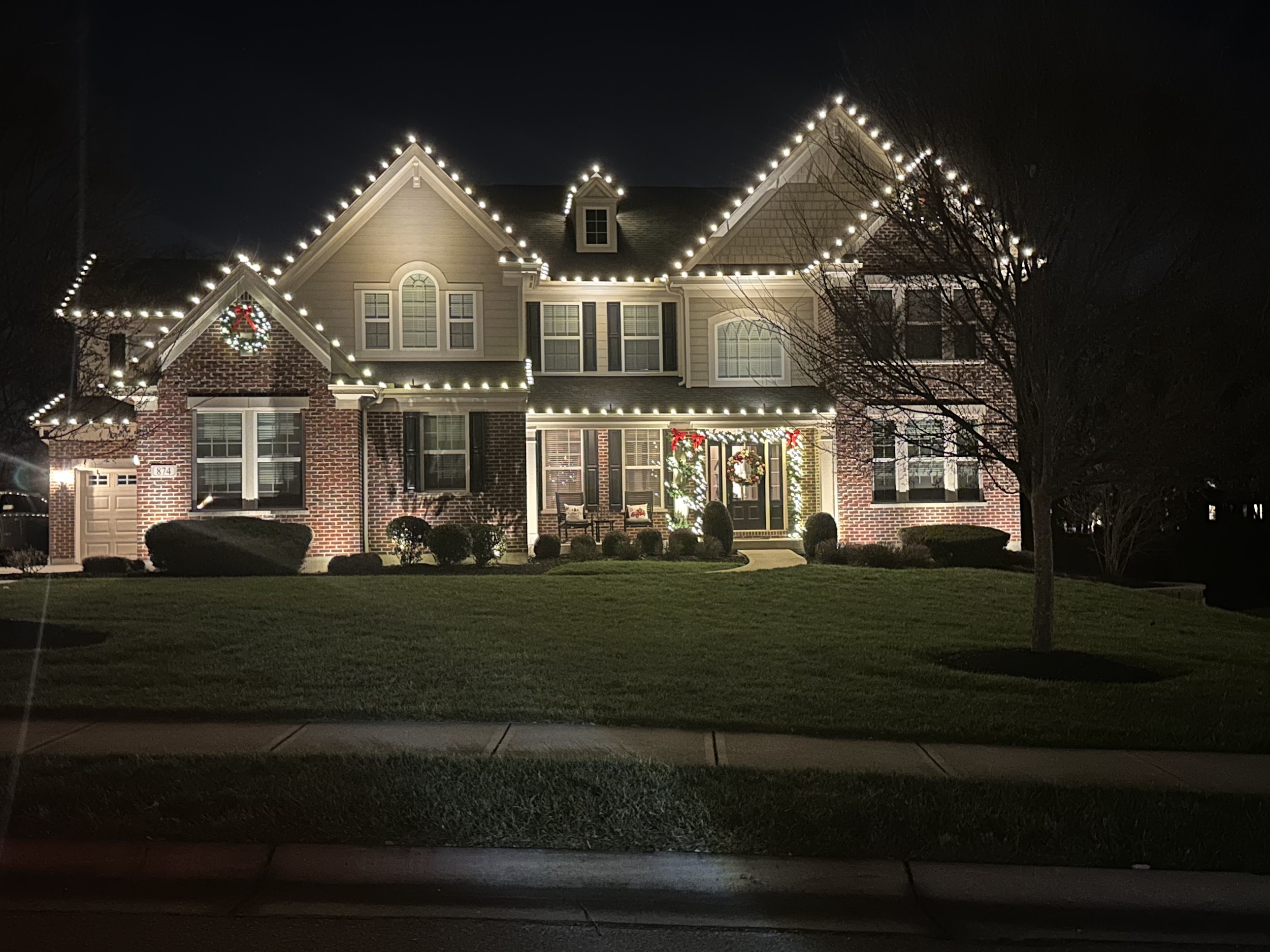
Most cities have a high-dollar pocket, and it's often on the north side of the city. Examples: the north side of Cincinnati, the northeast side of Columbus, and the northeast side of Indianapolis, including Carmel. If you live within an hour of a major city, there are wealthy people with money to spend.
You don't have to service the whole city. One installer in Dallas only services the pockets he wants. People who want Christmas lights are everywhere, but not everyone can afford them. Find the pockets that can, where people want to keep up with the Joneses and give their kids and grandkids an amazing experience.
Big Cities Have the Money
Installers in Houston and Dallas say there are only cheap people in their town, yet Houston has eight million people and expensive cars drive by every day. You don't need everybody. In Houston, installers are getting $8 to $10 a foot, and one installer in Dallas gets $8 to $9 a foot. Another in Dallas, who had hung lights for 28 years at $4 to $5 a foot, raised his prices and lost about 15 to 20% of his customers. He now makes more money and does less work, because he's getting a different type of customer.
Know Your House Range
One installer's customers were houses in about the $300,000 to $1 million range. He didn't go after multi-million-dollar homes, because they often already have landscapers and helpers. In places like California, a customer may be in a million-dollar house.
Attract Better Customers
You attract your customers. If you're cheap, you'll attract cheap customers, and people who nickel-and-dime everything complain when their customers nickel-and-dime them.
Post Your Best Jobs
On your website, don't post small houses unless you want more of them. Post the $2,000, $3,000, and $5,000 installs, because those are the customers you want.
100 Customers Beat 200
Would you rather have 100 customers paying an average of $2,000 at $8 to $10 a foot, or 200 customers paying $1,000? The first is a lot less work. For more on premium pricing, visit ChristmasLights.io.
The Pitch: Sell the Emotion, Not the Bulb
About 90% of people buy on emotion. That's true for Christmas lights and also for cars, clothing, eyewear, teeth, and hair. You're not selling Christmas lights. You're selling the emotion of Christmas.
Stop Talking About the Product
If you say, "We use LEDs. We cut the wire to the length," so does everyone else. That doesn't set you apart. You can get $5 or $6 a foot all day if that's what you want to talk about. Instead, talk about how amazing and beautiful their home is going to be, and go hard on it.
One approach used by sales pros: never talk about the product, talk about the problem you solve. For Christmas lights, the problem is making a house look amazing. Your pitch: "We make your home look amazing." You don't hang Christmas lights. You make homes look amazing.
Sell Memories
Ask customers what their parents did to decorate for Christmas. They all remember, no matter how old they are. Then tell them your goal is for their kids to have those same memories when they're that age. This is gold, so put it in your sales script. You are selling memories from when they were kids, and you will give the same memory to their kids.
Talk about the kids and how excited they'll be. One father said he could have sent his kids to Disney and spent half a million dollars and never gotten the reaction out of them that the lights did. That reaction is what you sell.
Record Your Calls
Start recording your calls. Put them in ChatGPT or Claude and ask what you can do better and which negative words may have lost the sale.
Yard Signs: Want It More Than the Person Pulling Them
Yard signs work for a lot of installers, though not for everyone. Installers who say they don't work are right, for them. But people who put out two or three thousand signs in a season do it for a reason.
How Many Signs and Where
One installer has put out 1,100 yard signs, and they get pulled. Put them out everywhere, not just some places. He put them up 20 times this season. The question is whether you want it more than the person pulling them and more than your competitors.
If your signs get pulled, try these:
Put them out Saturday morning if they get pulled on Friday. You want them out Saturday, Sunday, and Monday. If they're pulled after that, so be it.
Try different areas: busier intersections, hospitals by the doctor parking, and the higher-end part of town.
Put them in areas where they don't get pulled as often, and then keep hammering them out.
Don't Let Fear Stop You
If someone says they got a code enforcement call, ask whether it was really code enforcement or someone acting like it. Go put them out everywhere.
A Simple Design
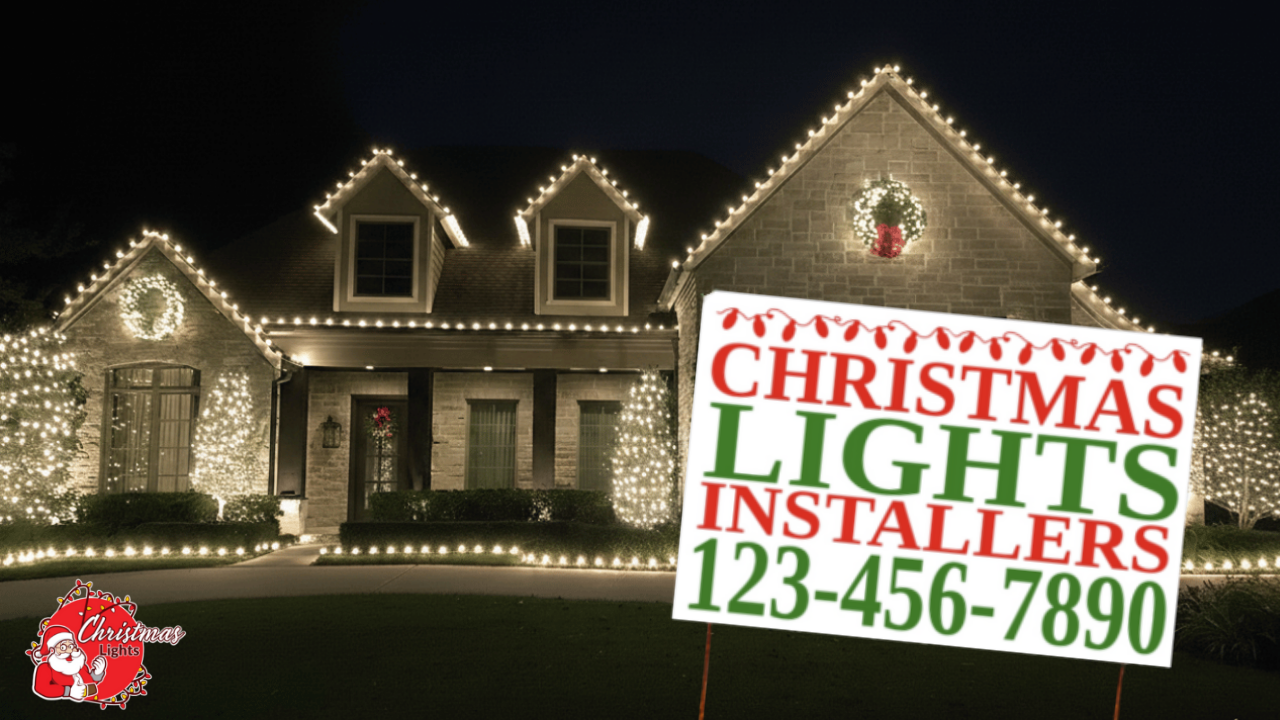
A sign says "Christmas light installation" and a phone number, in one color, white lettering on a red background.
Signs vs. Meta Ads
One installer put out 350 yard signs and ran $2,000 in Meta ads, and closed 16 jobs for about $35,000 gross. The average ticket is over $2,000. If the choice is another $1,000 in signs or more ads, the bet is that the signs brought in about twice as much as the ads. Put the money into more signs.
Meta ads have not worked well this year for several installers. Some paid $4,000 to $5,000 or $6,000 to $7,000 in Facebook ads and made about $2,000. One installer got a $1,000 job off $5,000 to $6,000 invested. One installer in a rural area gets about 40% of his business from yard signs, 30% from Facebook, 20% from word of mouth, and 10% from personal relationships. Because he is rural, signs stay in the county. Test everything, and put the most into what makes the most.
Answer the Phone
Answering the phone is the number one thing. Businesses are losing money by not answering. If you don't answer, the caller calls the next person.
One installer picked up a new client even though he was priced higher, because the client couldn't get the former company to answer the phone. Four clients had the same story this year. One company has a system where the phone rings three times, then transfers to another office person, then to a virtual assistant, then to another office.
If you're on a call with somebody else, hire someone to answer and put them on hold. If you put out 1,100 yard signs or spend $10,000 on marketing, pick up the phone.
Marketing Costs Money
New installers ask what a reasonable marketing budget is. It's not cheap to get leads. Do you want to grow a little or a lot? Are you willing to spend $10,000 to $15,000 to get to $100,000, or will you spend $5,000 and wonder why you only reach $30,000 or $40,000? A website costs money, a Google Business Profile costs money, SEO costs money, and Google Ads and Facebook ads cost money. So do buying and placing yard signs and paying people to put them out every week. Do you want a business or a hobby?
A New Installer in a Competitive Market
An installer who moved to central Florida did $69,000 in Christmas lights last year in a small town, and is at $20,000 this year despite more marketing. His close rate is about 25%, but he struggles to get enough quote appointments, and signs get pulled by the city. New-built subdivisions are good to market to, because those homeowners want to impress the neighborhood. The advice: check your ads, time your signs, and be "five-mile famous" on social media.
Hiring and Crews
Hire Another Crew Now
An installer who is fully booked at good prices asked whether to hire another crew now. The answer: yes. Find a roofer who is slow now and can be brought up to speed in three days. It's too early in the season to stop. The real lesson is that you should have raised your prices a long time ago, to $10, $12, or $15 a foot.
Get Off the Truck
The faster you get off the truck, the faster your business grows. It takes as long as you're hands-on. Don't hire someone with a lot of experience, because they're usually the worst. Hire someone hungry with a great attitude. A negative person is cancer in your business.
Pay for Performance
Pay by percentage or by the foot, so the faster crews work, the more they make. You can pay an hourly wage plus a percentage of anything over a set amount. One installer pays a two-man crew by performance. The head guy makes about $4,000 a week, and a helper makes about $1,800 a week, plus a $500 bonus each for not missing a day in October and $700 for not missing a day in November.
Product Notes
About 80 to 90% of customers want warm white. Installers like the KingPro bulb and the TUFF bulb. One installer asked whether warm white six-inch minis match the KingPro warm whites, and they do. One installer introduced a new color called Frozen, a teal blue and cool white that looks like ice. If the homeowner has little girls or granddaughters, it's a sale. A three-year contract is a common term.
Christmas Lights HQ carries kits and everything you need, ships fast, and answers the phone when you have an issue. About 75% of orders arrive within two to three days, and about 78% ship the same day. For bulbs and clips, shop Christmas Lights HQ.
Is It Too Late to Start?
No. Start this year and get four, five, or ten jobs, and next year you'll have a head start. People who started in December made $5,000 to $10,000, and the next year made $100,000 to $200,000 because they figured out what worked. Business typically drops off around December 5 to December 10.
These Two Weeks Matter Most
This week and next week are the two busiest weeks of the Christmas light season, because everybody wants their lights up before Thanksgiving. You'll get some after that, but these are the go weeks. Put out all the yard signs, and put everything you have into it.
Stay Safe
People have been falling off roofs, and some have fallen off stepladders. Take your time and use the right equipment. It might cost you, but it's cheaper than a hospital bill.
For more training, visit ChristmasLights.io or the online class.

Can I really get $8 a foot in my area?
It depends on belief and where you work. If you don't believe it, you won't get it. Look for high-dollar pockets, often on the north or northeast side of a city. Learn more at ChristmasLights.io.
What should I say instead of talking about bulbs?
Talk about the problem you solve: "We make your home look amazing." Ask what their parents did to decorate for Christmas and tell them your goal is for their kids to have those memories.
Is it better to have 100 customers at $2,000 or 200 at $1,000?
100 customers at about $2,000 is a lot less work.
What pictures should I post on my website?
Post the $2,000, $3,000, and $5,000 installs, because those are the customers you want.

What should I do if my yard signs get pulled?
Put them out Saturday morning, try busier intersections, hospital parking and the higher-end part of town, and keep putting them out in many places.
Are yard signs better than Meta ads?
For some installers, yes. One installer would bet that his $1,000 in signs brought in about twice as much as his $2,000 in ads. Test and track your results.
How important is answering the phone?
It's the number one thing. If you don't answer, the caller calls the next person.
Should I hire another crew when I'm booked?
Yes. Find a roofer who is slow now and can be up to speed in about three days, and raise prices.
How should I pay crews?
Pay for performance, with a percentage or per-foot pay so faster crews earn more. Hire hungry people with a great attitude.
What colors do most customers want?
About 80 to 90% want warm white. Find lights and kits at Christmas Lights HQ.

Copyright ©2026 All Right Reserved website designed by christmaslights.io
Terms of Service / Privacy Policy
Have questions or need assistance?
Contact us at (855)619-LITE