

Wholesale Pricing Presale Christmas Lights Clips
Pre-Season Wholesale C9 Best Clips
As Low As $0.14 per Clip
Elevate your Christmas light installations with the C9 Best Clip, the industry’s top choice for professional holiday decorators. Designed by a professional installer specifically for other installers, this nearly unbreakable clip is crafted to withstand the rigors of outdoor use season after season. Whether you're working on gutters, drip edges, or even shingles, the C9 Best Clip is the versatile, durable solution that makes your job easier and keeps costs down over the years.
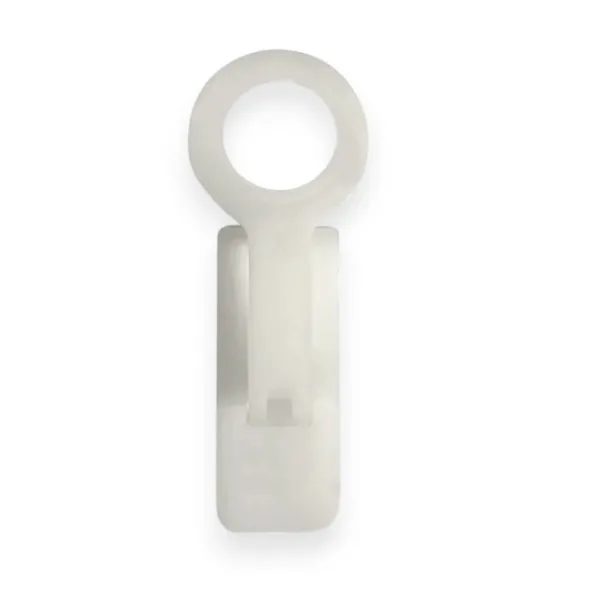
Colors Available:
White
Brown
Quantities Available:
1000/case
2000/case
Key Features:
Heavy-Duty Construction: Built from nearly unbreakable materials, the C9 Best Clip is designed to endure harsh weather conditions, ensuring reliable performance year after year.
Installer-Approved Design: Created by a professional Christmas light installer, this clip is engineered to meet the demands of the job, making installations faster and more efficient.
Versatile Use: The C9 Best Clip is perfect for securing lights along gutters, drip edges, and, in some cases, shingles, providing flexibility for a wide range of installation scenarios.
Cost-Effective: Reusable and durable, the C9 Best Clip is a cost-effective choice for professional installers, reducing the need for frequent replacements and lowering overall installation costs.
Recommended by Professionals: Trusted and recommended by expert Christmas light installers, the C9 Best Clip is the go-to solution for securing C9 bulbs and other holiday lighting elements.
Pre-Season Wholesale Best Shingle Tab Clips
As Low As $0.12 per Clip
Upgrade your Christmas light installations with the Durable Shingle Tab, designed to outlast and outperform standard shingle tabs. Made from highly durable plastic, this shingle tab provides a longer-lasting, more secure hold for both C7 and C9 sockets, ensuring your holiday lights stay perfectly in place. Whether you're installing lights on shingles, gutters, or decks, this versatile tab is the perfect Christmas light accessory.
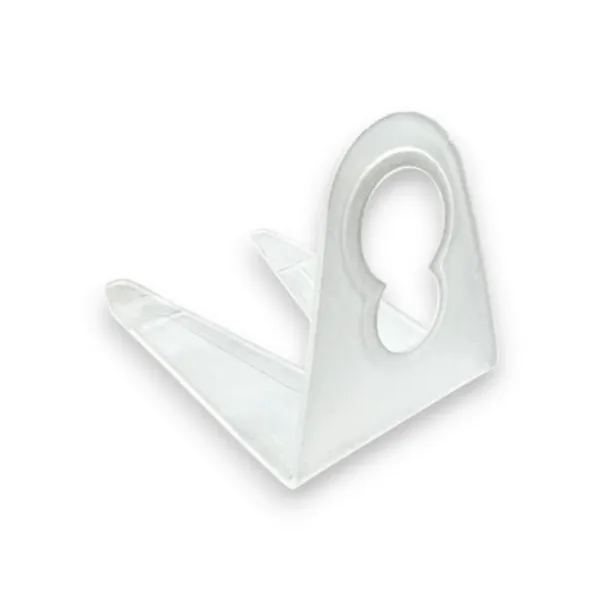
Colors Available:
White
Quantities Available:
1000/case
Key Features:
Very Durable Plastic: Constructed from premium, long-lasting plastic, this shingle tab is built to endure harsh weather conditions, providing years of reliable use—far exceeding the lifespan of standard shingle tabs.
Superior Socket Hold: Specifically designed to hold C7 and C9 sockets more securely than regular shingle tabs, ensuring your lights remain in place throughout the holiday season.
Easy Installation: The tab's design allows it to slide easily under shingles, making installation quicker and less frustrating than with other shingle tabs.
Versatile Use: Perfect for use on shingles, gutters, and decks. Simply wedge the legs within available spaces to secure the tab, or use it in conjunction with a parapet clip on flat surfaces for added stability.
Compatible with Parapet Clip: For flat surfaces, pair this shingle tab with a parapet clip to achieve a secure, professional-grade installation. It’s the perfect accessory for any Christmas light display.
Pre-Season Wholesale C9/C7 Best Enclosed Ridge Clips 500/Case
As Low As $0.40 per Clip
The Best Enclosed Ridge Clip is designed for professional holiday lighting installations, offering unbeatable security, durability, and versatility. Made from high-quality, durable plastic, this clip features an enclosed design that ensures it will never detach from the light strand, providing confidence that your lights will stay firmly in place. Its extended length accommodates any ridge shingle without causing damage, making it perfect for worry-free installations. Plus, it’s compatible with both C9 and C7 bulbs, adding even more flexibility to your setup.
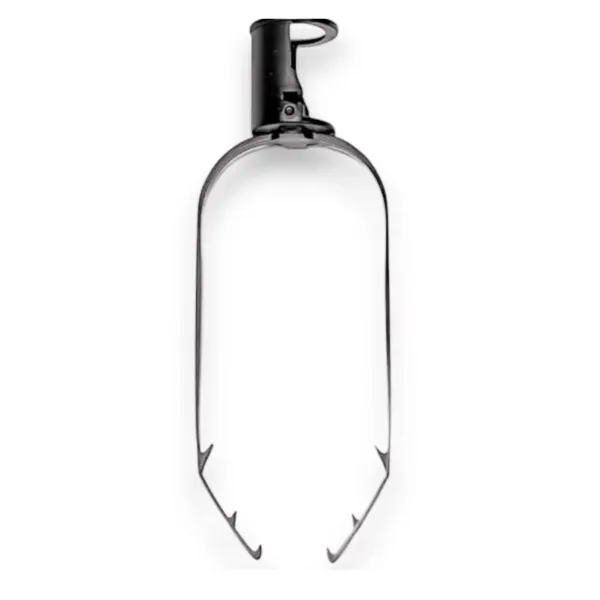
Colors Available:
Black
Quantities Available:
500/case
Key Features:
Durable Plastic Construction: Crafted from robust, high-grade plastic, these clips are built to endure tough weather conditions, ensuring long-lasting use season after season.
Enclosed Design: The unique enclosed structure securely locks onto the light strand, preventing the clip from slipping or detaching, even in windy or adverse weather.
Extended Length for Versatility: The longer design ensures a secure fit on any ridge shingle without causing damage, offering compatibility with various roof types.
Works with C9 and C7 Bulbs: Specifically designed to hold both C9 and C7 light strands, providing versatility and ease of use for different bulb sizes.
Easy Installation: Simplifies setup with quick, hassle-free application, saving time while delivering a clean, professional look.
Pre-Season Wholesale C9 Tuff Wedge Clip 800/Case
As Low As $0.16 per Clip
The Tuff Wedge Clip is the go-to choice for professional installers who need a fast and reliable way to secure C9 bulbs on holiday displays. Designed with convenience in mind, this versatile clip easily flexes over pre-installed bulbs, making it ideal for quick installations on socket wire lines. The Tuff Wedge Clip ensures a secure and polished look for your light displays, helping you create visually stunning installations with minimal effort.
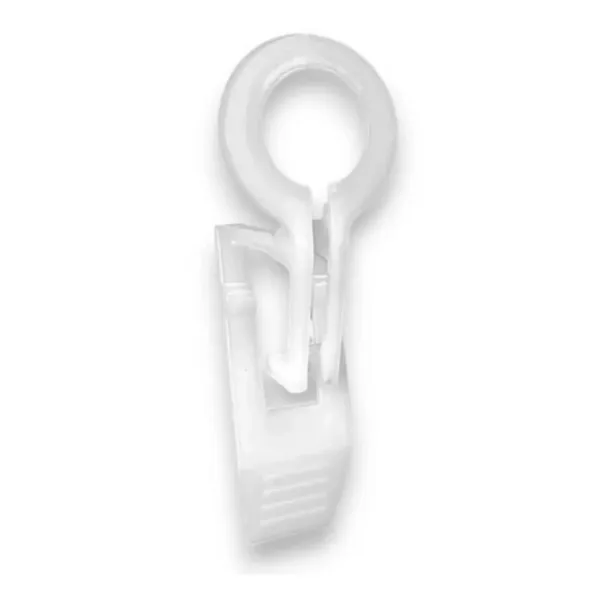
Colors Available:
White
Quantities Available:
800/case
Key Features:
Flexes Over Pre-Installed Bulbs: The Tuff Wedge Clip features a unique flexible design that allows it to snap directly over C9 bulbs already mounted on socket wire lines. This saves time and eliminates the need for removing or adjusting bulbs, making the installation process faster and more efficient.
Sturdy, Weather-Resistant Construction: Built from high-quality, UV-stabilized plastic, the Tuff Wedge Clip is engineered to resist harsh outdoor conditions, such as wind, rain, and snow. Its durable design prevents cracking and wear, ensuring long-lasting performance for both residential and commercial applications.
Ideal for Multiple Surfaces: Whether you’re working with shingles, gutters, or drip edges, the Tuff Wedge Clip provides a firm and secure grip on various surfaces, keeping lights in place without sagging or shifting.
Streamlined Installation: With the ability to clip directly over pre-installed bulbs, the Tuff Wedge Clip reduces installation time and simplifies the process, allowing for rapid and professional-looking displays that stand out during the holiday season.
Clean and Professional Finish: The Tuff Wedge Clip ensures that your C9 bulbs are perfectly aligned, giving your holiday light displays a clean, polished, and symmetrical appearance that will impress clients and onlookers alike.
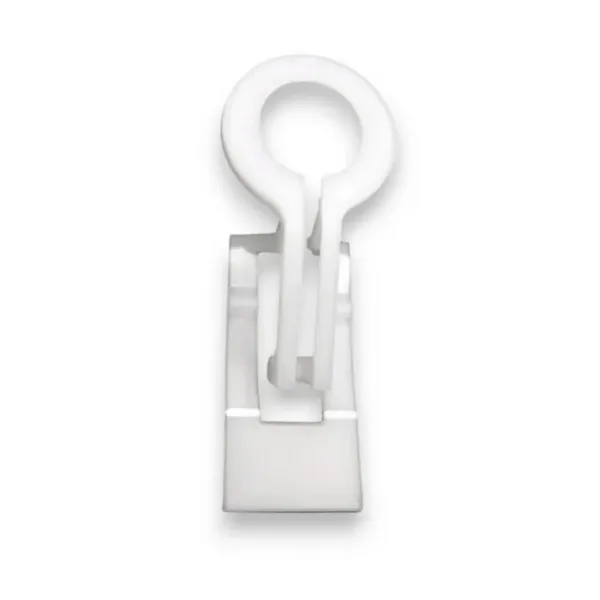
Pre-Season Wholesale C9 Tuff Flex Clip 800/Case
As Low As $0.16 per Clip
The Tuff Flex Clip is the perfect solution for professional installers seeking a versatile and efficient way to secure C9 bulbs on their holiday displays. Specifically designed to work with pre-installed bulbs on socket wire lines, this innovative clip offers both convenience and flexibility, making installations smoother and faster. The Tuff Flex Clip provides a strong and secure hold while allowing for easy adjustments, ensuring that your lights remain perfectly aligned throughout the season.
Colors Available:
White
Quantities Available:
800/case
Key Features:
Flexes Over Pre-Installed Bulbs: The Tuff Flex Clip’s unique design allows it to clip directly over C9 bulbs already installed on socket wire lines. This feature makes it ideal for installers looking to streamline the installation process and reduce setup time without compromising quality.
Strong and Durable Construction: Made from high-quality, weather-resistant materials, the Tuff Flex Clip is built to withstand extreme outdoor conditions, including wind, rain, and snow, ensuring that your light displays stay securely in place all season long.
Secure and Professional Hold: The Tuff Flex Clip’s sturdy grip ensures that bulbs remain firmly attached, even on challenging surfaces like gutters, shingles, and drip edges. Its reliable hold prevents shifting or sagging, giving your holiday display a clean and professional appearance.
Ease of Use and Versatility: With the ability to clip over pre-installed bulbs, the Tuff Flex Clip offers unmatched convenience. Installers can quickly secure lights without removing or adjusting bulbs, making it an ideal choice for both residential and commercial installations.
Frequently Asked Questions
What surfaces are the clips compatible with?
Our clips are versatile and can be used on gutters, shingles, drip edges, and even flat surfaces when paired with parapet clips, making them suitable for various installations.
Are the clips durable for outdoor use?
Yes, all our clips are made from heavy-duty, weather-resistant plastic, ensuring they withstand harsh outdoor conditions like wind, rain, and snow.
What bulb types are the clips compatible with?
Most of our clips, including C9 Best Clips and Shingle Tab Clips, are compatible with both C7 and C9 bulbs, offering flexibility for different lighting setups.
How do Tuff Wedge and Tuff Flex Clips simplify installation?
These clips are designed to flex over pre-installed bulbs, allowing you to quickly and securely attach lights without removing or adjusting bulbs, saving time and effort.
What quantities and colors are the clips available in?
Our clips are available in quantities ranging from 500 to 2000 per case and come in colors like white, brown, and black, giving you options to suit your project needs.
Discover Expert Tips on Our Blog

The Christmas Light Season Nobody Talks About (Raw Truth)
The Christmas lights installation business generates extraordinary revenue in compressed timeframes—some installers earn $100,000 in just seven days, while others generate six or seven figures in 8-12 weeks. This concentrated earning period creates life-changing financial opportunities, but it also produces crushing mental and physical exhaustion that threatens to destroy businesses from the inside out.
Burnout isn't a weakness—it's a predictable response to wearing every business hat simultaneously while working 12-14 hour days for weeks on end. The installer answering phones at 7 AM, climbing roofs until dark, managing employees, chasing payments, ordering materials, handling callbacks, and dealing with difficult customers experiences stress levels few other industries demand. Add weather delays, employee no-shows, family neglect, and financial anxiety over uncollected payments, and you have a recipe for complete breakdown.
This comprehensive guide addresses the reality of Christmas lights burnout that few discuss publicly, reveals why it happens and how to prevent it, provides systems for scaling without working yourself into the ground, and offers mindset shifts that separate sustainable six-figure businesses from one-season burnouts.
The Burnout Reality: What Nobody Talks About
Four conversations in one week revealed an identical pattern: successful installers generating $150,000-$200,000 saying "I'm burnt out, I'm exhausted, and I'm done."
The Common Thread in Burnout Stories
Conversation 1: Installer approaching $200,000 revenue, working solo without getting off the truck all season
Conversation 2: Business owner doing "everything"—sales, installation, callbacks, materials management, payments
Conversation 3: Installer with four crews getting 20+ leads daily but too overwhelmed to respond to half of them
Conversation 4: Solo operator working 14-hour days, seven days weekly, snapping at family who "just want to see me"
The pattern: revenue success accompanied by complete operational chaos and personal exhaustion.
Why Christmas Lights Creates Unique Burnout Risk
Compressed earning season: Generate entire year's income in 8-12 weeks instead of spreading over 12 months
Extreme weather vulnerability: Rain, snow, ice, and cold create installation delays that compress workload into fewer available days
Physical demands: Climbing ladders and walking roofs in freezing temperatures for 10-12 hours daily
Mental load: Simultaneously managing sales, operations, employees, materials, scheduling, payments, and customer service
Family sacrifice: Missing Thanksgiving, working weekends, arriving home after kids sleep, mental absence even when physically present
Financial stress: Hundreds of thousands in uncollected receivables sitting out while operating expenses mount
Equipment pressure: Wearing all hats because hiring feels riskier than just "doing it yourself"
One installer described it perfectly: "We start the season excited and energized. We end looking like skeletons—physically exhausted, mentally drained, emotionally depleted."

The Systems Problem: Why "Just Work Harder" Fails
Most burnout stems not from insufficient work ethic but from absent systems. Installers work harder, longer, and more intensely without addressing the structural problems causing overwhelm.
The One-Person Bottleneck
The installer who approached $200,000 revenue working entirely solo demonstrates the classic scaling failure. At some revenue level, adding hours becomes impossible—there are only 24 hours in a day.
The math that doesn't work:
Average ticket: $2,000
Jobs needed for $200,000: 100 jobs
Available installation days: 40-50 days (weather, scheduling)
Jobs per day required: 2-2.5 daily
Completing 2+ residential installations daily solo is physically impossible on most properties. The installer works sunrise to well past dark, six or seven days weekly, and still falls behind schedule.
The solution isn't working harder—it's hiring help. One quality crew member completing installations while the owner focuses on sales, scheduling, and quality control would have doubled revenue to $400,000 with less personal labor.
The "I Do Everything" Trap
Another common pattern: the business owner who refuses to delegate anything.
The owner simultaneously:
Answers every phone call personally
Creates every quote and mockup
Orders all materials and tracks inventory
Completes all installations (or manages crews on-site)
Handles all customer service and callbacks
Processes all payments and accounting
Manages all marketing and lead generation
This approach works fine at $50,000 revenue. At $150,000-$200,000, it creates chaos. At $500,000+, it's completely impossible.
The delegation hierarchy for scaling:
First hire: Installation crew member (removes you from daily physical labor)
Second hire: Office support (answers phones, sends quotes, schedules jobs, processes payments)
Third hire: Second installation crew (doubles installation capacity)
Fourth hire: Salesperson (removes you from quote generation and closing)
Fifth hire: Operations manager (coordinates crews, manages materials, handles logistics)
Most installers resist this progression because "I can't afford to hire anyone." The truth: you can't afford NOT to hire. Your time has a dollar value—if you earn $200,000 annually working 2,000 hours, your time is worth $100/hour. Every hour you spend on $20/hour tasks (answering phones, driving to supply stores, basic installation work) costs you $80 in opportunity cost.
The Lead Management Crisis
Multiple installers report receiving 20+ daily leads during peak season but only responding to half because they're "too busy installing."
This is business suicide. Each ignored lead cost money to generate (Facebook ads, yard signs, SEO investment). Ignoring leads is identical to lighting cash on fire.
The solution: Hire virtual assistant or part-time employee dedicated solely to lead response during peak season. For $15-$20/hour (approximately $1,200-$1,600 for entire season), this person:
Answers every call within minutes
Sends preliminary quotes within 60 minutes
Follows up on outstanding quotes systematically
Schedules installations and manages calendar
Processes payments and sends invoices
Cost: $1,500 for season. Value: Converting an additional 10-20 leads at $2,000 average ticket = $20,000-$40,000 additional revenue.
The ROI calculation isn't even close—it's overwhelmingly in favor of hiring help.

The Weather Stress Multiplier
Weather creates the variable installers cannot control, and it amplifies every other stress factor exponentially.
How Weather Destroys Schedules and Mental Health
Rain delays: Can't install safely on wet roofs. Every rain day pushes 2-3 scheduled jobs into an already-compressed timeline.
Snow complications: Some installers handle snow removal businesses, creating impossible choice between Christmas lights commitments and snow removal contracts.
Cold and ice: Frozen gutters, icy roofs, and brutal wind chills make installation dangerous and physically exhausting.
Compressed installation windows: Late November weather in many regions creates 10-15 day windows where installation is actually possible, forcing completion of 50+ jobs in impossibly short timeframes.
One installer perfectly summarized the dilemma: "I plow snow, but I have Christmas lights jobs scheduled. The snow needs to stop for two more weeks so I can finish lights, but I also need the snow income."
Managing Weather-Related Stress
Strategy 1: Build weather delays into pricing and scheduling
Don't schedule every available day. Build 20-30% weather buffer into schedules. If you have 40 potential installation days, only schedule 28-30 jobs initially. Weather delays fill the buffer days rather than creating cascade failures.
Strategy 2: Implement "first available" scheduling for weather delays
Instead of rescheduling specific dates after weather delays, move affected customers to "first available" status. This prevents the domino effect where one rain day requires rescheduling 20+ specific appointments.
Strategy 3: Use weather delays for quote follow-up and administrative work
Rain days are perfect for texting every outstanding quote, processing payments, ordering materials, and handling administrative tasks that get neglected during installation days.
Strategy 4: Invest in equipment enabling installation in marginal conditions
Boom lifts allow installation during conditions where roof access is impossible. The $4,000 seasonal rental cost seems expensive until you calculate the $20,000-$30,000 in jobs completed that would otherwise be cancelled or delayed.
The Employee Management Challenge
Employee issues rank among the top stressors during Christmas lights season—and many are self-inflicted through poor hiring, inadequate training, and unrealistic expectations.
Why "I Can't Find Good Workers" Is Usually Wrong
The installer who complains "you just can't find good workers today" typically:
Pays below-market rates ($15-$18/hour when McDonald's pays $25+)
Provides zero training beyond "figure it out"
Treats employees as disposable labor rather than valuable team members
Offers no appreciation, recognition, or positive feedback
Creates chaotic schedules with constant last-minute changes
Blames employees for failures caused by absent systems
The reality: Good workers exist everywhere. But good workers won't tolerate poor leadership, low pay, absent training, and chaotic operations.
The High-Performance Employee Formula
Pay competitively: $20-$25/hour minimum for experienced installers, $50+ per job for piece-rate work
Train systematically: Create video library showing every installation technique. Test knowledge with quizzes. Document training completion.
Treat professionally: Respect, appreciation, consistent communication, reliable schedules
Provide quality equipment: Professional trucks, proper safety gear (Cougar Paws, harnesses, pitch hoppers), quality tools
Implement performance bonuses: $50-$100 bonus for jobs completed without callbacks, customer satisfaction ratings above 4.5/5, safety compliance
Recognition and appreciation: Public praise for excellent work, thank-you messages, end-of-season bonuses
One installer noted: "I thought hiring help would cost me money. Instead, hiring one good crew member doubled my revenue because I could focus on sales and scheduling instead of installing everything myself."

The Two-Hour Hiring Story
An installer put out a Facebook post offering free business coaching during a six-hour drive. One person called. They talked for two hours.
The lesson: Most people want success handed to them without taking uncomfortable action. The one person who called got two hours of valuable coaching while everyone else scrolled past hoping success would magically appear.
The same principle applies to your business. Most people want $200,000 revenue without:
Making uncomfortable sales calls
investing money in marketing
Hiring help and trusting employees
Creating videos despite hating how they sound
Door-knocking neighborhoods
Posting daily on social media
Working 70-hour weeks during peak season
The installers earning six and seven figures do all those uncomfortable things. The installers stuck at $30,000-$50,000 do none of them.
The Mindset Shifts That Prevent Burnout
Burnout is partly physical exhaustion but primarily mental overwhelm. Changing how you think about your business changes your stress levels dramatically.
Shift 1: From "I Have to Do Everything" to "I Enable Others to Excel"
Old mindset: "Nobody can do this as well as I can, so I have to do everything myself."
New mindset: "My job is creating systems that enable others to do excellent work without me."
Your role isn't being the best installer—it's building a business that operates excellently whether you're present or not.
Shift 2: From "I Can't Afford Help" to "I Can't Afford NOT to Have Help"
Old mindset: "I can't afford to pay someone $20/hour when I'm only making $30/hour myself."
New mindset: "Paying someone $20/hour to complete installations frees me to sell jobs. I close $10,000 daily in new sales working the phones while my installer completes $4,000 in installations. Total daily revenue: $14,000. Without help: $2,000-$4,000."
The math always favors hiring once you calculate opportunity cost correctly.
Shift 3: From "I'm Too Busy" to "I'm Working on the Wrong Things"
Old mindset: "I'm too busy installing to respond to leads, follow up on quotes, or handle administrative work."
New mindset: "If I'm too busy installing to do sales and marketing, I'm working IN my business instead of ON my business. I need to hire installers so I can focus on revenue generation."
Being busy doesn't equal being productive. You can be busy all day with $20/hour tasks while neglecting $200/hour tasks that actually grow revenue.
Shift 4: From "This Customer Is Terrible" to "I Attracted the Wrong Customer"
Old mindset: "All my customers are cheap, demanding, and unreasonable."
New mindset: "I'm charging $6/foot and marketing to everyone. Of course I attract price-shopping problem customers. If I charge $10-$12/foot and target affluent neighborhoods, I'll attract customers who value quality and service."
Your pricing and marketing determine your customer quality. Bad customers are usually symptoms of underpricing and poor targeting.
The Price Psychology Breakthrough
One installer shared: "I thought you were lying when you said to charge $10/foot. I was stuck at $5/foot. I changed to $8-$12/foot and customers still buy—I just feel less stressed because I'm actually making profit."
Another: "I barely charged $6 first year and made no profit. Year two, I charged $8-$12 and was shocked how many people said yes. I 2.5x my revenue by simply changing my pricing."
The pattern repeats endlessly: Installers convinced their market "won't pay more than $X" who discover customers happily pay 50-100% more once the installer believes they're worth it.
The mental block isn't customer willingness—it's installer confidence. When you don't believe you're worth $10/foot, customers sense that uncertainty and negotiate down. When you confidently present $12/foot pricing, customers accept it as the market rate.

How do I avoid burnout when I'm the only person who can do installations?
You avoid burnout by not being the only person who can do installations. This requires proactive hiring before burnout hits—typically when you're scheduling 10+ jobs weekly. Hire experienced roofers first (they're already comfortable on roofs and understand safety). Train them on Christmas lights specifics using video libraries and supervised installations. Start them on simple properties while you handle complex jobs. Gradually transfer more installations to them while you focus on sales, scheduling, and business management. The investment in hiring and training pays for itself within 2-3 weeks.
What's the minimum revenue level where I should hire my first employee?
Hire your first installation helper at $50,000-$75,000 revenue or when you're consistently working 60+ hours weekly. The calculation: if hiring someone at $20-$25/hour enables you to close an additional 10-20 jobs at $2,000 average ticket, they generate $20,000-$40,000 additional revenue while costing $4,000-$6,000 in wages for the season. That's 300-1000% ROI. Don't wait until burnout forces the decision—hire proactively when growth trajectory justifies it.
How do I find reliable employees during Christmas lights season when everyone is busy?
Target roofers, construction workers, and landscapers whose primary business slows during winter. Post in roofing Facebook groups, construction trade groups, and local employment boards emphasizing "seasonal work, November-December, $20-$25/hour, flexible schedule." Offer competitive wages ($20-$25/hour minimum—remember McDonald's pays that much now). Provide quality equipment and professional environment. Train systematically using videos and supervised installations. Treat employees with respect and appreciation. The "worker shortage" largely exists among businesses offering low wages, poor treatment, and chaotic operations.
What systems prevent employee problems from creating more stress than they solve?
Create video training library covering every installation technique, safety protocol, and customer service expectation. Test comprehension with quizzes before allowing independent work. Implement checklists for every installation stage. Use quality control inspections (you or senior installer) before leaving properties. Pay piece-rate ($0.80-$1.25/foot) rather than hourly to incentivize efficiency and quality. Provide bonus structure rewarding no-callback jobs and high customer satisfaction. Document everything—training completion, safety briefings, performance issues. This documentation protects you legally and creates accountability.
How do I manage the mental stress of uncollected payments while trying to install?
Implement deposits and payment systems preventing this problem: require 50% deposit at booking (secures schedule, covers materials), collect remaining 50% immediately after installation completion before leaving property. Use Jobber, ServiceTitan, or similar CRM with integrated payment processing enabling tap-to-pay on phones. For customers unable to pay immediately, use financing options (Jobber offers this) enabling customer approval in minutes. Never leave properties without payment unless you have signed financing agreement. The stress of chasing $100,000+ in receivables destroys mental health—eliminate it through systematic payment collection.

Should I turn down leads when I'm already fully booked, or try to schedule them further out?
Send quotes immediately even if you're fully booked. Use premium pricing ($12-$15/foot instead of standard $10/foot) for jobs requiring rush scheduling or dates beyond your typical season end. Many customers will pay premiums for December installations. Capture contact information for leads you can't serve and convert them to 2026 pre-bookings with early-bird discounts. Subcontract overflow to trusted installers and take referral fees. Never simply ignore leads—you paid to generate them, and ignoring them wastes marketing dollars while potentially damaging reputation through non-responsiveness.
How do I balance family time when Christmas lights demands 12-14 hour days for weeks?
Set boundaries proactively: designate one day weekly as family day with zero work (even if it means turning down jobs or delaying installations). Communicate openly with family about the compressed earning season and what it enables (financial security, family vacations, time freedom remaining 10 months). Include family in celebrations of milestones ("we hit $100,000 today!"). Block evenings 6-8 PM for family dinner even if you return to administrative work afterward. Recognize the sacrifice family makes and express appreciation consistently. Remember: you're doing this FOR family financial security, but destroying family relationships in the process defeats the purpose.
What's the best way to handle weather delays that compress my schedule impossibly?
Build 20-30% buffer into initial scheduling—if you have 40 available installation days, schedule only 28-30 jobs initially so weather delays fill buffer rather than creating cascade failures. Use "first available" rescheduling rather than specific dates (prevents domino effect requiring 20+ rescheduling calls). Communicate proactively with customers about weather delays before they call you. Consider boom lift rental ($4,000 season) enabling installation in conditions where roof access is impossible. Use weather delay days for administrative work, quote follow-up, and material organization. Accept that some weather delays are unavoidable—the stress comes from trying to control uncontrollable factors.
How do I know if I'm underpricing and that's contributing to my stress?
If you're closing 30%+ of quotes, you're underpriced. Premium services targeting affluent customers typically close 15-25% of leads—higher rates indicate you're not filtering out price shoppers effectively. If you're working constantly but barely profitable, you're underpriced. If customers rarely question your pricing, you're underpriced. If you have more demand than installation capacity, you're underpriced. Calculate true costs: materials + labor + insurance + marketing + equipment + overhead + profit margin. Most installers discovering they're working for $15-$20/hour after all costs—that's underpricing driving burnout through overwork with insufficient profit.
Can I really grow to $200,000-$500,000 without working myself to death?
Yes—but only with systems and help. Solo installers can reasonably handle $75,000-$100,000 annually. Beyond that requires hiring. The path: first hire enables $150,000-$200,000, second hire enables $250,000-$350,000, third hire enables $400,000-$500,000+. Most burnout happens when revenue goals don't align with staffing reality. Plan hiring around growth targets: "I want $300,000 revenue next year. That requires 2-3 installation crews plus office support plus sales help. I'll need to invest $30,000-$50,000 in labor costs." This planning prevents the "I'm doing $200,000 solo and dying" scenario.


Copyright ©2026 All Right Reserved website designed by christmaslights.io
Terms of Service / Privacy Policy
Have questions or need assistance?
Contact us at (855)619-LITE