

Wholesale Pricing Presale Christmas Lights Socket Wire Spools, Stringers & Zip Cord
Pre-Season C9 1000' Socket Wire Spools
Looking for the cheapest Christmas lights wire spools at wholesale pricing?
Achieve perfect customization for any holiday display with our 1000-foot spool of customizable wire, available in Green, White, Brown, and Black. This versatile wire lets you cut precise lengths to ensure a flawless fit for every project. With flexible spacing options of 12", 15", 18", 24", and 36", you can tailor installations to meet specific needs. Available in top brands like Commercial, Minleon, and Admiral, this SPT-2 wire is the ultimate choice for professional-grade installations.
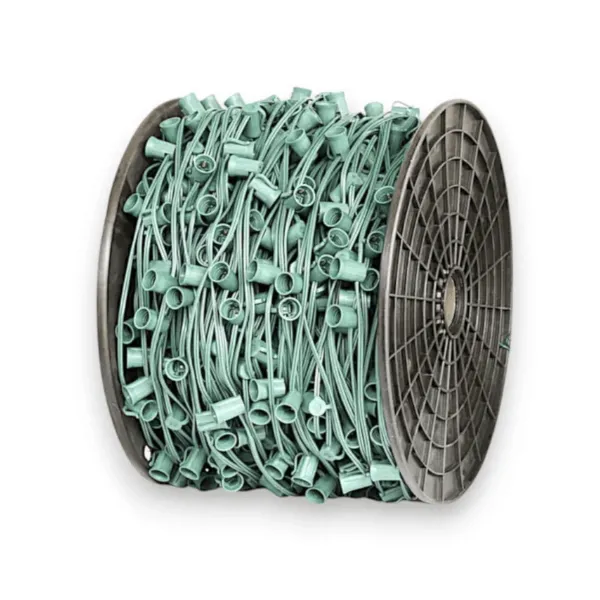
Brands Available:
Commercial
Minleon
Admiral
Color Wires Available:
Green
White
Brown
Black
Spacing Available:
(depending on brand/wire color)
12"
15"
18"
24"
36"
Key Features:
1000 Feet of Customizable Length: A full spool of 1000 feet provides ample wire to customize and cut to the exact lengths required for your installation, ensuring a perfect fit for every project.
Flexible Spacing Options (6" to 48")
12-15" Spacing: Ideal for residential roofline installations, providing a balanced and visually appealing light distribution.
24-36" Spacing: Perfect for tree installations, allowing you to place larger C9 bulbs strategically within the branches. The wider spacing helps to avoid a straight-line effect, creating a more natural and staggered look.
Pre-Season C9 Green Stringers SPT-1
Illuminate your home, business, or event with the highest quality Holiday Light String. Designed for both residential and commercial decorators, these light strings are made from top-tier 18-gauge UV-protected wire, ensuring years of maintenance-free use. Perfect for any season, these light strings are compatible with both incandescent C9 and LED C9 bulbs, offering versatility and long-lasting performance.
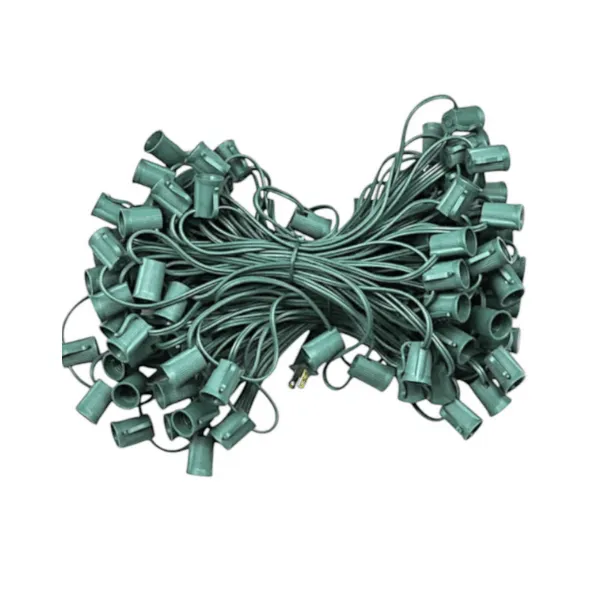
Professional-Grade UV Protected Green Wire for C9 Bulbs Available in these Options:
100' - 5/case
5' - 10/case
25' - 25/case
15' - 25/case
5' - 50/case
1' - 100/case
Key Features:
Professional-Grade Sockets: Equipped with durable sockets that feature weep holes, these light strings are engineered for trouble-free performance even in damp weather conditions.
SPT-1 Insulation: Boasting a 5 Amp capacity, the SPT-1 insulation ensures safe and reliable operation, making these strings ideal for both indoor and outdoor use.
End-to-End Connectivity: Each string comes with a male and female plug, allowing for easy end-to-end connections to extend your lighting display effortlessly.
Pre-Season C7 1000' Socket Wire Spools
This C7 1000' Bulk Spool of Socket Wire is designed with the professional installer in mind, offering exceptional flexibility and durability for a wide range of lighting projects. Whether you’re enhancing residential rooflines or creating stunning tree displays, this spool is crafted to meet the demands of any installation, providing the perfect solution for custom lighting designs.
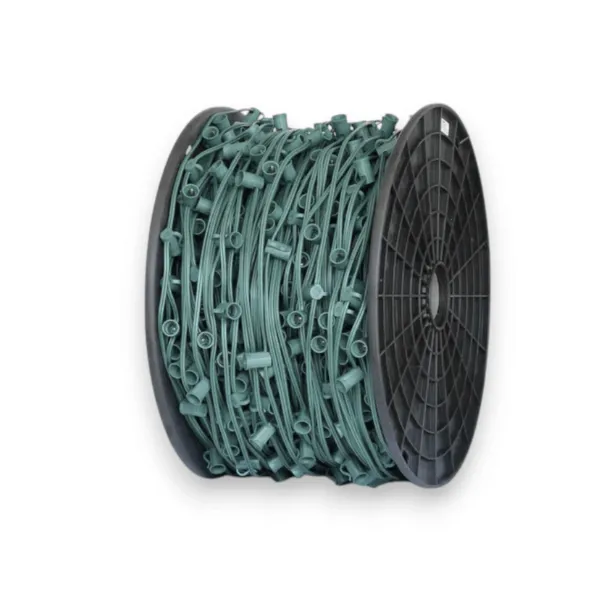
Brands Available:
Commercial
Admiral
Colors Available:
Green
White
Available Spacing:
12"
15"
18"
24"
36"
Key Features:
Durable SPT-1 Wire: Built to endure harsh outdoor conditions, this heavy-duty wire ensures that your lighting installation remains secure and reliable season after season.
Compatible with C7 Bulbs: Specifically designed for C7 bulbs, whether you choose traditional incandescent or energy-efficient LED options, offering versatility in your lighting setups.
Pre-Season Christmas Lights Zip Lamp Cord SPT-1 or SPT-2
As Low As $0.19 per foot
Take full control of your lighting installations with our Spools of Lamp Cord SPT-1 Extension Wire (Zip Cord). Ideal for professional and DIY decorators alike, this versatile extension wire allows you to create custom extension cords, add jumper wires, or extend your C9 or C7 stringers with ease. Whether you’re enhancing rooflines or adding length to your holiday displays, this spool provides the flexibility and durability needed for both indoor and outdoor applications.
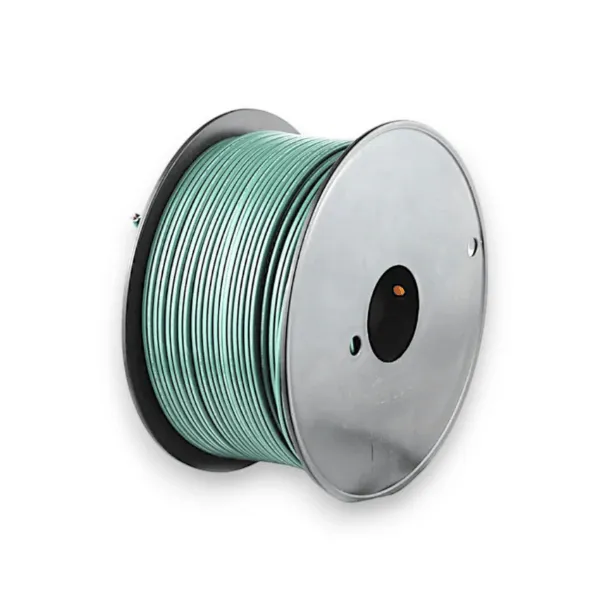
Lengths Available:
250'
500'
1000'
Colors Available:
Green
White
Black
Brown
Key Features:
250' - 1000' of SPT-1 Extension Wire: A full spool gives you ample wire to customize your lighting installations, ensuring you have the exact length you need for any project.
Zip Cord Design: The 18-gauge, 2-conductor wire is easy to work with and perfect for creating custom extension cords or adding extension leads and jumper wires to your lighting setup.
8 Amps/960 Watts Rating: The SPT-1 wire is rated for 8 amps or 960 watts, providing reliable performance for both small and large-scale installations.
Indoor and Outdoor Use: Designed to withstand various conditions, this wire is suitable for both indoor and outdoor use, making it a versatile addition to your lighting toolkit.
Perfect for C9 or C7 Stringers: Use this extension wire with our spools of SPT-1 male and female plugs to customize your C9 or C7 light stringers, ensuring a seamless and professional-looking display.
Frequently Asked Questions
What lengths are available for the Christmas lights wire spools?
The wire spools are available in customizable lengths of up to 1000 feet, ensuring you have enough wire for any size installation.
What spacing options are offered for the sockets?
The spacing options include 12", 15", 18", 24", and 36", allowing you to tailor your lighting design to specific project needs.
What colors are the wires available in?
The wire is available in Green, White, Brown, and Black, offering flexibility to match your design and installation requirements.
Are these wires compatible with both C9 and C7 bulbs?
Yes, the wires are compatible with both C9 and C7 bulbs, making them versatile for various holiday lighting setups.
What makes these sockets durable for outdoor use?
The professional-grade sockets feature UV protection and weep holes to prevent moisture buildup, ensuring reliable performance in outdoor conditions.
Are the wires safe for outdoor installations?
Absolutely! The wires come with SPT-1 insulation and a 5 Amp capacity, ensuring safe and reliable operation for both indoor and outdoor use.4o
Discover Expert Tips on Our Blog
Pro Christmas Light Removal: No Ladders Needed
The holidays are over, the joy has been had, and now only one task remains: taking down the Christmas lights. For most, this means a frustrating afternoon on a wobbly ladder, battling a hopelessly knotted nest of wires. It’s the annual chore that sours the end of the season.
But for professionals, it’s just another Tuesday. They can clear an entire house in as little as 15 minutes, and they do it without the stress, mess, or danger. The difference isn't magic; it's a complete system that separates amateurs from the pros. These aren't just "tips"—this is the methodology that makes them fast, safe, and profitable. Here’s how you can adopt their system.

1. The Takedown-First Mindset: Install for Easy Removal
The single biggest secret to a fast takedown begins before you hang the first bulb. Professionals operate with a takedown-first mindset, meaning the entire installation is planned for effortless removal. Amateurs think about how to get the lights up; pros think about how to get them down.
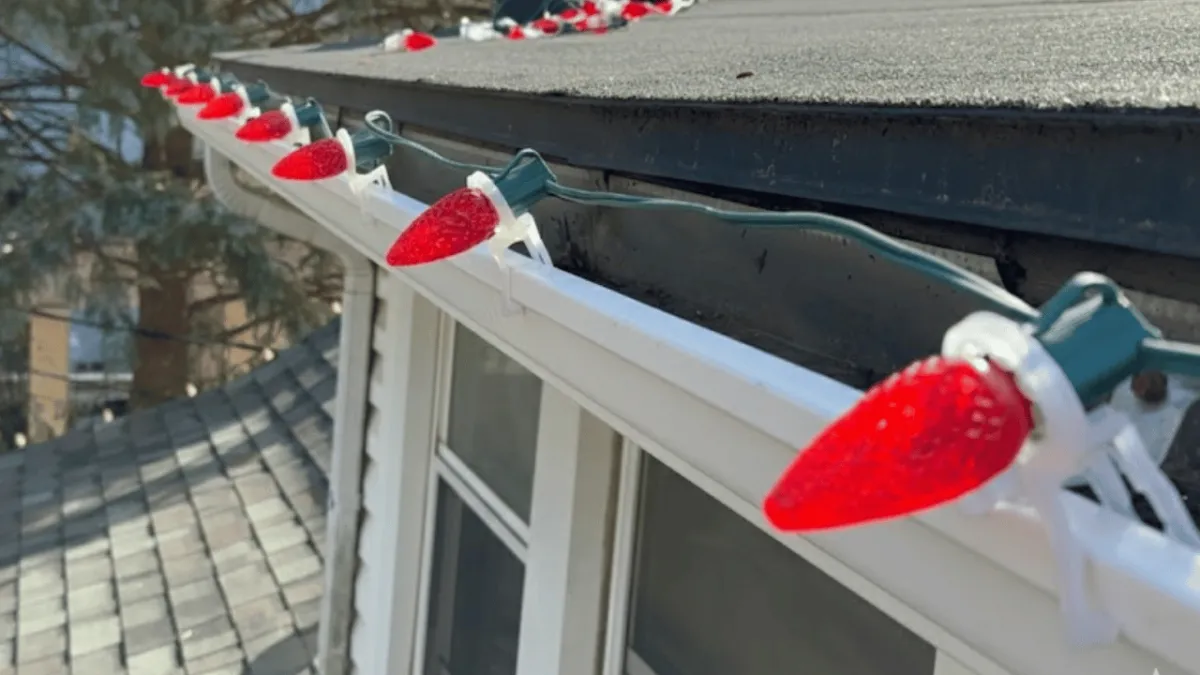
The number one amateur mistake is tightly zip-tying light strings directly to gutters. Every zip tie you add is one you’ll have to hunt down and snip from the top of a ladder. Professionals never do this. Instead of creating a problem, they use a brilliantly simple solution: take a clip and just shove it in behind the gutter. The tension holds it all season, but a gentle tug with a pole makes it fall right out. No climbing, no cutting.
...this is why it's so important that as we install to put up that we take down...
2. The Pro's Primary Tool: Ditch the Ladder for a Pole
Falls from ladders are a serious, costly risk, and for this job, they are almost entirely avoidable. The professional’s primary tool for a swift and safe takedown is not a ladder, but a long extension pole with a simple hook on the end.
This isn’t a specialized piece of equipment. A standard painter's pole (like a "Mr. Long Arm") with a paint roller hook attached is all you need. For higher jobs, a stiffer carbon fiber pole is even better. Using this tool, pros can lift lights from clips and even remove wreaths from as high as 24 feet, all while keeping both feet planted safely on the ground. You simply hook the wire, lift it off its anchor, and guide it down.
3. The Tangle-Free System: A Pro's Guide to Storage
A fast takedown is useless if you create a tangled nightmare for next year. Pros use a methodical system to ensure that when the lights come out of storage, they are perfectly organized and ready to be installed with zero guesswork.
Start in Reverse. The system is simple: take the lights down in the opposite order you put them up. If you started installing on the far right side of the house (when viewed from the street), you begin your takedown on the far left. This way, next year you can grab the first bundle and start on the far right, with every subsequent strand in perfect order.
Create the "Zip Tie Code". This is the organizational trick that makes the system foolproof. Think of it as a coordinate system for your house. Assign a color to each major section—for example, "red zip tie right." You can use pinks or any other color for the left side, front porch, etc. Then, use the number of zip ties to denote the level: one zip tie for the first floor, two for the second. A strand with two red zip ties instantly tells anyone on the crew, "Right side, Second floor." No photos or diagrams are needed.
The Arm's-Length Wrap. To prevent tangles, hold the strand and reach out as far as your arm can go, then bring the wire back to your hand to create a large loop. Repeat this, creating a neat, long bundle. When you reach the end, take the last couple of feet of wire and wrap it tightly around the bundle to secure it. For a final pro touch, tuck the male plug under one of the wraps. That way, you know exactly where the end is next year. This bundle will unspool perfectly, without a single knot.
A Quick Word of Caution from the Pros
While the pole method works for over 90% of the job, there's one critical exception: ridge clips on the peak of your roof. If your lights are attached with clips that go over the very top shingle (the ridge cap), a ladder is required.
Under no circumstances should you yank these with a pole from the ground. Pulling too hard will rip the entire ridge cap off your roof, causing expensive and significant damage. These specific clips must be removed carefully by hand.
Conclusion: Reclaim Your Post-Holiday Sanity
Taking down Christmas lights doesn't have to be your most dreaded annual chore. By adopting a professional system—installing for easy removal, using a pole instead of a ladder, and following a foolproof storage method—you can transform this task into a quick, safe job that takes as little as 15 minutes. A little foresight is all it takes to end the season on a calm and organized note.
Now that you have a professional system for takedown, what other holiday traditions could be simplified with a little more planning?

Why Should You Avoid Ladders for Christmas Light Takedowns?
To significantly reduce the risk of falling from ladders or roofs.
Using a ladder for takedown introduces unnecessary danger. Industry experts have observed several installers falling, which can lead to serious injury. By adopting a ground-based method using an extension pole, you can complete the job safely and efficiently.
What Tools Do You Need for a No-Ladder Takedown?
You primarily need an extension pole with a simple hook attachment for removal and colored zip ties for organization.
Extension Pole: This is the core tool for reaching high areas. Standard poles like "Mr. Long Arm" are sufficient for many jobs, but "carbon fiber" or "waterfed" poles perform much better for higher installations, such as those at 24 feet.
Hook Attachment: A simple hook is used to grab wreaths and pull down light strands. A dedicated tool is not required; a standard "paint roller" attachment works perfectly for this task.
Colored Zip Ties: These are used for organizing light strands during takedown, not for installation. A color-coding system helps identify where each strand belongs for the next season (e.g., red zip ties for the right side of the house).
How Do You Remove High Wreaths Without a Ladder?
Use an extension pole and hook to lift the wreath up and off its hanger, then carefully lower it to the ground.
The success of this method is determined during installation. By hanging the wreath with a simple, loose loop rather than wrapping it tightly around an anchor, you enable a fast, ladder-free removal.
Extend the pole and position the hook to securely grab a sturdy part of the wreath.
Lift the wreath straight up to unhook it from its hanger.
Lower the wreath slowly. It is critical to keep the pole as straight as possible during descent. Allowing the pole to bend sideways, especially when fully extended, can cause it to snap.
What is the Professional Method for Taking Down Light Strands?
Start removal from the opposite side of where the installation began, using a pole and hook to systematically pull lights down from their clips.
- Where Do You Start the Takedown Process?
Begin the takedown from the opposite side of where the installation started.
This simple rule creates a repeatable and efficient system. For example, if your installation process starts on the far right side of the house (when viewed from the street), your takedown process should begin on the far left side. This ensures the lights come down in the correct order for storage and re-installation.
- How Do You Use the Pole to Remove the Lights?
This is where a key installation decision pays off: by not securing the main line with zip ties, you enable a rapid, pole-based removal. Use the hook attachment on the extension pole to grab the light strand and pull it down and away from the gutters and clips.
This technique is effective because the main line is attached with simple clips rather than zip-tied to the gutters. This allows it to be pulled down easily without needing to climb a ladder to cut ties. Once a section is started, the rest of the line will often come down with a gentle pull.
When is a Ladder Still Necessary?
A ladder is only required when removing lights attached with "ridge clips" on the peak of a roof.
Attempting to pull lights from ridge clips with a pole is extremely risky. The force required can pull the entire ridge cap off the roof, causing significant damage. For this specific task, using a ladder is the only safe and correct method, reinforcing the need to plan your installation and takedown strategy together.

How Should You Organize Lights for Next Season?
Use a system of colored zip ties to label each strand by location and wrap them in large, tangle-free bundles.
- The Zip-Tie Labeling System
This system is designed for delegation and scalability. By creating a simple, logical code, you ensure that any crew member—even a new hire—can correctly identify and place each light strand next season without direct supervision, freeing up the business owner to manage other jobs.
The system uses color to denote the side of the house and the quantity of zip ties to denote the floor level. While the examples below use a red/blue system, you can use any consistent color scheme (e.g., pinks, greens) that works for your team.
Code Element
Meaning
Example
Color
Indicates the side of the house (viewed from the street).
Red = Right Side <br> Blue = Left Side
Quantity
Indicates the vertical level.
1 Zip Tie = First Floor <br> 2 Zip Ties = Second Floor
- The Tangle-Free Wrapping Method
This bundling technique ensures that lights can be quickly deployed next season without frustrating tangles.
As the lights come down, take the strand and create a large loop by reaching out as far as you can (e.g., 6 feet).
Continue creating these large, uniform loops along the entire length of the strand.
Once the entire strand is looped, take the final few feet of the light strand (the female plug end) and wrap it tightly around the bundle several times to secure it.
This method ensures the lights will "come right undone" when you unwrap them for the next installation.
Ready to turn seasonal takedowns into a profitable winter business? Learn the complete install-to-takedown system in our Christmas lights training.

Copyright ©2026 All Right Reserved website designed by christmaslights.io
Terms of Service / Privacy Policy
Have questions or need assistance?
Contact us at (855)619-LITE