Get the Cheapest Christmas Lights at Wholesale Pricing
Pre-Order Now for 2026!
Take advantage of our 2026 Pre-Season Sale!
Pre-order and lock in the best prices on Christmas Lights before
Looking for the cheapest Christmas lights at wholesale prices? Save big January 1 - February 16 2026 on premium Christmas lights and supplies! Whether you’re a professional installer or a holiday enthusiast, we offer the lowest prices on high-quality LED Christmas lights, string lights, and accessories.
🎄Why choose us?
Unbeatable Wholesale Pricing: Save more when you buy Christmas Lights in bulk – perfect for businesses and large-scale installations.
Top-Quality Products: We stock C9 Commercial Elite LED Bulbs, C7 Minleon V2 Bulbs, pre-lit garlands, and more.
Versatile Selection: From 500 to 100,000 bulbs, find the quantity and styles of Christmas Lights that suit your needs.
Wholesale Pricing Presale Christmas Lights C9 & C7 Bulbs
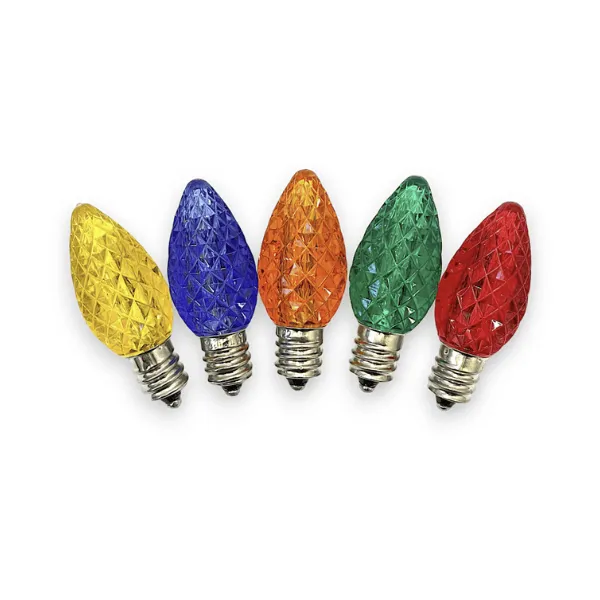
C9 & C7 LED Christmas Lights Bulbs
Looking for the cheapest Christmas Lights Bulbs with wholesale pricing? You've come to the right place! Our pre-season sale offers unbeatable wholesale prices on these top-quality, energy-efficient bulbs. Perfect for professional installers and holiday enthusiasts alike, our C9 and C7 bulbs are durable, vibrant, and available in a wide range of colors. Create stunning holiday displays while saving big with the best pricing on the market. Shop now and light up the season!
Wholesale Pricing Presale Christmas Lights Mini Lights Strands
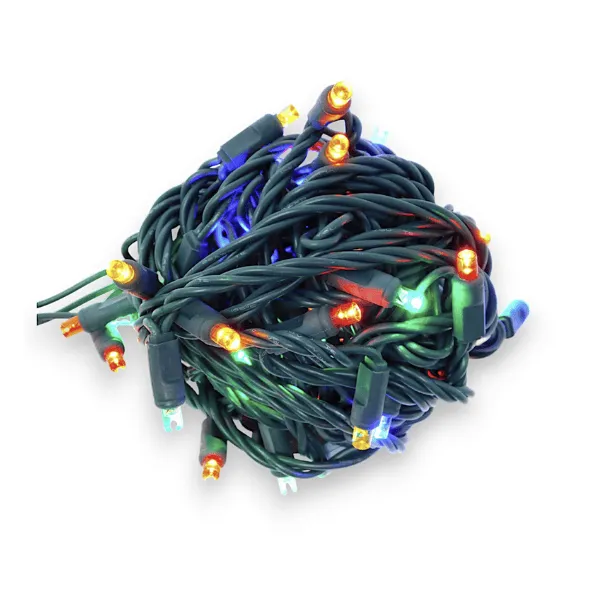
High-Quality Mini LED Christmas Lights Strands
Illuminate your holiday displays with our premium LED mini Christmas lights at wholesale pricing! These energy-efficient 5mm wide LED lights offer vibrant, long-lasting brilliance with up to 50,000 hours of lifespan. Perfect for wrapping trees, bushes, and architectural features, they feature durable, virtually unbreakable bulbs and patented moisture-resistant construction. Safely connect up to 45 strings for large-scale installations and enjoy the convenience of pre-balled lights for quick, hassle-free setup. Whether you're decorating a home or creating dazzling commercial displays, these mini lights deliver unmatched performance and reliability.
Wholesale Pricing Presale Christmas Lights Socket Wire & Zip Cords
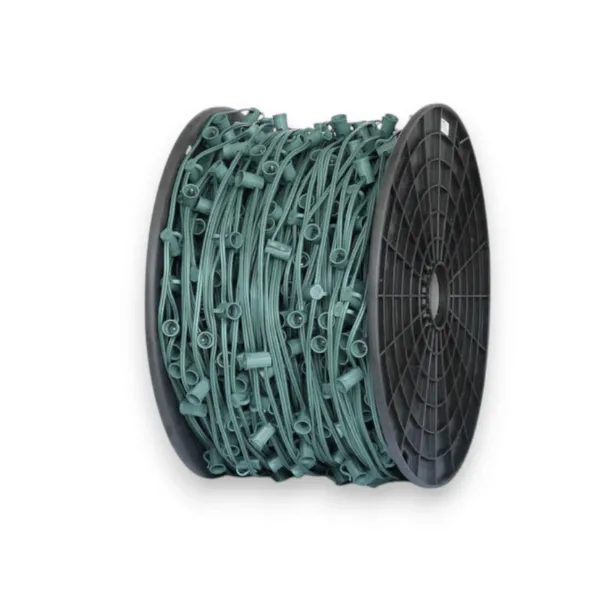
Socket Wire, Stringers & Zip Lamp Cord
Elevate your holiday lighting installations with our professional-grade wire spools and stringers, designed for C9 and C7 bulbs. Available in lengths up to 1000 feet and colors like Green, White, Brown, and Black, these customizable wires offer flexible spacing options ranging from 12" to 36" to suit any project. Featuring durable UV-protected sockets with weep holes and SPT-1 insulation, our wire ensures safe and reliable operation indoors and outdoors. Perfect for professional-grade displays, these spools provide the durability and versatility needed to create stunning, custom holiday lighting designs.
Wholesale Pricing Presale Christmas Lights Plugs
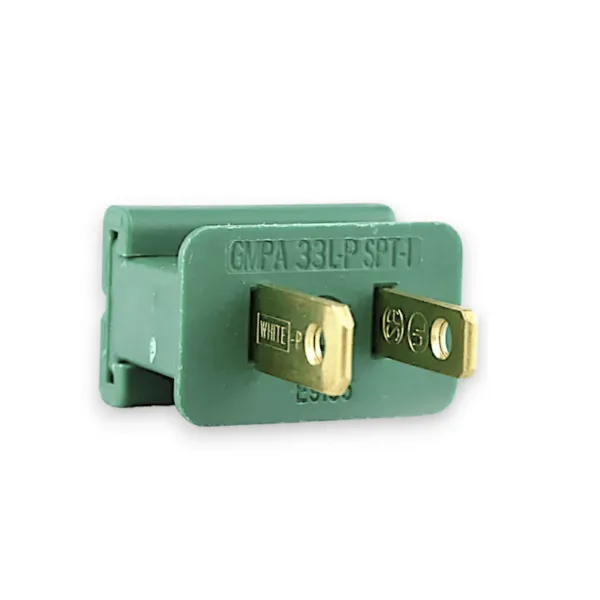
Wholesale Pricing Male & Female Christmas Plugs
Simplify your holiday lighting with our professional-grade Christmas light plugs, designed for durability and reliability in any installation. Choose from male plugs, female plugs with knockout tabs, and one-plug connectors, available in Green, White, Black, and Brown to match your design needs. Made from heavy-duty plastic, these plugs are built to withstand cold weather and ensure secure connections for indoor and outdoor use. Perfect for creating custom light strings or extension cords, our plugs make it easy to achieve professional-grade displays with ease and efficiency.
Wholesale Pricing Presale Christmas Lights Clips
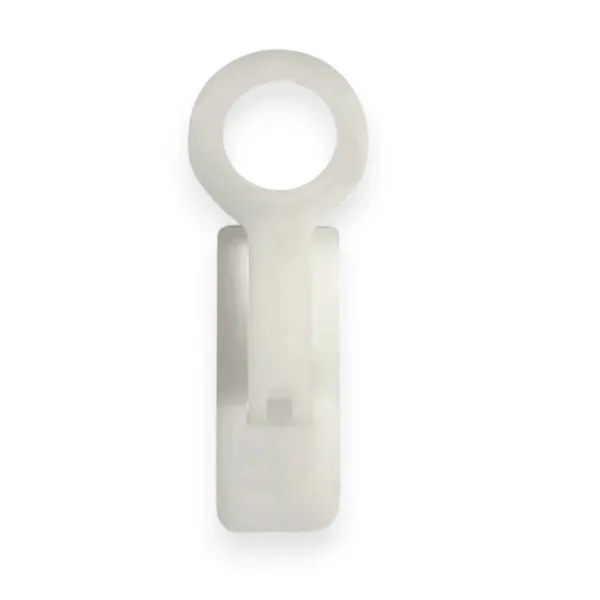
Presale Pricing Christmas Lights Clips
Secure your holiday light displays with our professional-grade Christmas light clips, designed for durability and ease of use. From C9 Best Clips and Shingle Tab Clips to Tuff Wedge Clips, our versatile selection ensures a secure fit for gutters, shingles, and other surfaces. Built with heavy-duty, weather-resistant materials, these clips are compatible with C7 and C9 bulbs and simplify installation with options that flex over pre-installed bulbs. Available in bulk quantities and multiple colors, our clips are perfect for creating polished, professional holiday displays that last all season.
Wholesale Pricing Presale Christmas Lights Accessories: Stakes/Wreaths/Bows/Garland

Christmas Lights Accessories
Complete your holiday displays with our premium Christmas accessories, including durable light stakes, elegant wreaths, lush garlands, and stunning bows. Designed for both residential and commercial use, these high-quality decorations are built to last and add a touch of festive charm to any setting. Whether you're lining pathways with light stakes or accenting doorways with pre-lit garlands and bows, our accessories offer the perfect finishing touch for your holiday decor. Shop now to secure wholesale pricing and elevate your seasonal displays!
Wholesale Pricing Presale Christmas Lights Pre-Bulbed & Pre-Clipped
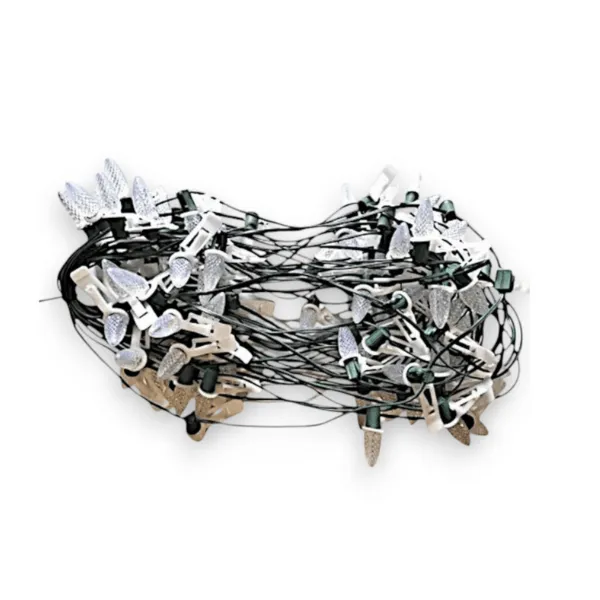
C9 & C7 Christmas Lights Pre-Bulbed & Pre-Clipped Strands
Transform your holiday setup with our pre-bulbed and pre-clipped Christmas light strands, designed for convenience and professional-grade results. These 100-foot strands feature high-quality C9 or C7 bulbs, durable clips, and flexible green socket wire, all pre-attached for effortless installation. Choose from vibrant colors like Warm White, Sun Warm White, and Multi-Color to match your holiday vision. Perfect for both professionals and homeowners, these strands save time and deliver a polished, stunning display.
Frequently Asked Questions
What’s the difference between C9 and C7 LED Christmas Light bulbs?
C9 bulbs are slightly larger than C7 bulbs, making them ideal for larger displays such as rooflines, trees, and commercial decorations. C7 bulbs are smaller and better suited for smaller spaces, window frames, or accent lighting.
Can I use your wires and plugs for both indoor and outdoor lighting projects?
Yes, our wires and plugs are designed for both indoor and outdoor use. They're constructed with weather-resistant materials to withstand various environmental conditions. However, always ensure proper installation and follow safety guidelines for outdoor electrical setups.
Are your mini lights energy efficient?
Absolutely! The LED technology in these lights uses up to 90% less energy than traditional incandescent bulbs, helping you save on energy costs while still delivering a brilliant display.
What makes your sockets durable for outdoor use?
Our professional-grade sockets feature UV protection and weep holes to prevent moisture buildup, ensuring reliable performance in outdoor conditions.
What is the difference between SPT-1 and SPT-2 plugs?
SPT-1 plugs are designed for standard-duty use, while SPT-2 plugs have thicker insulation, making them ideal for heavy-duty installations and more demanding projects.
What bulb types are compatible with your clips?
Most of our clips, including C9 Best Clips and Shingle Tab Clips, are compatible with both C7 and C9 bulbs, offering flexibility for different lighting setups.
Discover Expert Tips on Our Blog

Go Time for Christmas Light Installers: Yard Signs, Phone Calls, and Follow-Up That Close Jobs
Halloween is wrapping up, and for Christmas light installers that means the phones are about to start ringing. This is the stretch when customers stop kicking tires and start asking, "Can you get our Christmas lights up?" Installers who are ready close jobs. Installers who miss calls, skip follow-up, or underprice their work watch those jobs go to someone else.
This guide covers what to do right now: how many yard signs to put out, how to answer the phone, how to raise your average ticket, how to follow up, and how to price the work. If you want more strategies for growing a Christmas light installation business, start here.
It's Go Time
Typically, the week Halloween winds down is when people really start calling and asking. That is why installers get last year's customers up starting October 1: it frees the calendar and the crew for the rush of new clients. It's also the time to push hard on marketing.
Why Other Installers Seem to Be Closing So Much
If you're in your first year, you may see installers posting, "I closed another $10,000," or "Here's $30,000." What they don't mention is that many have been in business since 2015, 2018, or 2019. They have hundreds of five-star reviews, they've spent heavily on SEO, and they have a client base that refers friends. Some have been installing lights since September. Their results come from years of building, not luck, and you can build the same foundation.
That doesn't mean you can't close jobs this year. Some people can. One installer attended a class and then closed two dealerships. Nothing was special about him. He took action, and now those dealerships are in his portfolio for pictures and videos. But if you've never sold before, learning to sell and close is part of the job.
October Is Full of Tire Kickers
A lot of October leads aren't ready. Many people don't want lights up before Halloween because their Halloween decorations are up. That's why you keep pushing marketing now. From here on out, more of the people who call actually want to close.
Yard Signs: Put Out More Than You Think
Yard signs work in every part of the country, and no other marketing source is as good. One installer spent over $5,000 on Facebook ads, run by one of the best ad managers around, and closed one job. A thousand yard signs would still cost less than that $5,000, and he'd likely make more. Another installer using the same ad manager is getting ready to turn his Facebook ads off. Both also run signs, and the signs do better by a lot, even with Google Ads doing well.
How Many Signs to Put Out
Here is the plan:
October: 100 yard signs
November: 100 yard signs
The week before Thanksgiving: an extra 100
If you're just starting with signs: 200 per week in November, which could get you close to $100,000 even if you're starting from scratch
If you're putting out 100 a week, put them everywhere. One installer who ordered a thousand signs found it wasn't enough and had to order more.
If someone pulls your signs down, be consistent, prolific, and relentless. Put out more than they can take down.
What Your Sign Should Say
Keep the sign simple: a red background, white lettering, the words "Christmas lights" or "Pro Christmas light installer," and a big phone number. That is it. No logo, no QR code, nothing extra. If you've put out a lot of signs and gotten few calls, look at what's on the sign. Test it yourself: put the logo and QR code on one and only "Christmas lights" and a big phone number on the other, and see which wins. Need signs? Try MoneyBushes.com. After the season, you can pick signs up in mid-January to reuse, but they usually don't last that long.
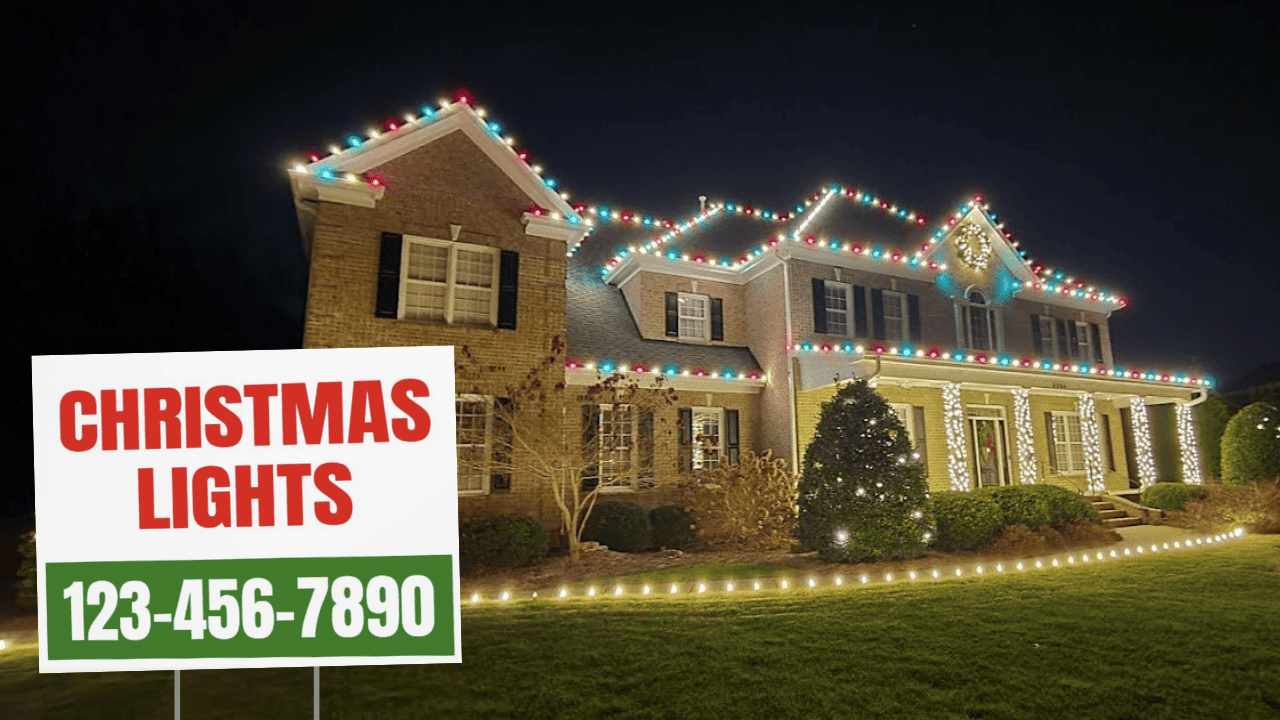
Where to Put Signs
Place yours next to another company's sign. Don't put it in front of theirs or touch it. Data shows a Coke machine alone makes about $200, but a Coke machine and a Pepsi machine each make about $300, because the customer goes from "I want that" to choosing between option A and option B. The exception: if 50 signs are already there, skip it.
Spread them out. If you put four signs at every stop sign and light, you may get a call from code enforcement.
Cover subdivisions, areas outside subdivisions, and main streets. Focus on one area, then push out farther.
Answer the Phone
The number one problem is missed calls. It doesn't matter how much you spend on marketing if nobody picks up. If two yard signs sit next to each other and you don't answer, they call the other company, and by the time you call back, that company has booked the job.
Everyone misses calls. If you're on another call, or you're in a home doing a quote, you can't answer. That's why you need to know how many you miss. Set up a phone tracking number so you can see how many calls come in. If you don't track, you can't know what you missed.
Many installers don't want to hire a receptionist because of the cost. Ask how much each missed call is costing you. One installer who handles marketing for a client saw how many calls just one line missed and was shocked.
Raise Your Average Ticket Before You Lower Your Price
Lowering your price to get leads is a trap. It's a race to the bottom, and someone will always do it cheaper. Some people will do the same job for $200 or $300. That's okay, because there are customers for that. You want the customer willing to pay $2,000.
What One First-Year Result Tells You
A first-year installer in middle Tennessee put out 250 signs, got 20 calls, and sold two jobs at $900 and $1,100. Should the price drop? No. Look at the numbers:
Twenty calls and two sales is a 10% close rate, and early calls are rarely good. The only direction is up.
Many of those 20 calls weren't good leads. Did you give bids on all 20? How many times did you follow up?
Two jobs from 250 signs in the month of October means more signs, not lower prices.
Those $900 and $1,100 jobs are small. Get the average ticket up. In Nashville and Knoxville, you can get $9 to $12 a foot.
In the beginning, don't worry about pre-qualifying. Learn to talk on the phone. It's all reps. Do the mock-ups so you get quicker.
Send a Real Quote
If your quote says "133 feet times $8 equals this," you haven't learned to send the right quote. Put the work into a proper quote that shows the full job.
Know Your Price Floor
If you're under $8 a foot, you're too low. Some installers have sold at $20 a foot, and when they sold the value and made the customer feel amazing, that wasn't too high. Small houses also push per-foot pricing up. If you have a $1,000 or $1,500 minimum and the house has 50 feet, the per-foot price rises, and that's fine.
Aim for an average ticket of $1,500 to $2,000. At an average of 150 feet, a crew can put up about five jobs a day. At a $2,000 ticket, that is $10,000 a day. Paying two helpers about $1 a foot, split between a roof person and a ground person, leaves you plenty.
Follow Up Like It's Your Job
Follow-up closes big jobs. One installer sold $50,000 in a few days, including a $20,000 retirement community he worked for two months with calls, texts, emails, handwritten notes, an in-person visit, and donuts. That job is for three years, so it's actually a $60,000 sale, and it could be worth more if the customer adds on or renews for another three years.
Most installers give up after one or two follow-ups. They send a quote, ghost the customer, and wonder why they never get big jobs. It typically takes eight to 11 touches to close a job. Follow up every day for at least 14 days. If you're not following up, you're going to fold up.

Handling "Let Me Talk to My Spouse"
That sentence can be a sales death sentence. If you're going in person, don't go unless both decision-makers will be there. Ask politely: "Is the decision-maker going to be there? I don't want to waste your time or mine." You can also ask, "Can you make a decision without your spouse?" On the phone, keep following up.
When a Prospect Says Someone Else Charges Half
Don't argue price. Ask yourself whether you're insured, whether you come back and fix problems, whether you leave one bulb out all season, and whether your five-star reviews are in front of the customer. Then ask why they're calling you at all.
Pricing Trees, Bushes, and Materials
Canopy-Wrapped Trees
Price canopy wrap by the foot of the tree's height, not by the strand. Branch wrapping is different. For an evergreen with minis placed six inches apart, expect $40 to $60 a foot. A 10-foot tree at $60 a foot is $600. For a 15-foot tree with C7s, you can keep charging by the foot of height, or you can figure out how many lights you need at 12- or 15-inch spacing, see what that costs, and double it.
Trees that lose their leaves are different. In the North, where leaves drop soon, space the lights about 18 inches apart, roughly fingertips to elbow, so you can see through the tree. A tree that keeps its leaves past Christmas won't look good that way, so keep that in mind in the South.
Bushes and Columns
For minis on bushes, six-inch spacing is most common, though four inches can look better on small bushes. On columns, some installers use four inches and others use six.
Materials and Labor
Materials run about $1.19 for the socket, clip, and bulb. Buy lights and supplies at Christmas Lights HQ, where orders ship out the same day.
Know the third, third, third rule: about a third of your revenue goes to materials, marketing, and similar costs, a third goes to labor, and a third is profit. In year two, you don't buy all the lights and tools again, because lights last five to seven years. So year two keeps labor at a third and profit becomes about two-thirds. If you did $23,000 in a week but only made $4,000 on five jobs, ask whether you charged enough, and remember the lifetime value of the customer.
Work Smarter on the Job
Use a garbage can for spools. A 1,000-foot spool tangles. Bulb and clip the lights (find sockets, clips, and bulbs at Christmas Lights HQ), then place them straight into a 55-gallon garbage can and take the can with you. Don't reel them back onto the spool. That's a disaster.
Skip windows. The lights fall off and you have to go back. If your employees clip them onto painted surfaces or stucco, you may end up repainting or repairing what they damaged.
Install the whole house. Do the roof, trees, bushes, and ground stakes. A single set of lights across the front is what everyone else does.
Wear a harness. Videos without harnesses can get your insurance canceled. If a worker falls, workers' comp or OSHA can come after you with liability and fines. Don't do anything you're not comfortable with. One roof anchor system worth looking at costs about $800 for the kit.
Know Your Numbers
Say your Meta ads cost $30 a lead and you close 10%. That is about $300 per customer. That's where you raise prices: you should be at $8 to $10 a foot and work your close rate up to 15 to 20%, which brings your cost per customer down. Reported Meta costs range from $12 to $18 a lead, or $8 to $10 a click. Meta brings more tire kickers than Google Ads.
If you've already closed a lot, check how much of your work falls in November. If you're booked into the end of November, add crews and raise prices. If you aren't booked for much of November, put everything into Google Ads and Facebook ads.
Believe You Can Get Paid
If you don't believe you're worth $8 to $12 a foot, you will never get it. If you don't see it, you won't achieve it. Installers in the greater Cincinnati area get $9 to $10 a foot. One installer in a city of eight million people said, "There are only cheap people here," while driving past Lamborghinis. Another installer, who is not in a major city, is on track for $750,000 this year with thousands of yard signs, Facebook ads, and Google ads.
It won't be perfect. Orders get missed, wrong colors go up, and bushes get skipped. Put systems in place so it happens less. And don't sell peak bulbs and LEDs. Sell the magic: the kids' faces and the feeling when the family comes outside.
It's a numbers game. You won't close them all, and you don't want to, because that means you're too cheap. Consistency is key. For more training, visit ChristmasLights.io.

How many yard signs should I put out?
Put out 100 in October and 100 in November, plus an extra 100 the week before Thanksgiving. If you're just starting, 200 per week in November can get you close to $100,000.
What should a yard sign say?
Keep it simple: red background, white lettering, "Christmas lights" or "Pro Christmas light installer," and a big phone number. No logo or QR code.
Is it okay to put my sign next to a competitor's?
Yes, put it next to theirs, not in front of or touching it. Two options draw more customers than one. Skip spots that already have 50 signs.
What's the biggest mistake that costs installers jobs?
Missed phone calls. Track your calls with a tracking number, and if two signs sit side by side, the company that answers wins. Learn more at ChristmasLights.io.
Should I lower my price when I'm not getting enough calls?
No. Put out more signs, do more reps, and get your average ticket up. Lowering your price is a race to the bottom.
How many times should I follow up?
Follow up every day for at least 14 days. It typically takes eight to 11 touches to close. Find more sales training at ChristmasLights.io.
How should I price a tree?
For canopy wrap, price by the foot of the tree's height. An evergreen with minis six inches apart is about $40 to $60 a foot, so a 10-foot tree at $60 a foot is $600.
How do I keep a 1,000-foot spool from tangling?
Bulb and clip the lights, then place them in a 55-gallon garbage can instead of reeling them back on the spool.
What do I say when a customer wants to talk to a spouse first?
Make sure both decision-makers will be there before you visit. Ask politely if the decision-maker will be there so you don't waste either person's time.
What's a good average ticket to aim for?
Aim for $1,500 to $2,000. At that level, a crew averaging 150 feet can do about five jobs a day. Get supplies at Christmas Lights HQ.

Copyright ©2026 All Right Reserved website designed by christmaslights.io
Terms of Service / Privacy Policy
Have questions or need assistance?
Contact us at (855)619-LITE